
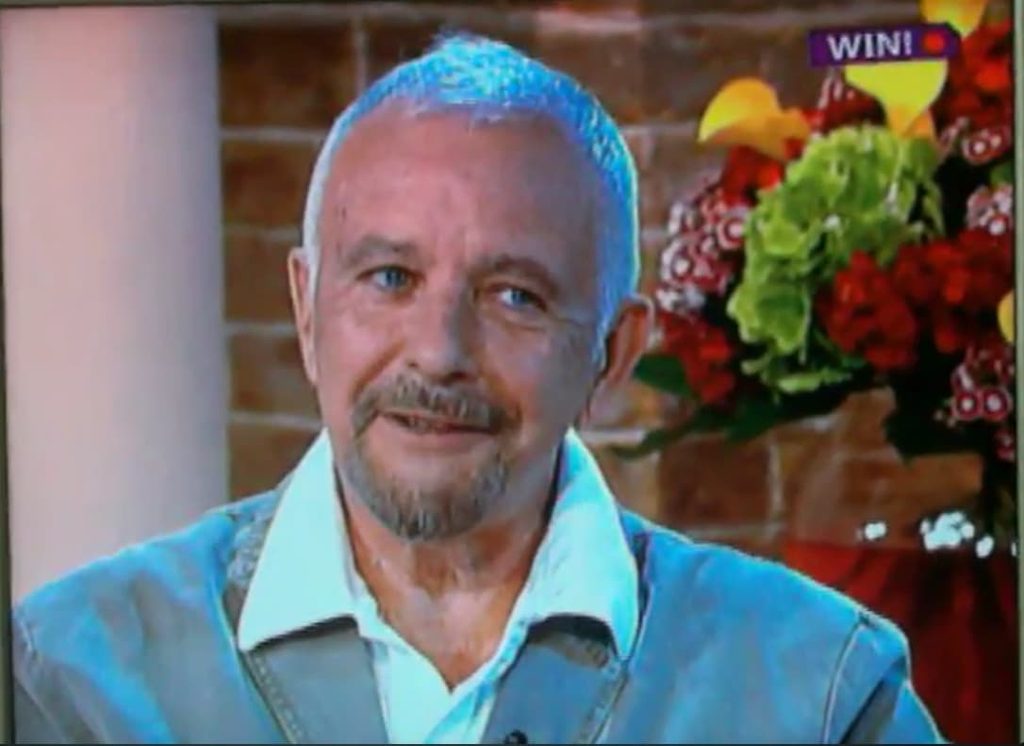
David Essex looked back on a remarkable career while embracing a completely new chapter on British television
When David Essex appeared on ITV’s This Morning on 18 August 2011, there was something wonderfully full circle about seeing him sitting on the daytime television sofa. At 63, Essex was already several decades removed from the extraordinary years that had made him one of Britain’s biggest stars, yet he was speaking with the same relaxed charm that had always been part of his appeal. His reason for being there was very different from the career that had first made him famous. He had recently joined EastEnders as Eddie Moon, the father of Michael, Tyler and Anthony Moon, and the interview came as his first stint on the BBC soap was approaching its final weeks. He spoke warmly about the experience, describing it as wonderful, challenging and intimidating, particularly because of the intensity of the production schedule and the calibre of actors around him.
There was a lovely sense of perspective in the way Essex talked about EastEnders. For an artist who had already experienced enormous success in music, film and theatre, he had nothing to prove by appearing in a soap opera. Instead, he seemed genuinely interested in the challenge of learning something new. He praised the writers, directors and fellow actors, and spoke about how quickly the work could take over his life. His character, Eddie Moon, was not simply a celebrity cameo. Essex had stepped into a substantial storyline and had to work at the pace demanded by one of Britain’s biggest television dramas. The experience clearly mattered to him. He later said that the level of performance from the cast had been phenomenal, and that working with them had been a privilege.
What makes the interview especially enjoyable in retrospect is the man behind the character. David Essex had begun his career under his birth name, David Cook, before changing his professional surname because an existing member of the actors’ union Equity was already registered as Cook. His manager suggested “Essex,” giving British popular culture one of its most memorable stage names. By 2011, that name carried an extraordinary amount of history. He had broken through with “Rock On” in 1973, starred in That’ll Be the Day, appeared in Godspell, and continued moving between recording studios, film sets, theatres and concert stages. Essex later described 1973 as an extraordinary period because three parts of his career were suddenly successful at once: the film, the musical and his recording career.
There was also something particularly revealing about Essex’s attitude toward fame. Even after decades in show business, he continued to speak about his career with a striking lack of self importance. In an interview that same year, he described himself as fortunate to be able to do the things he loved and said he never felt that what he did made him more worthy than an ordinary working person. That humility helps explain why his This Morning appearance feels so natural. The young man whose face once appeared on countless bedroom walls had become a veteran performer, but he had not developed the distance or grandiosity that can sometimes come with such a long career.
The timing of the interview also gave the conversation an interesting sense of transition. Essex was preparing to leave EastEnders because he was returning to the stage, touring with All the Fun of the Fair. The decision was not about losing interest in acting. His television work had simply collided with the demands of his continuing career as a performer. Contemporary reports noted that Eddie Moon was due to leave the programme in October while Essex went on tour, and he remained open to the possibility of returning to Walford in the future.
Watching David Essex in 2011 is therefore rather different from watching the dazzling young singer of the early 1970s. The famous face is still unmistakable, and the smile still has that familiar warmth, but there is a different kind of confidence in him. He had already survived the changing fashions of popular music, moved through acting and theatre, endured the inevitable rise and fall of celebrity attention, and continued working because performing was simply part of who he was. The This Morning interview captures him at another crossroads, looking back without becoming trapped in the past and stepping into something new without pretending to be the young David Essex again. That may be one of the most appealing things about the appearance: beneath all the nostalgia surrounding the man and his greatest songs, there was still an artist curious enough to accept another challenge.