
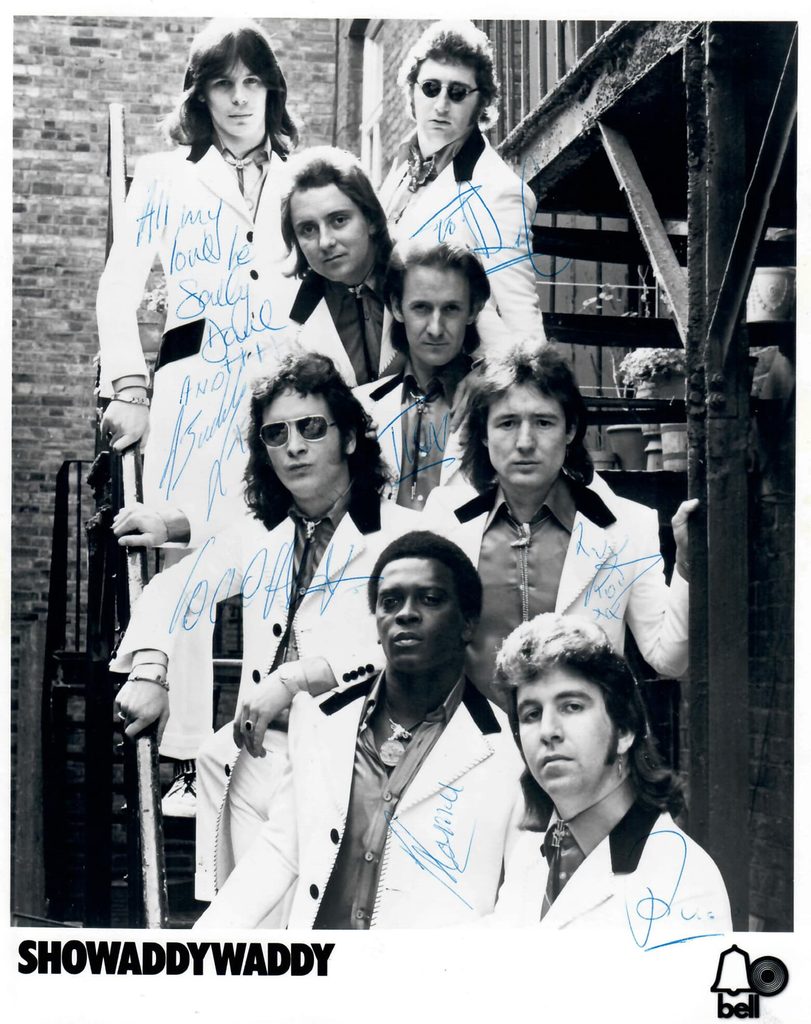
“Come On Let’s Go” found Showaddywaddy doing what they did best: taking a piece of 1950s rock ’n’ roll and making it sparkle all over again
By the time Showaddywaddy recorded “Come On Let’s Go,” they had already established themselves as one of Britain’s most successful rock ’n’ roll revival groups. The song appeared on their 1979 album Crepes & Drapes, released on 2 November 1979, and sits among a collection of covers and original songs that captured the group’s fascination with the sounds and style of an earlier generation. The album itself reached No. 8 on the UK Albums Chart, continuing the remarkable commercial run Showaddywaddy had enjoyed throughout the decade. Their official discography lists “Come On Let’s Go” alongside songs such as “Sweet Little Rock ’n’ Roller,” “Sea Cruise,” “Twist & Shout” and “Remember Then,” making the record feel almost like a celebration of the rock ’n’ roll jukebox.
The song goes back to Ritchie Valens, who wrote and recorded “Come On, Let’s Go” in 1958. Valens’ original reached No. 42 on the Billboard Hot 100, becoming one of the young Californian’s four charting singles from his self-titled debut album. There is something especially fitting about Showaddywaddy choosing it. Valens’ recording was short, urgent and bursting with teenage excitement, built around a simple invitation to the girl he loves: come on, let’s go, let’s stay together. Showaddywaddy understood exactly what made that kind of song work. They did not need to reinvent the lyric or burden it with modern production. They simply leaned into the melody, the rhythm and the joyful innocence of early rock ’n’ roll. Their version runs for just over two minutes, keeping the whole thing compact and energetic, as though the record itself cannot quite sit still.
What makes Showaddywaddy’s version particularly enjoyable is the way it fits naturally into the band’s larger musical world. They had never treated 1950s rock ’n’ roll as something frozen in a display case. Their whole identity was built around bringing that music back to life through exuberant performances, colorful clothes, vocal harmonies and an unmistakable sense of fun. The group had already taken songs such as “Three Steps to Heaven,” “Heartbeat,” “Under the Moon of Love,” “When” and “You Got What It Takes” into the British charts, often achieving enormous success with material that originated years before. Their own official history shows just how extraordinary that period was: “Hey Rock And Roll” reached No. 2 in 1974, “Three Steps To Heaven” also reached No. 2, “Heartbeat” reached No. 7, and “Under The Moon Of Love” became a No. 1. By 1979, the formula was no longer a novelty. Showaddywaddy had made nostalgia commercially powerful.
There is also an interesting detail behind the recording itself. Malcolm Allured, one of the group’s two drummers, is specifically credited by the band’s official biography as having played drums on “Come On Let’s Go.” Showaddywaddy’s unusual two-drummer setup was part of what gave the group such a formidable stage presence. Romeo Challenger played on most of their recordings and live performances, while Malcolm contributed not only musically but also through the group’s dance routines, introductions and interaction with audiences. That combination helped give Showaddywaddy a visual identity as strong as their musical one. They were not simply musicians reproducing old records. They were performers creating an entire atmosphere around them.
And perhaps that is why “Come On Let’s Go” feels so natural in the Showaddywaddy catalogue. The song began with Ritchie Valens at a moment when rock ’n’ roll still felt young, reckless and full of possibility. More than twenty years later, Showaddywaddy picked it up and carried that feeling into the late 1970s, when punk, disco and new-wave music were changing the British charts. They belonged to another musical tradition, but they were never embarrassed by it. On Crepes & Drapes, “Come On Let’s Go” sits comfortably among the songs that allowed Showaddywaddy to turn an old jukebox sound into something vibrant enough for another generation. The result is simple, fast and wonderfully direct: a little piece of Ritchie Valens’ 1958 rock ’n’ roll spirit, given the bright, energetic Showaddywaddy treatment that made the Leicester group so distinctive.