
DOLLY PARTON’S “ROMEO” TURNED A COUNTRY LOVE SONG INTO ONE OF HER MOST PLAYFUL MUSICAL MOMENTS
There are plenty of love songs in country music, but very few begin by turning the tables on the man. “Romeo” is Dolly Parton having a little fun with the entire idea. Written entirely by Dolly, the song became the first single from her 1993 album Slow Dancing with the Moon, released as a single on January 25, 1993. Instead of keeping the spotlight on one romantic hero, Dolly surrounded herself with some of the biggest women in country music at the time: Mary Chapin Carpenter, Kathy Mattea, Pam Tillis and Tanya Tucker, with Billy Ray Cyrus stepping into the role of the irresistible Romeo. The record was officially billed as “Dolly Parton and Friends,” and reached No. 27 on Billboard’s Hot Country Songs chart and No. 50 on the Billboard Hot 100.
The idea is wonderfully cheeky. Dolly and her female friends essentially turn the traditional country flirtation song upside down, surrounding Billy Ray with attention while he plays the handsome object of their admiration. It was particularly amusing in 1993 because Cyrus was still riding the enormous success of “Achy Breaky Heart,” which had made him one of the most recognizable young faces in country music. Dolly understood exactly how to use that image without taking it too seriously. The song sounds bright and playful, but there is also something clever underneath it. Dolly, who had spent much of her career being scrutinized for her appearance, was now directing the gaze toward the male star and letting the women have all the fun.
The timing gave the song an especially interesting place in Dolly’s career. Slow Dancing with the Moon, released February 23, 1993, was her 32nd solo studio album and became a Top 5 country album, reaching No. 4 on Billboard’s Top Country Albums chart and No. 16 on the Billboard 200. Dolly wrote eight of its twelve songs, and the album included collaborations with several artists. “Romeo” was clearly designed to introduce the project with energy rather than solemnity. Yet the song also carried a charitable purpose. Dolly had been writing it when Hurricane Andrew devastated Florida in 1992, and proceeds from the single were donated to the American Red Cross.
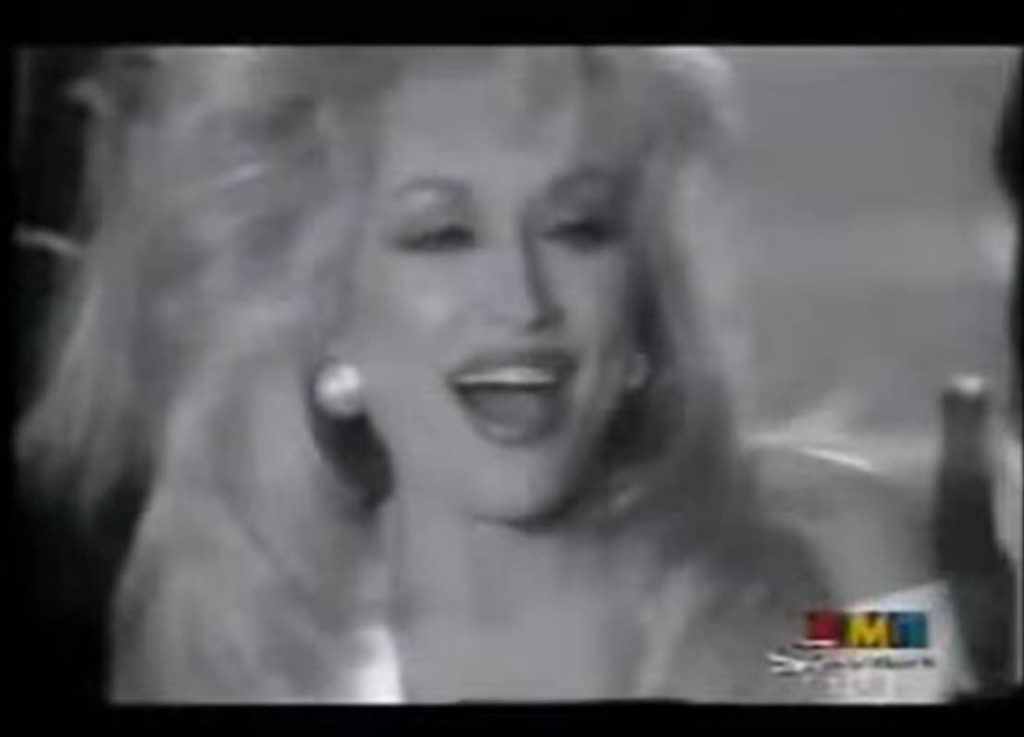
Then came the music video, which gave Dolly’s sense of humor an even larger playground. Shot in black and white, it brings together the artists from the recording, except Pam Tillis, who was unavailable for the shoot. Dolly and her friends are presented as though they are enjoying a girls’ night out when their Romeo arrives, and the entire setup turns the usual country music video formula upside down. Billy Ray is no longer the singer standing confidently at the center of the story while women admire him from a distance. Here, he becomes the one surrounded by teasing attention. Dolly knew exactly how funny the reversal could be, and she played it with the same wink that made so many of her television appearances memorable.
There is something particularly charming about seeing those women together in this period of country music history. Mary Chapin Carpenter, Kathy Mattea, Tanya Tucker, Pam Tillis and Dolly Parton represented very different generations and personalities, yet “Romeo” allowed them to step outside the seriousness often attached to country music and simply have fun. The recording was even recognized with a Grammy nomination for Best Country Collaboration with Vocals, while it later received honors at the 1994 CMT Music Awards for Vocal Event and Video Event.
That is why “Romeo” remains such an enjoyable piece of Dolly’s 1990s catalog. It was not trying to become another “I Will Always Love You” or “Coat of Many Colors.” Dolly was doing something much lighter. She wrote a song about attraction, gathered some of her friends, put Billy Ray Cyrus in the middle of the joke, and turned a familiar romantic fantasy into a celebration of female friendship and humor. Behind all that laughter, however, was a very Dolly quality: the ability to make something look effortless while quietly controlling every part of the story. In “Romeo,” she was not waiting for somebody else to write the punchline. She wrote the whole thing herself.