
How Sammy Davis Jr. Gave A Bert Kaempfert Ballad A Sophisticated New Sound At A Turning Point In His Career
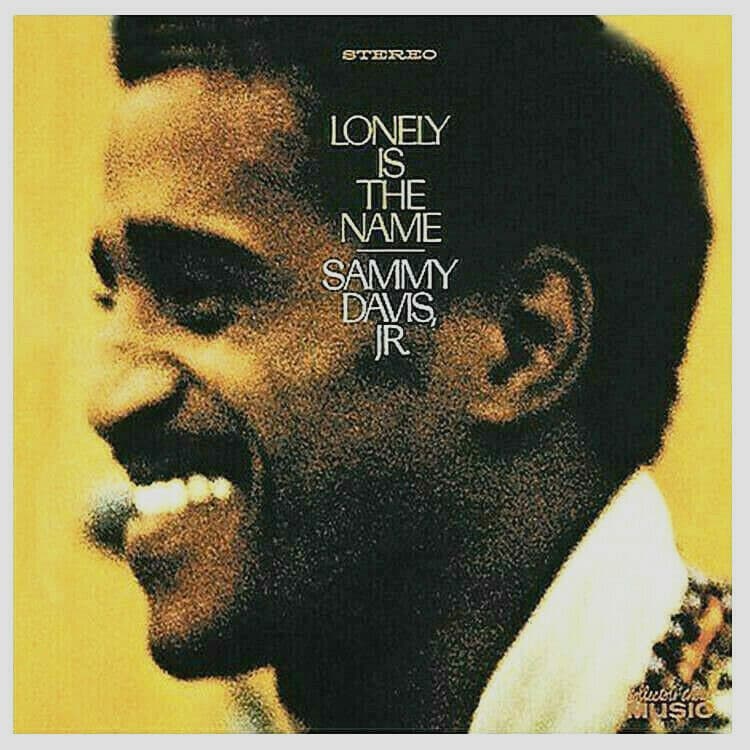
In 1968, Sammy Davis Jr. found himself at an unusual crossroads. He was still one of the most recognizable entertainers in America, a celebrated singer, dancer, actor and member of the legendary Rat Pack circle, yet popular music was changing rapidly around him. Reprise producer Jimmy Bowen, who had already helped create major contemporary hits for Frank Sinatra and Dean Martin, was searching for a modern sound that could bring Davis back into the singles spotlight. The result was “Lonely Is The Name,” a sophisticated ballad written by Bert Kaempfert, Herbert Rehbein and Carl Sigman. Released on Reprise in early 1968, the single eventually reached No. 93 on the Billboard Hot 100 and, more significantly, climbed to No. 12 on Billboard’s Easy Listening chart, giving Davis his strongest showing there since 1963.
The choice of material was not accidental. Kaempfert had already become associated with the contemporary orchestral sound that was transforming traditional pop. Bowen had seen what could happen when an established entertainer was given a fresh arrangement. His work on Sinatra’s “Strangers in the Night” had produced a massive 1966 hit, and he believed “Lonely Is The Name” could give Davis a similar kind of contemporary treatment. For the recording, Davis was paired with arranger H. B. Barnum, himself a former child actor and singer who had developed into an accomplished arranger and producer. The combination brought a different texture to Davis’s voice, placing him inside a polished late 1960s production rather than simply recreating the orchestral pop style of his earlier recordings.
There was, however, another story unfolding behind the record. Davis was becoming increasingly occupied outside the recording studio. During the summer of 1967, he had been in London filming Salt and Pepper, and from April through September 1968 he was deeply involved with Golden Boy, including its Chicago and West End runs. That meant recording was competing with an already extraordinary schedule of stage, film and television commitments. The Lonely Is The Name album, released in August 1968, was therefore something of a snapshot of an artist whose career was moving in several directions at once. The LP became Davis’s first album release in ten months and combined newly recorded material with recordings made in 1966 and 1967.
The album itself reveals just how much Davis was being asked to navigate stylistically. Alongside the title track were songs such as “Up, Up and Away,” “The Good Life,” “Shake, Shake, Shake,” “We’ll Be Together Again,” “Don’t Take Your Time,” “Children, Children,” “Uptight,” “You’ve Got Your Troubles” and “All That Jazz.” The mixture could feel eclectic, but it also reflected the remarkable breadth of Davis as an entertainer. He could move from jazz and traditional pop to Broadway material and contemporary pop without ever losing the personality in his voice. The title song provided one of the album’s clearest attempts to place that voice firmly inside the musical language of 1968.
What makes “Lonely Is The Name” especially interesting today is that it did not become the enormous commercial breakthrough Bowen had hoped for. Its No. 93 Billboard Hot 100 peak was modest compared with the major successes Davis had enjoyed earlier in his career. Yet the No. 12 Easy Listening position tells a different story. Radio programmers still recognized the appeal of his voice, and the song demonstrated that Davis could adapt to the changing pop landscape without surrendering the elegance that had always distinguished him. Billboard itself described the recording as a change of pace for Davis and praised it as a well performed commercial entry.
And there is something quietly revealing about the song’s place in Davis’s story. Only a few months after “Lonely Is The Name” appeared, another song recorded during the same extraordinary period would give him the breakthrough Bowen had been seeking. “I’ve Gotta Be Me”, released later in 1968, eventually reached No. 11 on the Billboard Hot 100 and became one of the defining recordings of Davis’s later career. The contrast makes “Lonely Is The Name” fascinating in retrospect. It was not the final answer, but it was part of the search, an attempt to find where a legendary performer fitted into a rapidly changing musical world.
Listening to “Lonely Is The Name” today, that transitional quality becomes part of its charm. Sammy Davis Jr. sounds like an artist refusing to be frozen in the era that had made him famous. Behind him was Broadway, Hollywood, television, the Rat Pack and decades of stage experience. Ahead lay another chapter in which “I’ve Gotta Be Me” would give him an entirely new anthem of individuality. Between those two records sits “Lonely Is The Name,” a polished, melancholy recording that captured Sammy Davis Jr. in motion, still searching, still adapting and still proving that one of the great entertainers of his generation could enter a changing musical landscape without losing the unmistakable voice that made him Sammy.