
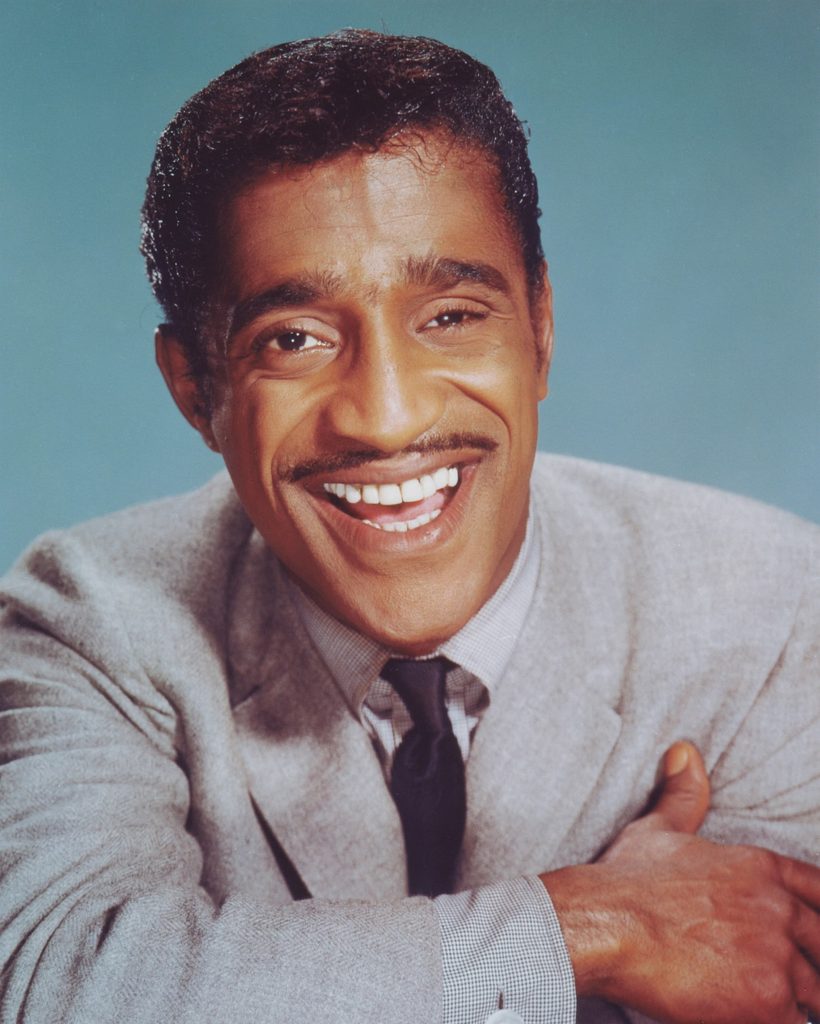
SAMMY DAVIS JR. TURNED “I’VE GOTTA BE ME” INTO A PERSONAL ANTHEM AFTER IT WAS ALMOST HIDDEN ON THE B-SIDE
In 1968, Sammy Davis Jr. recorded a song that seemed almost perfectly suited to the man who sang it. “I’ve Gotta Be Me”, written by Walter Marks, had originated in the Broadway musical Golden Rainbow, where Steve Lawrence introduced it. Lawrence encouraged Sammy to record the song, and producer Jimmy Bowen immediately recognized something special in Davis’s interpretation. Yet there was an unexpected twist. After the recording was mastered, Bowen decided to put “I’ve Gotta Be Me” on the B-side, choosing the more contemporary “Bein’ Natural Bein’ Me” as the single’s A-side. Radio DJs had other ideas. Once several stations began playing the supposedly secondary track, listeners responded, and the record gradually became one of Sammy’s biggest successes.
Released late in 1968 on Reprise Records, Sammy’s version quickly developed a life of its own. It eventually reached No. 11 on the Billboard Hot 100, spending 16 weeks on the chart, while its performance on Billboard’s Easy Listening chart was even more remarkable: it remained at No. 1 for seven weeks. It was Sammy’s most successful single since “Something’s Gotta Give” in 1955, a remarkable comeback for an entertainer who had already spent decades moving between vaudeville, jazz, film, Broadway, television and Las Vegas. The song also gave its name to his 1968 album, which reached No. 24 on the Billboard album chart during a 25-week run.
What makes the recording feel so natural in Sammy’s voice is the lyric’s insistence on individuality. “I’ve Gotta Be Me” is essentially a declaration that a person cannot live indefinitely according to somebody else’s expectations. Sammy had spent his entire career negotiating expectations. He was an extraordinary entertainer who could sing, dance, act and perform comedy, but he was also an artist whose public life unfolded during an era when race, identity and celebrity could collide in complicated ways. The song does not need to be treated as a literal autobiography to feel deeply connected to him. In Sammy’s hands, the words sound less like a theatrical character making a statement and more like an entertainer claiming the right to remain himself.
That quality may also explain why the song survived beyond its original Broadway setting. Golden Rainbow opened at New York’s Shubert Theatre on February 4, 1968, and closed on January 11, 1969. The musical itself did not become a lasting Broadway success, yet one of its songs escaped the theater and found a much larger audience through Sammy. Steve Lawrence’s earlier recording had reached No. 6 on the Easy Listening chart, but Davis gave the composition a broader popular impact, taking it into the Top 20 of the Hot 100.
There is something wonderfully appropriate about the way the record found its audience. “I’ve Gotta Be Me” was almost hidden on the B-side, but radio listeners pulled it into the light. Sammy then made it part of his live act, and the song became closely associated with him for the rest of his career. The words gave him a natural opportunity to combine the qualities that had always made him such a compelling performer: theatrical timing, musical precision, personality and an unmistakable sense of presence. It was a song that allowed Sammy to stand at the center of the stage and say exactly what its title promised.
And perhaps the most satisfying detail is that the song did not arrive as some grandly planned career statement. It began with Steve Lawrence recommending it, Jimmy Bowen hearing its potential, a record company putting it on the wrong side of a single, and radio DJs giving it another chance. Then Sammy Davis Jr. took over. By early 1969, “I’ve Gotta Be Me” was sitting at No. 11 on the Hot 100 and ruling the Easy Listening chart, while Sammy was once again hearing his own voice coming from radios across America. A song about refusing to become someone else had found exactly the right singer.