
“Illinois” is a quiet meditation on home, memory, and the ache of becoming someone else without ever truly leaving where you began.
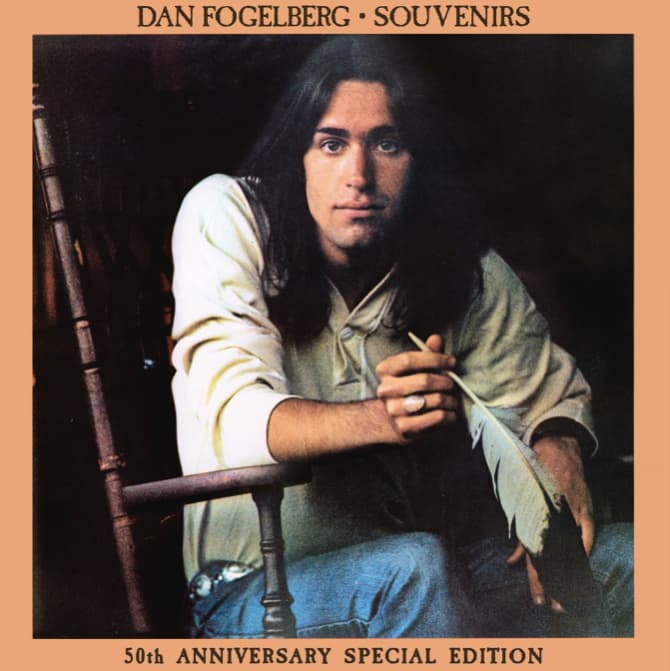
When listeners speak of Dan Fogelberg, the conversation often turns to the tender romance of “Longer” or the bittersweet seasonal reflection of “Same Old Lang Syne.” Those songs, deservedly celebrated, came later. Earlier still, before the spotlight fully found him, there was “Illinois”, a song that did not announce itself as a hit but instead whispered its presence with uncommon sincerity. Released in 1974 on the album Souvenirs, “Illinois” stands as one of Fogelberg’s most introspective and revealing works, offering a clear window into the emotional geography that shaped his songwriting.
Souvenirs, produced by Joe Walsh, reached No. 17 on the Billboard 200, marking Fogelberg’s first significant commercial breakthrough. Yet “Illinois” itself was not released as a major single and did not chart on Billboard’s singles rankings. That fact is important, because it explains much about the song’s enduring character. It was never designed to chase radio rotation or broad acclaim. Instead, it functioned as a personal statement, placed early in the album to establish tone and intent. From the opening moments, the song feels grounded, reflective, and deliberately unhurried.
The story behind “Illinois” is inseparable from Fogelberg’s own life. Born in Illinois and raised in the Midwest, he carried with him the quiet sensibility of small towns, long drives, and inward looking reflection. At the time he wrote the song, Fogelberg was still defining who he was as an artist. He had not yet become the household name he would later be. “Illinois” captures that moment precisely, when ambition and attachment exist side by side, when the pull of leaving is matched by the gravity of staying connected to one’s roots.
Musically, the song is restrained and intimate. Acoustic guitar lines unfold gently, supported by subtle arrangements that never overwhelm the lyric. Fogelberg’s voice is calm, measured, and deeply human. There is no dramatic vocal flourish. Instead, he sings as if speaking quietly to himself, or perhaps to an old friend who already understands. This simplicity allows the lyrics to carry their full emotional weight. The landscapes he describes are not romanticized fantasies. They are familiar places, rendered meaningful through memory rather than spectacle.
The meaning of “Illinois” lies in its honest acceptance of uncertainty. It is not a song about triumph or regret, but about standing at a threshold. The narrator looks back with affection and forward with quiet resolve, fully aware that moving on does not erase where one comes from. This theme resonated deeply with listeners who had lived long enough to recognize that life rarely offers clean departures. The past remains present, not as a burden, but as a companion.
Within Souvenirs, “Illinois” serves as an emotional anchor. While the album includes more widely recognized songs such as “Part of the Plan”, which became Fogelberg’s first Top 40 hit on the Billboard Hot 100, “Illinois” provides the emotional context that makes those later successes feel earned rather than manufactured. It reminds the listener that before recognition, there was reflection. Before confidence, there was listening.
Over time, “Illinois” has gained quiet appreciation among devoted listeners and critics who value its authenticity. It stands today as an early example of what would become Fogelberg’s signature strength: the ability to articulate complex inner emotions with clarity, warmth, and restraint. For those who return to it years later, the song often sounds different than it did the first time. Not because the music has changed, but because the listener has.
In the end, “Illinois” remains a testament to an artist honoring his beginnings. It is a song about place, but more deeply, it is about identity. In listening to it, one hears not only a young songwriter finding his voice, but a reminder that the roads we travel never fully separate us from the ground where we first learned how to stand.
 Great Songs