
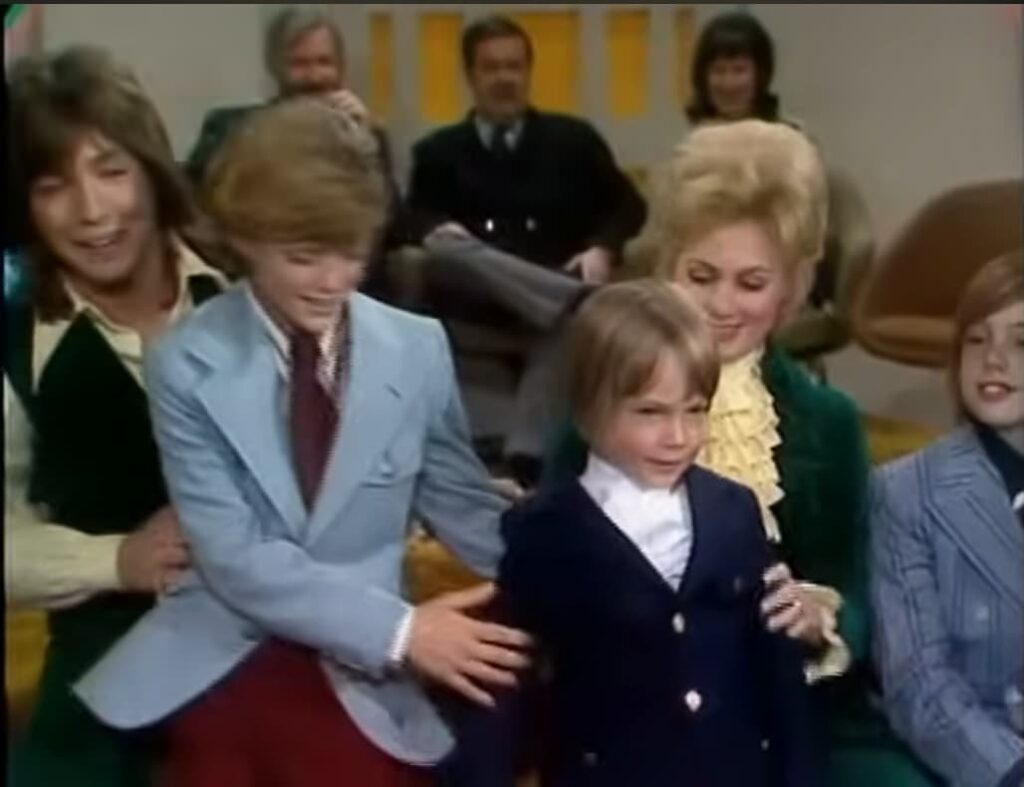
A tender reflection on family, identity, and the quiet passing of time, where voices bound by blood tell a story that feels both personal and universal.
When David Cassidy joined his mother, Shirley Jones, for “This Is Your Life,” the result was more than a duet—it was an intimate conversation set to music. Released in 1972 as part of the album Rock Me Baby, the song did not achieve major chart success, particularly when compared to Cassidy’s earlier hits with The Partridge Family. Yet its significance lies far beyond chart positions. It stands as a rare and deeply personal recording, one that captures a fleeting moment where art and real life quietly intertwine.
By 1972, David Cassidy had already become one of the defining teen idols of his generation. His voice was instantly recognizable, his presence unavoidable in popular culture. But with Rock Me Baby, there was a subtle shift—a movement away from the polished, television-driven image toward something more reflective, more grounded. “This Is Your Life” embodies that transition. It does not chase radio trends or aim for commercial spectacle. Instead, it pauses, looks inward, and speaks with a sincerity that feels almost disarming.
The presence of Shirley Jones adds a layer of emotional depth that cannot be manufactured. This is not simply a collaboration between two performers; it is a meeting of generations, a dialogue between experience and youth, between guidance and self-discovery. Their voices, distinct yet harmoniously aligned, create a sense of continuity—of life unfolding, of lessons passed quietly from one to another. There is a gentleness in the way the song unfolds, as though each line carries with it an unspoken understanding.
Musically, the arrangement is understated, allowing the emotional core to take precedence. Soft instrumentation frames the vocals without overwhelming them, giving space for nuance and expression. It is in this restraint that the song finds its strength. Rather than building toward a dramatic climax, it moves steadily, like a conversation that deepens gradually, revealing more with each passing moment.
The meaning of “This Is Your Life” resonates most strongly in its simplicity. It speaks of time—not in grand, sweeping gestures, but in the small, often overlooked moments that shape a life. There is an acknowledgment of growth, of change, and of the quiet realization that life moves forward whether one is ready or not. Yet within that realization, there is also comfort. The song does not lament the passage of time; it accepts it, even embraces it, with a sense of calm reflection.
For listeners, the song often feels less like a performance and more like a memory. It evokes images of conversations that linger long after they end, of guidance offered without insistence, of understanding that arrives not all at once but gradually. There is a warmth to it, a sense that life, with all its uncertainties, is still something to be lived fully and thoughtfully.
In the broader context of David Cassidy’s career, “This Is Your Life” occupies a unique place. It does not carry the immediate recognition of his chart-topping singles, but it reveals another dimension of his artistry—one that values connection over popularity, sincerity over spectacle. And in pairing his voice with Shirley Jones, the song becomes something even more enduring: a quiet testament to the bonds that shape us, both on and off the stage.
Over time, the song has remained a subtle yet meaningful entry in the landscape of early 1970s pop. It may not have dominated the charts, but it has endured in a different way—through the emotional resonance it leaves behind. It reminds us that music does not always need to be loud to be powerful, nor widely celebrated to be significant.
And as the final notes fade, what remains is not a sense of conclusion, but of continuation. A life still unfolding, a story still being written. “This Is Your Life” does not seek to define that story—it simply acknowledges it, with quiet grace and lasting sincerity.