
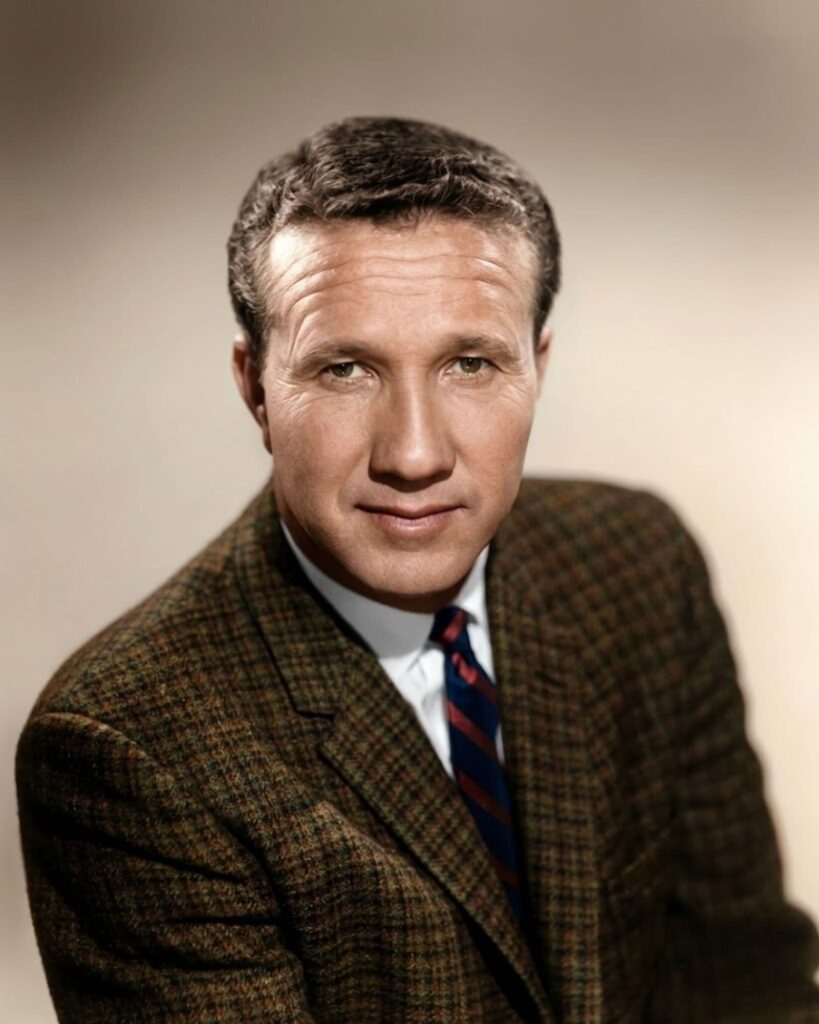
From Dust and Silence to a Voice That Carried the American West
Before the charts ever carried his name, before the Grand Ole Opry lights softened his silhouette into legend, Marty Robbins was simply a boy listening to echoes—of hardship, of silence, and of stories that refused to fade. Born as Marty Robbins in 1925 in Glendale, Arizona, his early life did not promise stardom. It barely promised stability. Raised as one of nine children in a struggling household, he learned quickly that survival often came before dreams, and that childhood could vanish overnight without warning.
By the age of twelve, the fragile structure of his home life collapsed. The absence left behind was not just physical—it was a quiet that pressed heavily on the spirit. Robbins would later reflect on that moment with a kind of restrained clarity, understanding that some silences shape a person more deeply than noise ever could. Yet even in that stillness, something enduring took root. His father’s harmonica, worn but expressive, filled the air with melodies that carried both sorrow and resilience. And his grandfather’s stories—tales of cowboys, deserts, and distant horizons—became more than entertainment. They became a lifeline, a place where imagination could roam freely when reality offered little comfort.
It is important to understand that the mythology surrounding Marty Robbins—the cowboy balladeer, the voice of the West—was not crafted in studios or marketing rooms. It was born in those early years, in a boy’s quiet determination to hold onto something beautiful in the midst of uncertainty. When he would later record songs like “El Paso” in 1959, which reached No. 1 on the Billboard Hot 100 and won a Grammy Award, listeners were not just hearing a well-written narrative—they were hearing the culmination of a life that had long been intertwined with longing, distance, and the search for belonging.
But the true turning point came earlier, far from Arizona’s dry earth. At seventeen, Robbins enlisted in the United States Navy during World War II. It was there, aboard a ship surrounded by endless water and sky, that he first picked up a guitar. There is something almost poetic about that moment—the idea that a young man, removed from everything familiar, would discover the very thing that would define him. The ocean, vast and indifferent, became the backdrop to a quiet awakening. In those solitary hours, the seeds planted by his childhood—music, storytelling, and an unspoken yearning—began to take form.
What followed was not immediate success, but a gradual shaping of identity. Robbins was not merely learning to play; he was learning how to translate feeling into sound. His later recordings, particularly those found on the landmark album “Gunfighter Ballads and Trail Songs”, would reflect this deeply personal approach. Songs were never just songs. They were recollections, imagined or lived, carried with a sincerity that felt almost fragile.
The significance of Marty Robbins in country music history lies not only in his commercial achievements but in the emotional truth he brought to his work. His voice had a clarity that seemed untouched by pretense, and his storytelling carried a weight that could only come from lived experience. When audiences embraced his music, they were responding to something genuine—something that reminded them of places, moments, and feelings that time could not erase.
Looking back, it becomes clear that his journey was never about escaping his beginnings. Instead, it was about transforming them. The poverty, the broken home, the long nights filled with borrowed melodies and inherited stories—these were not obstacles to overcome but essential threads in the fabric of his artistry. They gave his music its depth, its honesty, and its enduring power.
In the end, the legend of Marty Robbins is not defined solely by chart positions or accolades, though they are impressive. It is defined by a quiet resilience, by a boy who listened carefully to the world around him and chose to answer it with song. And in doing so, he created a voice that continues to echo, long after the silence that once shaped him has faded.