
A Song About Love Lost and Pride Wounded — “The Race Is On” Turns Heartbreak Into a Dramatic Finish Line
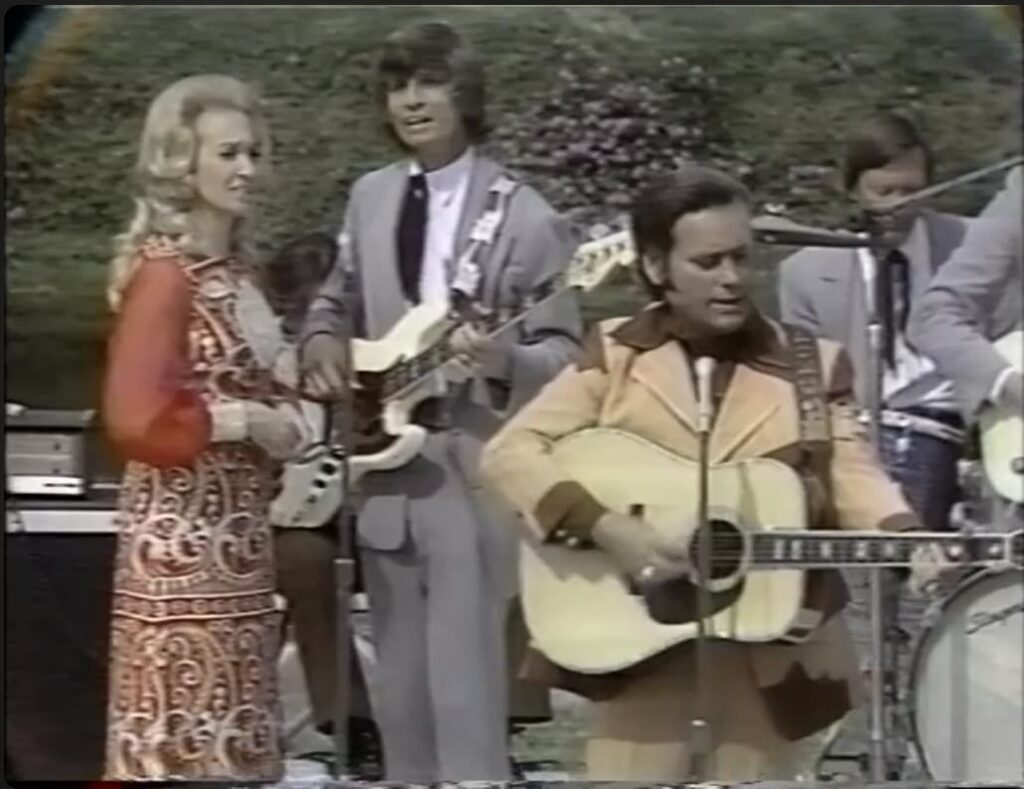
When George Jones stepped onto the stage at Cypress Gardens in 1973, backed by the unmistakable harmony of Tammy Wynette, the performance of “The Race Is On” felt less like a simple country song and more like a vivid emotional story unfolding in real time. By that point, the song had already secured its place as one of the defining recordings of Jones’s career—an example of how country music could transform personal pain into something strangely uplifting.
Originally released in 1964, “The Race Is On” quickly became one of the most successful singles in George Jones’s early catalog. The song climbed to No. 3 on the Billboard Hot Country Singles chart, marking an important moment in his rise toward becoming one of the most respected voices in country music. Written by the talented songwriter Don Rollins, the track cleverly blends humor, heartbreak, and metaphor in a way that only classic country music seems able to accomplish.
The premise of “The Race Is On” is simple but brilliant. Instead of describing a broken relationship in conventional terms, the lyrics compare romantic heartbreak to a horse race. The singer finds himself watching as love slips away, with phrases like “the race is on” and “my tears are holding back” turning emotional defeat into a dramatic sporting event. In the hands of George Jones, this metaphor becomes both playful and deeply poignant.
Musically, the song carries an upbeat tempo that almost disguises the sadness in its story. The lively rhythm, bright steel guitar lines, and driving arrangement give the impression of motion—like horses thundering down the track. Yet Jones’s voice reveals the truth behind the excitement. His delivery carries the subtle ache of someone who knows the outcome long before the finish line appears.
The 1973 performance at Cypress Gardens, where George Jones was joined vocally by Tammy Wynette, adds an extra layer of emotional resonance to the song. At the time, the two were one of country music’s most famous couples. Their partnership had produced unforgettable duets such as “Golden Ring” and “We’re Gonna Hold On.” Onstage together, their voices carried a chemistry that was both musical and deeply personal.
Hearing Tammy Wynette support Jones on “The Race Is On” creates an interesting emotional contrast. Wynette’s gentle harmony softens the sharp edges of the song’s narrative, almost like a sympathetic voice echoing in the background of the story. Their combined performance turns the song into something richer than the original recording—a moment where two powerful country voices intertwine over a tale of romantic defeat.
Part of what has always made George Jones such an extraordinary singer is his ability to convey complex emotion without overstatement. His voice never relies on dramatic exaggeration. Instead, it carries a natural sincerity that draws listeners into the story. On “The Race Is On,” he sings as though the words simply arrived from real experience, each line delivered with a mixture of humor, resignation, and quiet dignity.
The song itself also reflects the creative energy of Nashville in the mid-1960s. Country music was beginning to broaden its storytelling techniques, experimenting with clever metaphors and more dynamic arrangements. Don Rollins’s songwriting captures that shift perfectly. By turning heartbreak into the language of horse racing, he created a lyric that felt fresh, memorable, and instantly relatable.
Over the decades, “The Race Is On” has been recorded by many artists, including Jack Jones, whose 1965 pop version reached No. 15 on the Billboard Hot 100. Yet it is George Jones’s original recording that remains the definitive interpretation. His voice gives the song its emotional authenticity—the sense that beneath the clever metaphor lies a very real sense of loss.
Watching the 1973 performance today, one cannot help but notice how effortlessly the music flows. There is no theatrical display, no elaborate production. Just George Jones, standing with quiet confidence, telling a story through song while Tammy Wynette’s harmony glides beside him like a gentle echo.
And perhaps that simplicity is what allows “The Race Is On” to endure. It reminds listeners that life often feels like a series of races—moments when hope surges forward, only to stumble along the way. Yet through the steady voice of George Jones, even defeat carries a strange kind of grace. In that sense, the song is not only about losing love. It is about the courage to keep running, even when the odds seem clear long before the finish line.