
A Song of Distance and Longing—“Early Morning Rain” and the Gentle Soul of Gordon Lightfoot
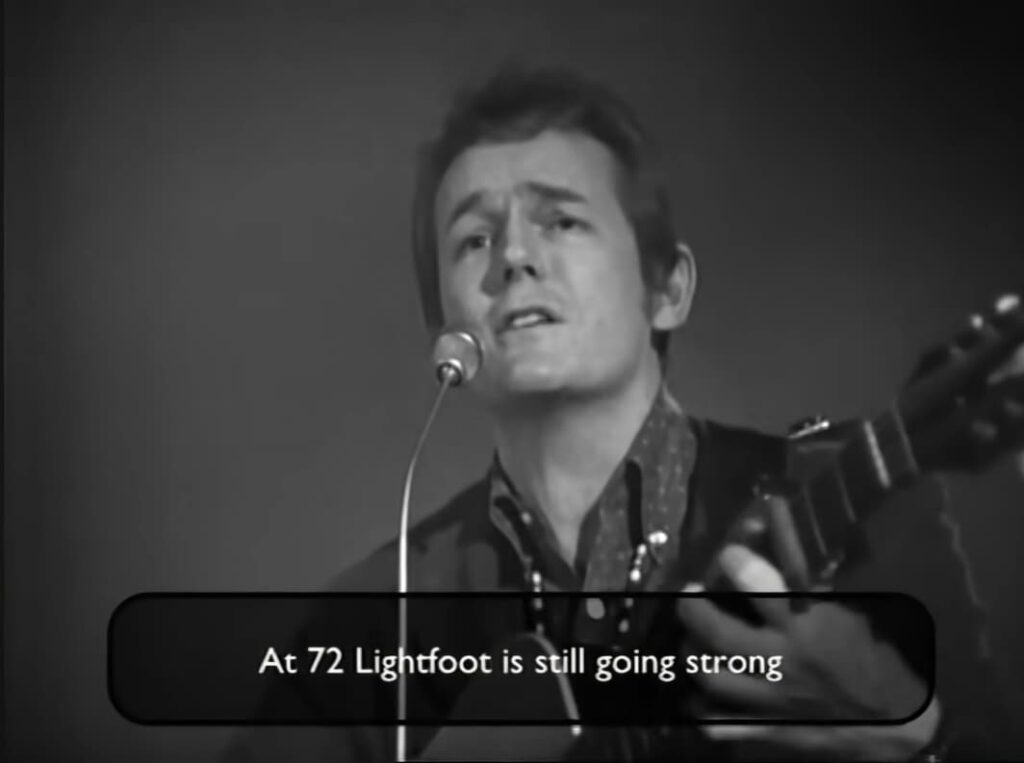
Few songs in the vast landscape of folk music carry the quiet, enduring weight of “Early Morning Rain”—a composition by Gordon Lightfoot that first emerged in the mid-1960s and would go on to define not only his career, but the very essence of Canadian songwriting. By the time he performed it for the BBC in 1969, Lightfoot was already establishing himself as one of the most authentic and introspective voices of his generation, a troubadour whose songs seemed to arrive not from the stage, but from life itself.
Written in 1964, “Early Morning Rain” did not initially storm the charts in the way pop hits often do. Instead, its influence spread more quietly, carried by interpretations from artists such as Peter, Paul and Mary and Ian & Sylvia, whose versions helped introduce the song to a broader audience. Lightfoot’s own recording, featured on his debut album “Lightfoot!” (1966), became a cornerstone of his repertoire. While it did not achieve high chart positions in its original form, its legacy would far outlast many chart-toppers of the era.
The story behind the song is as humble as it is evocative. Gordon Lightfoot once recalled sitting at Los Angeles International Airport, watching planes depart while he remained grounded—both physically and emotionally. That image became the foundation of the song: a man standing in the rain, longing not just for a journey, but for a sense of belonging. The lyrics, spare and unadorned, capture a universal feeling—the ache of being left behind, of watching life move forward without you.
By 1969, when Lightfoot performed the song live for the BBC, there was already a sense that this was more than just another folk tune. His voice, still youthful yet carrying a subtle gravity, delivered each line with a calm sincerity that felt almost conversational. There was no theatrical flourish, no attempt to dramatize the emotion. Instead, he allowed the song to breathe, trusting in its simplicity.
And that is where its power lies.
Because “Early Morning Rain” is not a song that demands attention—it invites reflection. It speaks softly, yet lingers long after it ends. In an era when music was becoming increasingly experimental and amplified, Lightfoot chose restraint. He understood that sometimes, the most profound truths are expressed in the quietest ways.
That quiet truth would follow him throughout his life.
On May 1, 2023, at 7:30 p.m., Gordon Lightfoot passed away at Sunnybrook Hospital in Toronto, closing a chapter that had spanned more than six decades. Just days later, on May 8, 2023, a private funeral service was held in his hometown of Orillia, Ontario, at St. Paul’s Church—the very place where he had first sung as a boy in the church choir. There is something deeply poetic in that return. A life that began in song, coming to rest in the same sacred space where the first notes were once sung.
It is impossible not to think of “Early Morning Rain” in that context.
Because the song, in many ways, mirrors the arc of his life. It speaks of departure, of distance, of the passage of time. Yet it never loses its sense of quiet dignity. Even in its melancholy, there is a kind of peace—a recognition that longing is part of being human, and that beauty can be found even in moments of solitude.
Gordon Lightfoot was often called Canada’s beloved troubadour, and rightly so. But titles alone cannot capture what he gave through his music. His songs were not grand declarations; they were gentle companions. They walked alongside listeners through years, through changes, through memories both joyful and bittersweet.
And perhaps that is why his passing feels less like an ending, and more like a pause.
Because every time “Early Morning Rain” begins to play—whether from a worn vinyl record or a quiet broadcast—the voice returns. Steady, thoughtful, unmistakably human. A reminder of a time when songs were written not to impress, but to express.
And in that soft, reflective space, Gordon Lightfoot still stands—watching the planes, feeling the rain, and giving voice to something we have all, at one time or another, quietly understood.