
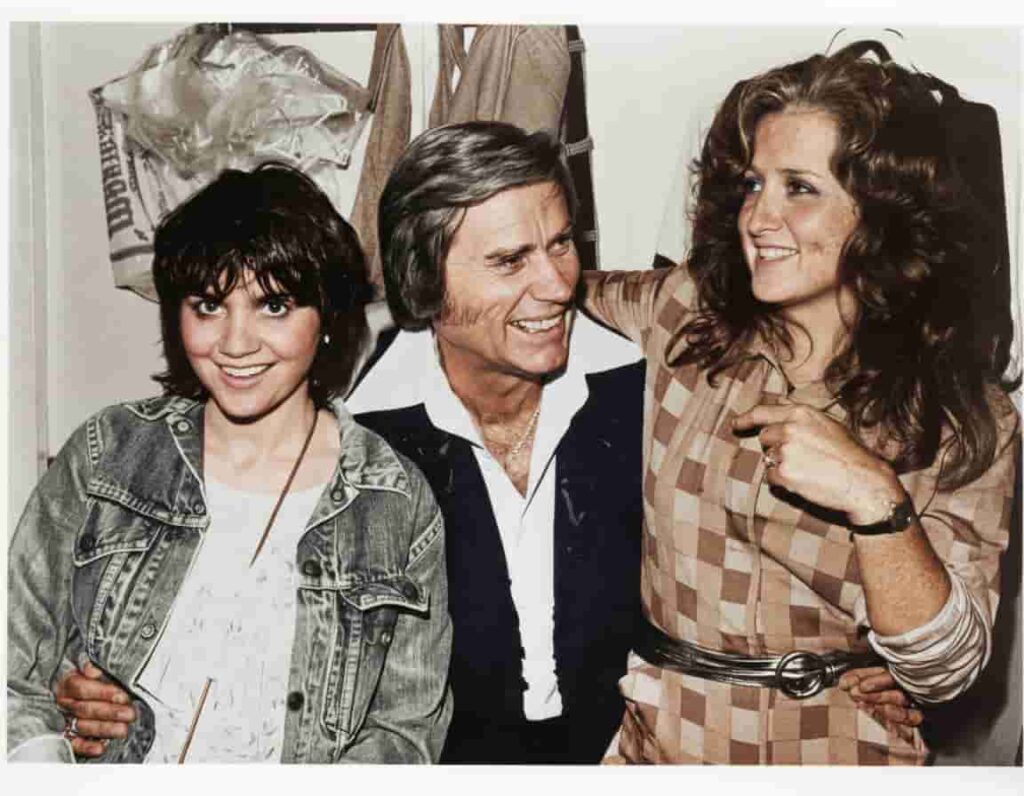
A wistful confession of heartbreak and regret in melody
The duet I’ve Turned You to Stone by George Jones and Linda Ronstadt emerged as a somber, haunting reflection on love lost a lament that captures remorse, emotional coldness, and the silent ache of a heart hardened by mistake.
If you seek a song soaked in regret and gentle sorrow, this is it.
When the album My Very Special Guests, featuring this duet, was released in 1979, it peaked at #38 on the US Billboard Country Albums chart.
Though that placement wasn’t stellar, the deeper story behind the song and the lives of those who sang it carries weight far beyond chart numbers.
The story behind the song
By the late ’70s, George Jones was navigating a dark chapter in his life. Substance abuse, financial troubles, and personal turmoil weighed heavily on him.
In that troubled period, the concept of My Very Special Guests was conceived an ambitious yet risky idea pairing him with various artists from different genres. Among them was Linda Ronstadt, a pop/rock-oriented singer whose voice contrasted with Jones’ gritty country drawl.
The duet on I’ve Turned You to Stone was more than a collaboration of convenience. In it, two distinctly different vocal worlds met the smoky, world-weary voice of Jones and the clear, emotive tone of Ronstadt producing a fragile yet powerful balance. Their collaboration was a rare crossover moment: country’s sorrowful terrain touched by the emotional clarity and resonance of a more mainstream/pop singer.
Interestingly, that duet wasn’t just for studio walls. When Ronstadt unexpectedly joined Jones at a 1980 show in New York City, they performed an impromptu live version of the song an intimate, unplanned moment that underlined how much this song meant to both.
The meaning and emotional weight
At its heart, I’ve Turned You to Stone speaks of remorse and regret. The narrator (or narrators) confess an inability to sustain love. Lyrically, lines like:
“Heartache by heartache I’ve turned you to stone”
…reveal the pain caused by neglect, missed chances, and emotional numbness. The repeated refrain “life here together has turned you to stone” drips with the sorrow of realizing too late that love has been drained of warmth and vitality; replaced by coldness, by regret.
It is not a blaze of romantic promise, but a gentle ache of mourning for what could have been. The metaphor of turning someone to stone once warm, alive, human summons a bitter sadness: love destroyed not by grand events, but by quiet neglect and repeated heartbreak.
When George’s ragged voice intertwines with Linda’s clear tones, the song becomes more than words on vinyl. It becomes a confession; a regret; a late-night whisper to memory. For any listener who’s ever felt the sting of failed love, the duet becomes almost unbearably familiar.
Why this song endures beyond charts
Perhaps I’ve Turned You to Stone never became a blockbuster hit. The album itself was criticized by some as inconsistent and uneven, partly because Jones’ voice had suffered during those dark years. Yet this very vulnerability the rasp, the ache, the weariness becomes part of the song’s power. It does not seek to dazzle. It seeks to console. It seeks to admit: “I was wrong.”
For older listeners those who have known love, loss, regret, and the quiet ache of memory this song resonates deeply. It does not romanticize heartbreak. It accepts it. It offers no easy redemption. Only a sad, soft confession, sung by two voices from different worlds, meeting in sorrow.
And that more than any chart position is why I’ve Turned You to Stone remains a quiet gem.
 Music Legend