
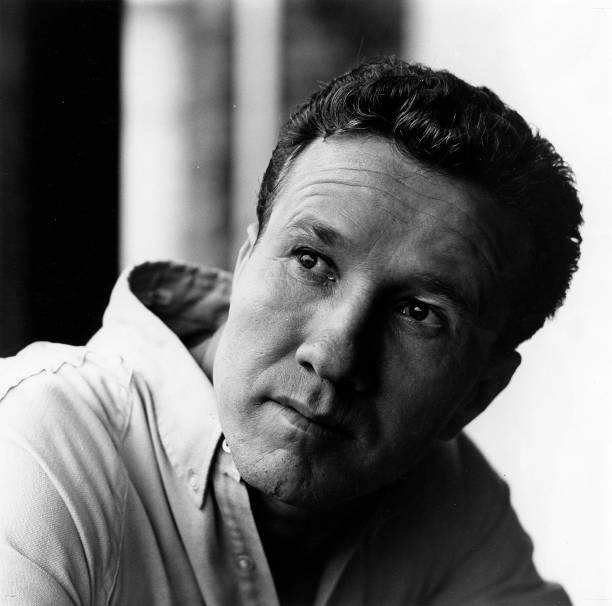
The Great Western Convergence of 1966 – Marty Robbins, Merle Haggard, and Bonnie Owens on the Trail of the “Bakersfield Sound”
In the vibrant landscape of 1960s country music, two distinct capital cities defined the genre’s destiny: the polished, string-laden studios of Nashville, Tennessee, and the raw, electric, oil-and-dust honky-tonks of Bakersfield, California. In 1966, these two worlds collided in a spectacular display of artistic camaraderie when Marty Robbins crossed paths with the rising architects of the West Coast revolution: Merle Haggard, his powerhouse vocalist wife Bonnie Owens, and their legendary backing band, The Strangers. This intersection brought together the finest vocalists, songwriters, and instrumentalists of the era, creating an unforgettable moment in musical history where smooth Western storytelling met the sharp edge of the “Bakersfield Sound.”
The “backstory” of this convergence is rooted in a mutual, deep-seated respect for the working-class experience. Marty Robbins was already an established “Titan” on Columbia Records, universally revered for his “Velvet Voice” and cinematic epics. Meanwhile, Merle Haggard was just breaking through on Capitol Records, having secured his first major hits like “Swinging Doors” and “The Bottle Let Me Down.” Backed by The Strangers—featuring the pristine, bell-like steel guitar of Ralph Mooney and the driving telecaster of Roy Nichols—Haggard’s sound was the perfect, gritty counterpoint to Robbins’ smooth Arizona style. For the sophisticated listener, this era represents a golden moment when the “foundation” of country music was being rewritten by artists who lived the “Passion and Danger” they sang about.
The Dynamic of the Road: Echoes of the West Coast Circui
For those who lived through the shifting tides of 1960s music, seeing these names on the same marquee was a masterclass in musical synergy. Bonnie Owens, a brilliant artist in her own right who won the Academy of Country Music’s first “Female Vocalist of the Year” award in 1965, was the crucial harmonic glue. Her high, clear mountain-style harmonies perfectly complemented Haggard’s rich baritone, creating a vocal blend that rivaled any duo in the business.
“We were all just travelers on the same highway, trying to find a piece of truth in a three-minute song.”
When Marty Robbins joined forces with the Haggard package tour in 1966, the musical exchange was palpable. Robbins, ever the musical chameleon, was deeply enamored with the West Coast style. The Strangers provided a driving, danceable rhythm that injected a new energy into the live circuit. This wasn’t a competition of egos; it was a celebration of heritage. They shared a deep love for the “desert dust” of their roots, and their nightly performances became a “souvenir” of an era when live musicianship was the ultimate currency.
An Unmatched Legacy of Grit and Harmony
As we look back from the vantage point of 2026, the collaboration between Robbins, Haggard, Owens, and The Strangers remains a monument to authenticity. They taught us that country music didn’t have to fit into a single box. It could be an epic gunfighter ballad, a driving honky-tonk anthem, or a tender, heartbreaking duet.
They remained pillars of the industry because they refused to compromise their “working-class” identities. While Marty would return to his Nashville home and his beloved Marizona, and Merle and Bonnie would continue to build the Bakersfield empire, the brief seasons they spent sharing stages left an indelible mark on the arrangement of American roots music. It proved that whether a song was born in the desert of Arizona or the valley of California, the heart behind it remained exactly the same.
 Music Legend