
From Teen Idol to Lifesaver—A Voice That Once Filled Arenas Now Quietly Saving Lives
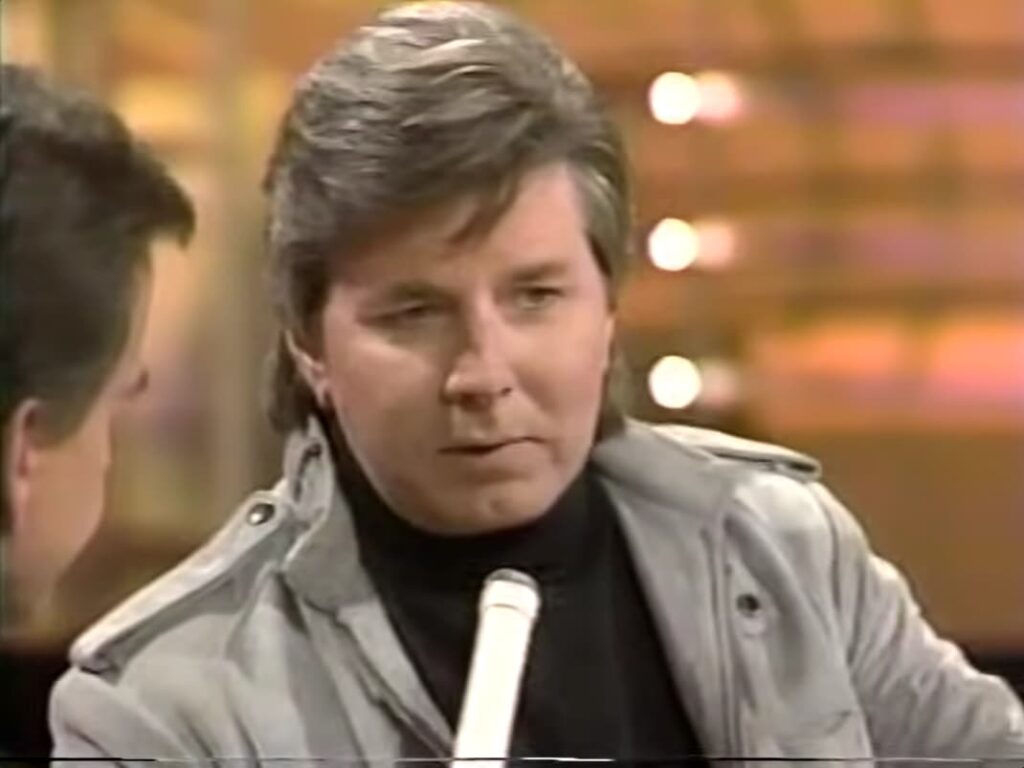
By February 1994, when Bobby Sherman appeared in a television interview reflecting on his life beyond the spotlight, the world had already long associated him with a different image—one of youthful charm, chart-topping hits, and the unmistakable glow of a late-1960s and early-1970s teen idol. Yet what unfolded in that interview was something far more profound than nostalgia. It was the story of transformation, of a man who had stepped away from fame at its peak and chosen a path defined not by applause, but by purpose.
At the height of his musical career, Bobby Sherman was one of the most recognizable faces in American pop culture. Songs like “Little Woman” (which reached No. 3 on the Billboard Hot 100 in 1969) and “Julie, Do Ya Love Me” (No. 5, 1970) cemented his place among the era’s most beloved performers. His albums, including “Here Comes Bobby” (1970), achieved gold status, and his presence on television—particularly in shows like Here Come the Brides—made him a household name. For many, his voice was part of everyday life, carried through transistor radios and living room television sets.
But by the mid-1970s, something began to shift.
While many artists of his stature continued to chase the momentum of fame, Sherman made a decision that, at the time, seemed almost unthinkable. He stepped away. Not abruptly, not dramatically—but with quiet intention. What followed was a second life, one far removed from the stage.
In that 1994 interview, viewers were introduced to a different man—calm, grounded, and deeply committed to his role as an EMT instructor for the LAPD. It was not a symbolic position or a passing interest. Sherman had undergone rigorous training, becoming a certified emergency medical technician, and later dedicating himself to teaching others how to save lives. In many ways, the discipline and empathy required in that field mirrored the emotional connection he once shared with audiences—but now, the stakes were infinitely more real.
What made the interview especially poignant was the inclusion of a vintage performance clip, a reminder of the life he had once lived. Watching the young Bobby Sherman on stage—full of energy, voice bright and clear—it was impossible not to feel the contrast. And yet, there was no sense of loss. Instead, there was continuity.
Because at its core, his journey was not about leaving something behind. It was about carrying forward the same sincerity into a different form of service.
The Betagems channel, which preserves various moments from his career—such as “Bobby Sherman 1970 primetime TV performance,” “Bobby Sherman March 1988 daytime TV performance,” and even “Bobby Sherman & Fabian 1983 Get Crazy scenes”—offers a broader view of that evolution. Each clip captures a different chapter: the rise, the transition, the quiet reappearance. Together, they form a mosaic of a life lived across two very different worlds.
There is something deeply reflective in revisiting these moments.
Because in an industry often defined by reinvention for the sake of relevance, Bobby Sherman’s story stands apart. He did not reinvent himself to remain in the spotlight. He reinvented himself to step away from it. And in doing so, he revealed a truth that resonates far beyond music: that fulfillment is not always found where the world is looking.
In that 1994 interview, there is a quiet dignity in the way he speaks. No regret. No longing for what once was. Only a steady awareness of what matters now.
And perhaps that is the lasting meaning behind his journey.
The songs remain—“Little Woman,” “La La La (If I Had You),” “Easy Come, Easy Go”—each one carrying echoes of a time when his voice defined a generation’s soundtrack. But beyond the music, there is something else that endures: the example of a life that chose depth over fame, service over applause.
In the end, the stage may have grown silent, but the impact did not fade.
It simply found a different audience—one measured not in numbers, but in lives quietly touched, and sometimes, quite literally, saved.