
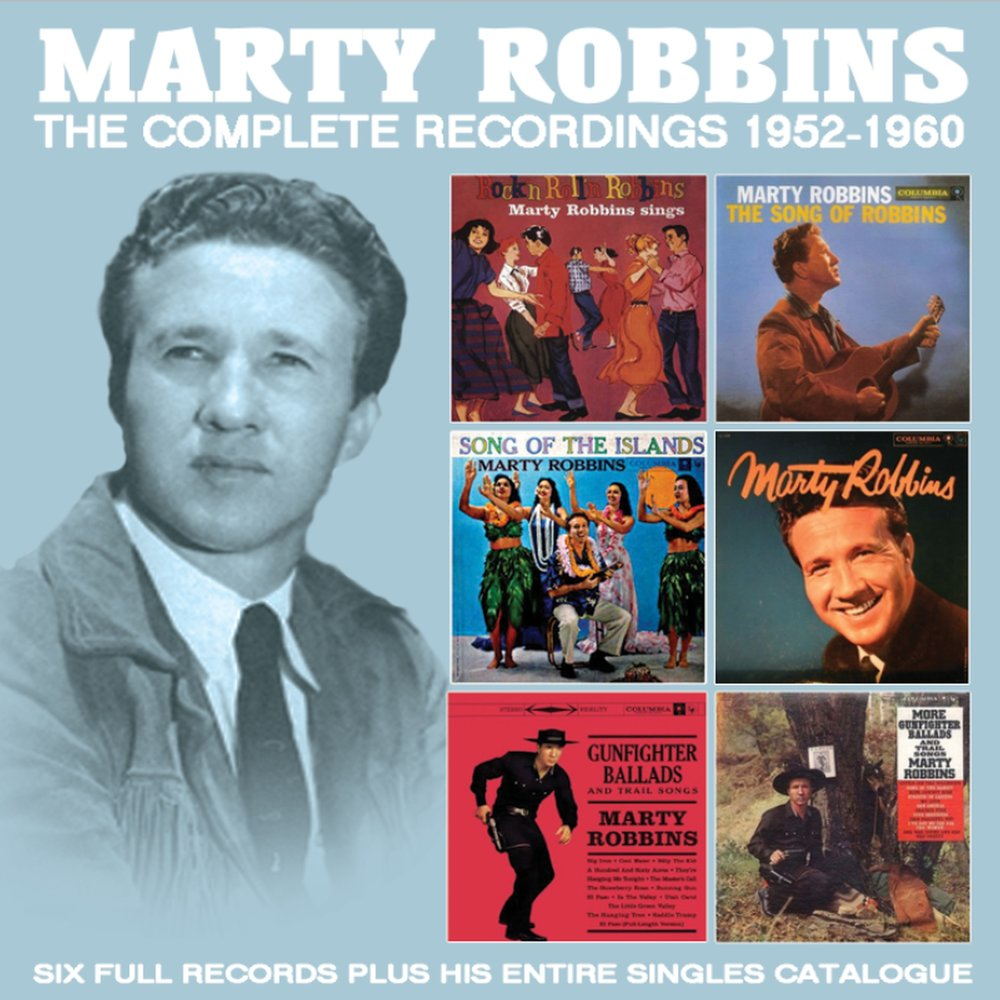
Marty Robbins – The Hanging Tree: When a Symbol of Death Becomes the Giver of New Life
Few songs are so instantly evocative of the danger and high stakes of the cinematic American West as “The Hanging Tree,” and when sung by the voice of Marty Robbins, it becomes an unforgettable piece of balladry. Unlike his self-penned gunfighter narratives, this track has a direct connection to Hollywood history, serving as the powerful theme song for the major 1959 Western film of the same name, starring Gary Cooper.
The significance of “The Hanging Tree” is immense, primarily due to its connection to the motion picture. It was performed by Marty Robbins over the opening credits of the 1959 film, instantly lending the project his gravitas and authenticity. As a single, released in 1959, it performed remarkably well, demonstrating its appeal to both country fans and the wider pop audience drawn in by the film. The song peaked at Number 15 on the U.S. Hot C&W Sides chart, and impressively crossed over to peak at Number 38 on the all-genre Billboard Hot 100 pop chart. This success not only confirmed Robbins‘s crossover appeal but cemented the song’s place in the popular imagination. Adding to its pedigree, the track—written specifically for the film—was nominated for an Academy Award for Best Song in 1960, an extraordinary honor that speaks to its quality and impact.
The composition was handled by Hollywood professionals: the music was scored by the great Max Steiner (who also scored the film), and the lyrics were written by the renowned songwriting duo Mack David and Jerry Livingston. Their collective genius was to craft a song that acts as a tight, metaphorical reference to the film’s complex narrative, using the image of the tree not just as a place of execution, but as a symbolic destination for the protagonist’s lost hopes. Marty Robbins‘s recording was so definitive that members of the Western Writers of America later recognized it as one of the Top 100 Western songs of all time.
The story embedded in “The Hanging Tree” is a poetic and condensed narrative about a man who comes to the rough gold rush town searching for wealth, but carrying the heavy burden of a lost dream of love. He initially places those cherished but painful dreams—his memories, his heart—on the Hanging Tree, a symbolic act of emotional self-execution to numb himself to further hurt. The song then details a sudden turn of fate: he finds gold and he finds a girl who loves him, but he can’t reciprocate, because his heart is still figuratively hanging on the limb. The climax is a dramatic confrontation over his gold that leads to him being dragged to the actual tree. In a moment of high irony and redemption, the brush with death and the subsequent act of salvation by his true love forces him to confront his past.
For the older listener, the profound meaning of “The Hanging Tree” lies in its beautiful transformation of a symbol of death into a Tree of Life. It speaks to the deeply human realization that true life requires vulnerability—you must almost die, or at least face your emotional demons, to be truly free to live and love. The narrator walks away from the tree not only physically free but emotionally redeemed, his love walking with him. Marty Robbins delivers the ballad with a chilling, cinematic drama that perfectly captures the harsh realities of the frontier and the powerful, saving grace of genuine love. It’s a timeless narrative that reminds us that sometimes, our greatest fears must be faced before we can embrace our greatest joys.
 Music Legend