
How Kenny Rogers Looked Back On A Difficult Childhood, A Life Built From Music, And The Song He Considered Greater Than Almost Any Other
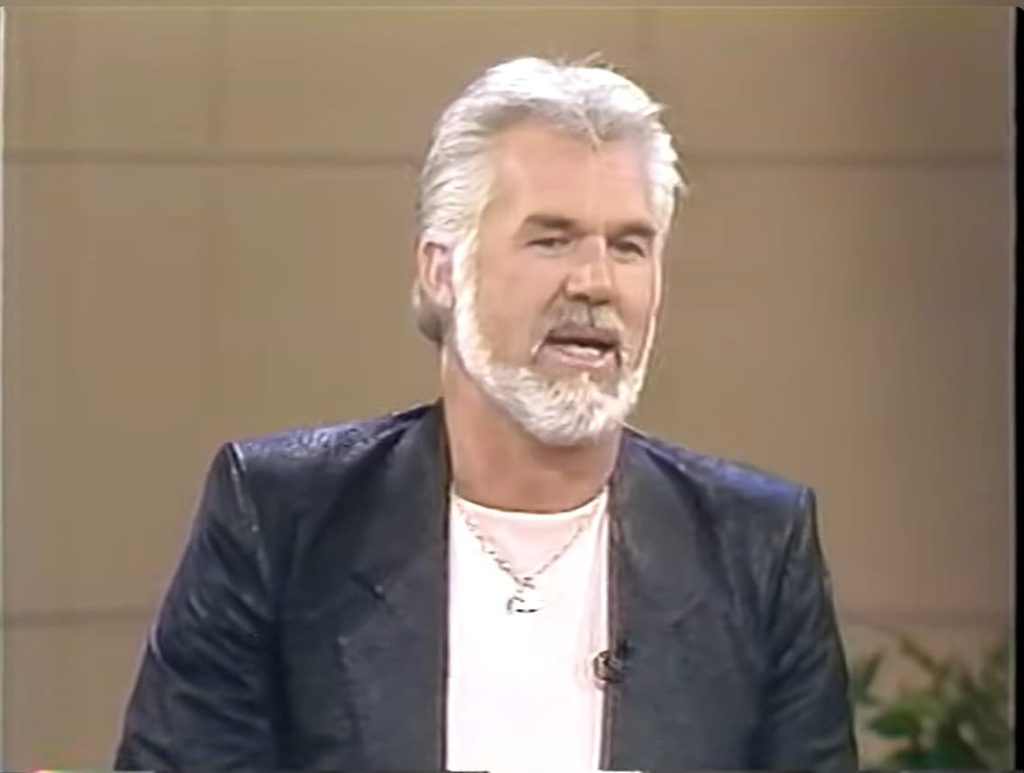
On October 7, 1986, Kenny Rogers appeared on The Phil Donahue Show at a fascinating point in his career. By then, he was no longer simply the country singer who had emerged from The First Edition. He had become one of the most recognizable voices in American popular music, with songs that crossed country, pop, adult contemporary and R&B audiences. Yet sitting across from Phil Donahue, Rogers spoke not only about the extraordinary success that had come to define his public life, but also about where he had come from. The contrast was striking. The man sitting in the television studio was a major international star, but the story behind him began in a much humbler place in Houston, Texas. Rogers was born in 1938, the fourth of eight children, and his family lived in the San Felipe Courts public housing project. During the interview, he explained that he was the first person in his family, “as far back as we know,” to graduate from high school.
That part of the conversation gives the appearance a meaning that goes far beyond a celebrity interview. Rogers remembered a childhood in which money was extremely limited. His father worked as a carpenter, and Rogers recalled that his father’s highest weekly income was around $75. The family sometimes ate peanut butter sandwiches because there was little else available, although Rogers also remembered that, as a child, he did not necessarily understand how difficult their circumstances were. That detail says something important about the way memory works. Hardship becomes part of childhood before a child has the vocabulary to call it hardship. Years later, when the same child has travelled around the world and sold millions of records, those early memories can suddenly look very different. Rogers had already lived through several musical lives by 1986, but he had never entirely left that Houston boy behind.
There was also a beautiful musical revelation during the interview. When Phil Donahue asked Rogers about his own favorite song, he chose “Lady”, the 1980 song written and produced by Lionel Richie. Rogers described it as being “head and shoulders above almost all the songs in the world.” Coming from a singer with such an enormous catalogue, the answer is revealing. “Lady” was not merely another successful single in his career. It represented one of the most important musical crossroads of his life. Richie came from R&B and soul, while Rogers had built his reputation in country, and their collaboration created something that lived comfortably between those worlds. Released in September 1980, “Lady” became Rogers’ only solo No. 1 on the Billboard Hot 100, remaining at the top for six weeks. It also reached No. 1 on the country and adult contemporary charts, making it one of the defining crossover records of the era.
What makes this television appearance particularly valuable now is its intimacy. There is no elaborate stage production surrounding Rogers, no giant concert audience, and no need to remind anyone that he was a star. Instead, there is a singer sitting in conversation, reflecting on the improbable distance between his childhood and the life he eventually built. By October 1986, his career had already included “Lucille,” “The Gambler,” “Coward of the County,” “Lady,” and his remarkable partnership with Dolly Parton on “Islands in the Stream.” He had become a bridge between musical worlds, someone who could enter a country audience, a pop audience or an adult contemporary setting without appearing to belong exclusively to any one of them. The Phil Donahue appearance captured something that photographs and hit records cannot: the personality behind the voice, and the memory of the man before the fame.
Looking back at the October 7, 1986 conversation today, perhaps the most moving part is not the list of achievements but the way Rogers could speak about them without losing sight of his beginnings. The boy from a Houston housing project had become a man whose songs were heard around the world, yet when asked to choose the song closest to his heart, he went back to “Lady,” a record born from an unexpected meeting between country and R&B. That choice feels almost symbolic of Kenny Rogers himself. His career was built on crossing boundaries, between genres, generations and audiences, while carrying the warmth of the place where it all began. The television cameras captured Kenny Rogers at a moment when his success was already enormous, but his story still sounded personal. And that is why this old Phil Donahue conversation feels less like a piece of celebrity television and more like a small window into the man behind one of America’s most familiar voices.