
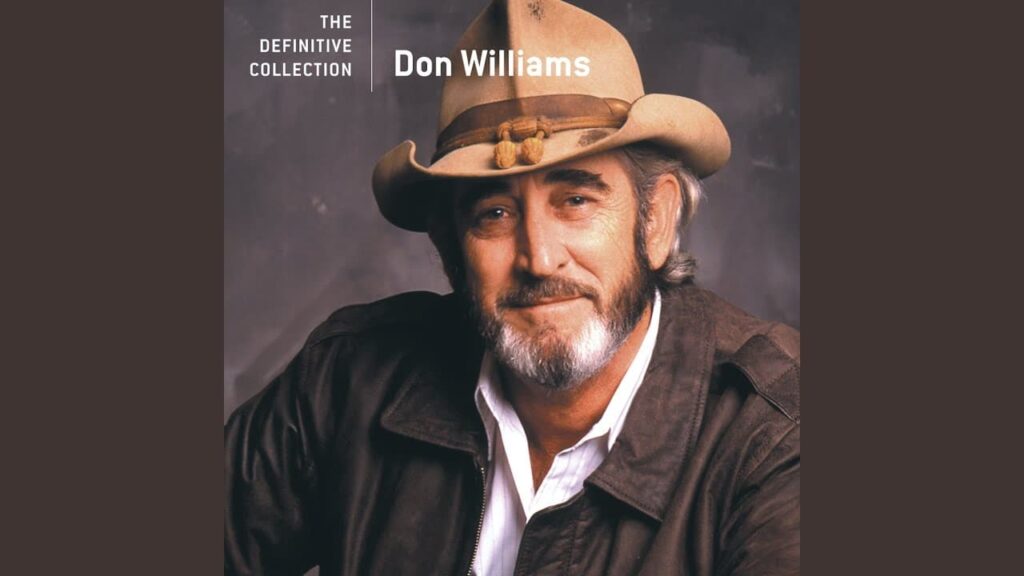
A Quiet Man from Texas Became a Voice an Entire Continent Chose to Carry in Its Heart
By the time Don Williams discovered just how deeply Africa loved him, he was already one of country music’s most recognizable voices in America. His warm baritone had carried songs like “Tulsa Time,” “I Believe in You,” and “Amanda” to the top of the charts, while albums such as Expressions, Especially for You, and I Believe in You established him as one of the defining figures of 1970s and 1980s country music. Yet even with multiple No. 1 hits and sold-out tours across the United States, there remained something Nashville never fully understood about Don Williams: somewhere thousands of miles away, across Africa, his music had quietly become woven into the emotional fabric of everyday life.
Unlike many American stars who intentionally pursued international crossover fame, Williams’ rise across African countries happened almost organically. His music traveled through radio broadcasts, cassette tapes passed hand to hand, roadside markets, taxi stereos, and family gatherings. Long before algorithms and streaming platforms connected global audiences, ordinary listeners across places like Nigeria, Kenya, Uganda, Zimbabwe, and South Africa had already embraced him as one of their own. And the remarkable part was not simply that they loved country music. It was that they recognized something profoundly familiar in Williams himself.
Part of this connection came from the emotional architecture of his songs. Don Williams never sang with theatrical excess. He sang plainly, patiently, almost conversationally. His music centered ordinary people: workers, fathers, lonely lovers, weary dreamers trying to make peace with life’s disappointments. In many African communities navigating political instability, economic hardship, and rapid social change during the 1970s and 1980s, that emotional honesty resonated deeply. Williams sounded trustworthy. His voice carried calm rather than ego. And in cultures where storytelling and emotional sincerity hold enormous value, listeners responded instinctively.
What makes this story so fascinating is how invisible it initially remained to the American music industry. Nashville understood Williams as a successful country artist, but not as a global cultural phenomenon. While flashy crossover stars often received international headlines, Williams quietly built one of the most emotionally loyal audiences any American country singer has ever known overseas. In some regions of Africa, his songs became so embedded in public life that they transcended genre entirely. People who never considered themselves “country music fans” still knew his voice intimately.
There are countless stories from African listeners describing how Williams’ music accompanied pivotal moments in their lives. Farmers played his records at sunrise before work. Bus drivers filled long rural journeys with his songs. Families gathered around radios late at night while his calm voice drifted through open windows. For many listeners, “Lord I Hope This Day Is Good” was not simply an American country song. It was a deeply personal prayer set to music. That universality explains why Williams’ connection to Africa endured across generations rather than fading as a temporary trend.
When Williams eventually performed before African audiences, the experience reportedly stunned him. Night after night, massive crowds sang every lyric back with astonishing intensity. Here was a man known in America for understated success suddenly realizing he had become something far larger elsewhere: a source of emotional continuity across an entire continent. And perhaps for the first time, Williams fully understood the true reach of his own music.
There is something profoundly moving about that realization because Don Williams himself always seemed slightly uncomfortable with celebrity mythology. He did not cultivate the image of a conquering superstar. He appeared almost surprised by fame throughout much of his career. That humility only strengthened the bond African audiences felt toward him. Unlike performers who projected distance or grandeur, Williams seemed approachable, almost familiar. His songs carried no sense of cultural superiority. They spoke the language of ordinary endurance.
In hindsight, Africa’s embrace of Don Williams reveals something larger about music itself. The songs that travel furthest are often not the loudest or most fashionable. They are the songs rooted in emotional truth simple enough for anyone, anywhere, to recognize. Williams sang about loneliness, hope, faith, regret, work, love, and quiet perseverance. Those themes do not belong to one nation. They belong to humanity.
And perhaps that is why the story feels so powerful today. While Nashville measured success through charts and awards, millions across Africa had already decided something even more important. They had taken the voice of a soft-spoken man from Texas and transformed it into part of their own collective memory.
Long before the industry fully realized it, Don Williams had not merely found international fans.
He had found another home.
 Oldies Songs