
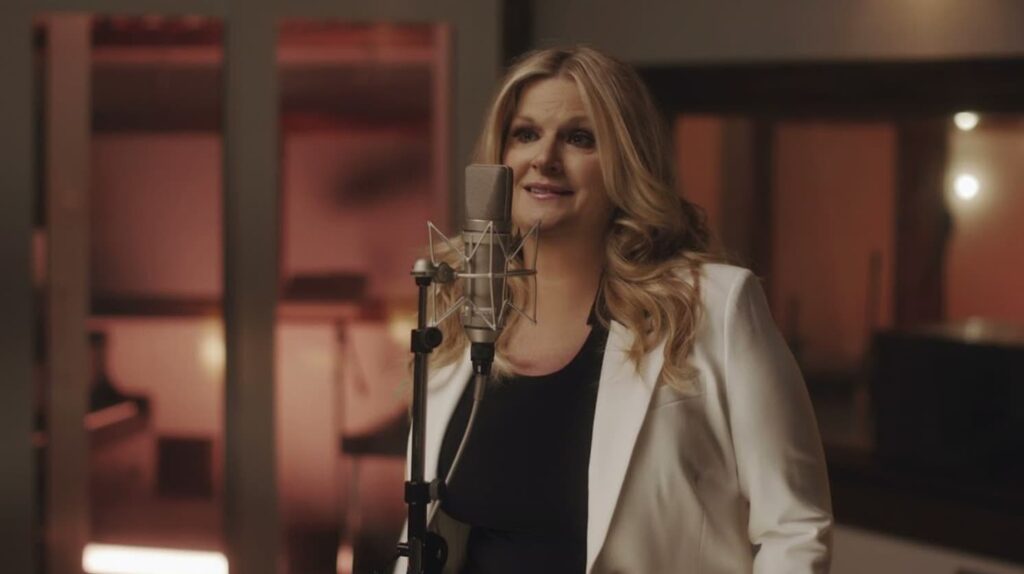
Trisha Yearwood – She’s In Love With The Boy: The Timeless Story of How Love Triumphs Over Daddy’s Doubt
There are certain songs that don’t just launch a career; they launch an era. Trisha Yearwood’s debut single, “She’s In Love With The Boy,” released in March 1991, is precisely one of those defining moments. This track is a joyous, buoyant piece of storytelling that immediately announced the arrival of one of country music’s most essential voices, a singer who possessed both power and the wisdom of a trusted confidante. The song is not merely about young love; it’s a profound, multigenerational fable about destiny, defiance, and the cyclical nature of family life that resonates deep within the soul of anyone who ever had to prove their choice of partner to a skeptical parent.
The immediate success of this single was historic. Upon its release, it climbed swiftly and beautifully, peaking at Number 1 on the Billboard Hot Country Singles & Tracks chart in August 1991. What makes this achievement so remarkable is that it made Trisha Yearwood the first female country artist since 1964 to reach the top of the chart with her debut single. The song’s massive popularity cemented her place immediately, leading her self-titled debut album, Trisha Yearwood, to peak at Number 2 on the Top Country Albums chart and make history again as the first debut album by a female country artist to sell one million copies (earning a Platinum certification) in two decades.
The heart of “She’s In Love With The Boy” lies in the brilliant songwriting of Jon Ims, who crafted a narrative so relatable it feels lifted right from a small-town photo album. The story centers on Katie and Tommy, two teenagers whose simple, pure love is complicated by Katie’s father, who sees Tommy as nothing more than a “hay-seed plowboy who didn’t have a row to hoe.” This classic parental disapproval sets the stage for the song’s most memorable, and most moving, moment.
The true genius of the song comes in the bridge, when Katie’s mother intervenes after the father sternly confronts the late-arriving couple. The mother’s quiet defense is a moment of pure, clear-eyed realization, reminding the stubborn father that he and she were once the very same couple: “My daddy said you wasn’t worth a lick / When I was seventeen and you were twenty-one.” The meaning here is universal and deeply touching: the passions and doubts of youth are simply inherited, and the same stubborn love that forged the parents’ marriage is now guiding the daughter. The mother’s final, reflective line, “What’s meant to be will always find a way,” is a comforting, profound truth that allows us older listeners to smile knowingly, recalling our own battles for true love.
For those of us who came of age during that time, this song is the sound of a new, confident female voice in country music—a voice that brought sophisticated, heartfelt storytelling back to the forefront. It’s a nostalgic anthem of independence, a gentle rebellion packaged in a bright, mid-tempo groove. It wasn’t just a hit; it was a cultural mirror, reflecting the enduring power of a steadfast heart.