
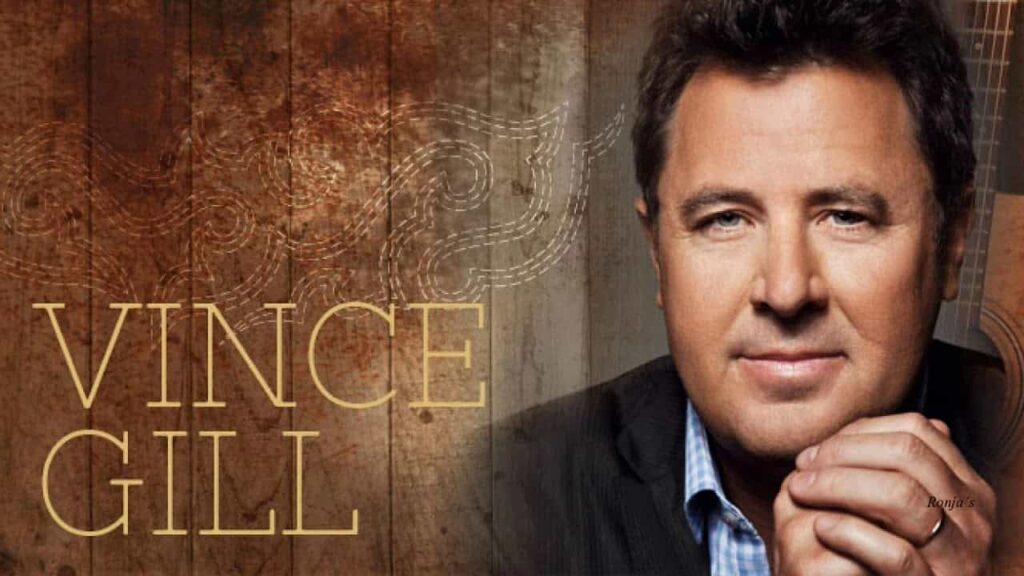
A quiet, steadfast love illuminated through time, carried by a voice that understood devotion in its most human form.
Released in 1991, “Look at Us” emerged as one of Vince Gill’s most deeply felt and enduring ballads, issued as a standout track from his album Pocket Full of Gold. Upon its debut, the song began a slow, graceful climb up the U.S. country charts, ultimately reaching No. 4 on the Billboard Hot Country Singles & Tracks chart. That achievement modest on paper, profound in impact marked the moment it became something far more lasting than a radio hit. Almost immediately, listeners recognized it as a modern classic: a soft-spoken anthem of commitment, aging love, and the quiet, daily tenderness that keeps two people standing together through the years.
From the very first bars, “Look at Us” announces itself not with grandeur but with restraint. The gentle guitar lines played with a careful touch by Gill himself create a frame of simplicity around a subject that is anything but simple: the endurance of love across decades. What gives the song its unmistakable emotional weight is the sincerity of Gill’s voice. His delivery is warm yet unguarded, almost conversational, as though he is drawing the listener into a private moment, asking them not just to hear the words but to remember what devotion feels like.
The story behind the song makes that intimacy even more striking. Gill co-wrote “Look at Us” with Max D. Barnes, a legendary Nashville writer known for capturing emotional truths without dramatization. At the time, Gill was reflecting deeply on the marriages, long friendships, and lived relationships around him those couples who had weathered storms together, who had stayed when others left, and who understood that love is built day by day. “Look at Us” was born from that meditation: not from heartbreak, not from fantasy, but from the very real, very human work of holding on.
Its music video added another layer of authenticity. Rather than casting actors, Gill chose real couples many of them older whose faces carried the marks of shared years. The effect was profound: viewers saw not romance performed, but romance lived. That choice added to the song’s legacy, connecting it directly to anniversaries, weddings, vow renewals, and quiet family gatherings where love is honored not with spectacle but with gratitude.
Over the decades, “Look at Us” has become one of Vince Gill’s signature works, performed countless times in venues where emotion mattered far more than volume. Audiences often fell silent when the opening notes began. Many recognized themselves or someone they loved in its lyrics: the endurance, the compromise, the soft persistence that makes a relationship last. Gill’s vocal phrasing, unhurried and compassionate, allowed listeners to step into their own memories, whether joyful, reflective, or bittersweet.
At its core, “Look at Us” is a meditation on partnership. It does not idealize love; it honors it. It reminds us that devotion is not measured in grand gestures but in shared mornings, familiar hands, and the simple decision to stay. For many, the song has served as a mirror reflecting the quiet victories of love that survives: not untouched by hardship, but strengthened by it.
More than thirty years after its release, the ballad continues to resonate with listeners who know what it means to build a life with someone. In a world that often moves too quickly, “Look at Us” remains a gentle, steady voice reminding us of what truly endures: two people choosing each other, again and again, across all the seasons of their lives.
 Music Legend
  Oldies Songs