
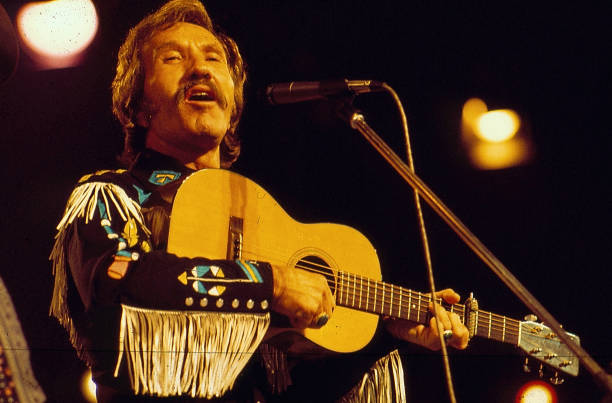
Marty Robbins – A Man And His Music: The 1981 Opry Special
The year 1981 was a significant one for Marty Robbins. Just a year before his untimely passing, he took to the stage of the Grand Ole Opry for a televised celebration titled “A Man and His Music.” While the title was later used for a definitive 1991 compilation album, the 1981 concert remains a holy grail for fans—a high-definition look at a legend who, despite health challenges, remained the undisputed master of the stage. This was Marty at his most seasoned, flanked by stars like Barbara Mandrell, proving that his “velvet” voice hadn’t lost an ounce of its magic.
To watch the 1981 performance is to see a man who knew he was a part of history. The context of this show is deeply poignant. By the early 80s, Marty had survived multiple heart attacks and was a pioneer of the “Outlaw” spirit long before it had a name. This concert wasn’t just a setlist of hits; it was a victory lap. Recorded at the Opry House in Nashville, it captured Marty in a rare moment of reflection, balancing his playful, “joking” stage persona with the soul-shattering sincerity of his ballads.
The setlist of this era was a breathtaking journey through his multi-faceted career:
- The Gunfighter Medley: No Robbins concert was complete without the “Big Three”—“El Paso,” “Big Iron,” and “The Hanging Tree.” In 1981, he performed these with a dramatic flair that made the audience feel the desert heat and the smell of gunpowder.
- The Mandrell Collaboration: One of the highlights of the special was his medley with Barbara and Louise Mandrell. Together, they breezed through “Tonight Carmen,” “Cool Water,” and “El Paso,” showcasing Marty’s ability to harmonize with the best in the business.
- The Crossover Classics: He revisited the songs that made him a pop superstar, like “A White Sport Coat (And a Pink Carnation)” and “Don’t Worry,” reminding everyone that he was the original king of the “Nashville Sound.”
The profound meaning of this 1981 appearance resonates with a mature audience because it represents the endurance of the artist:
- A Final Standing Ovation: For those who saw it at the time, there was a sense that we were witnessing something rare. It reflects a nostalgia for the “Golden Age” of televised country specials, where the focus was on the song and the singer’s charisma.
- The Mastery of Transition: Marty moved effortlessly from the high-lonesome sound of his early days to the polished crooning of his later years. It honors a career that refused to be put in a box, celebrating a man who was as comfortable in a NASCAR driver’s seat as he was in a tuxedo.
- The Living Legend: In 1981, Marty was already a member of the Country Music Hall of Fame. This concert served as a living monument to his influence, showing a younger generation how a true pro commands a room.
Marty Robbins in 1981 was a man who had nothing left to prove but everything left to give. His voice had a rich, woody resonance that only comes with age and experience. When he looked into the camera, he wasn’t just singing to a lens; he was singing to every fan who had bought a record since 1951. The arrangement featured his tight, longtime touring band, characterized by that signature “tick-tack” bass and the soaring, weeping steel guitar that defined his sound. For our generation, the 1981 “A Man and His Music” performances are the ultimate souvenir; they remind us that a great voice never truly fades—it just becomes a part of the wind.
 Music Legend