
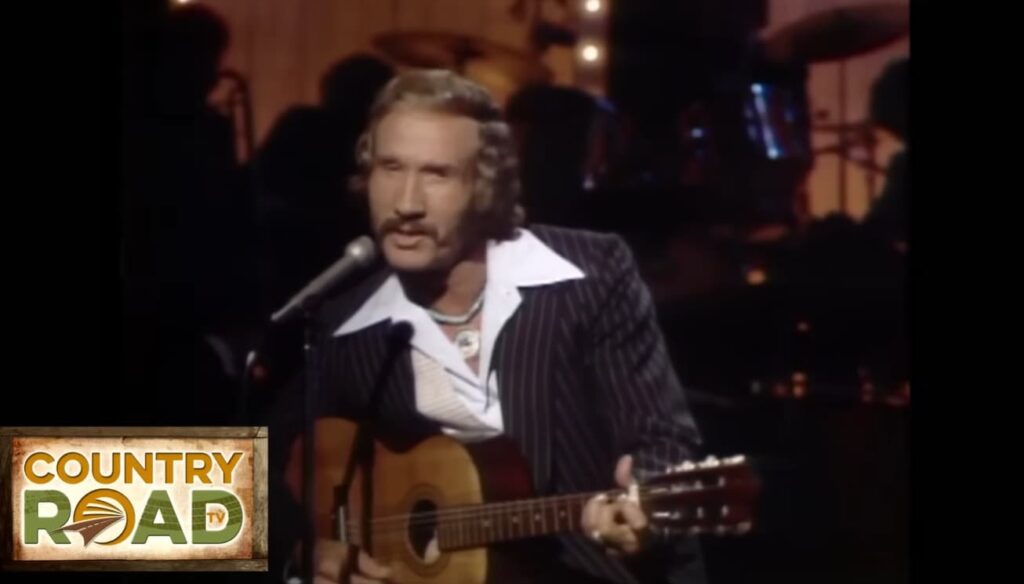
Marty Robbins – the Eddy Arnold Influence: A “High-Fidelity” Meeting of Two “Gentle Giants”
In the sophisticated, gold-tinged landscape of the Nashville Sound, the intersection of Marty Robbins and the music of Eddy Arnold stands as a definitive “high-level” masterclass in “velvet” authority. While Marty never released a formal tribute album titled “Marty Robbins Sings Eddy Arnold,” his career was a rhythmic exploration of the polished, crossover style that Arnold—the “Tennessee Plowboy”—had pioneered. For those of us who have followed these two icons through the decades, hearing Marty revisit Arnold’s signature hits is a visceral revelation of “The Truth” found in the narrative song. It captures a “high-fidelity” moment where two of the most crystalline voices in the industry share a common, soulful language.
The “story” behind Marty’s interpretation of Arnold’s material is a masterclass in the “mini-movie” style of vocal respect. A prime example is Marty’s later-career rendition of “Chained to a Memory,” a song originally popularized by Arnold. Marty’s delivery is a study in “velvet” authority; he navigates the “twists and turns” of the melody with a rhythmic timing that honors the original while adding his own crystalline tenor. It was an era where the industry was moving toward a point of absolute, “high-level” sophistication, and Marty proved he was a “vocal chameleon” capable of inhabiting the smooth, sophisticated psyche that Arnold had crafted. He showed that a song about the heavy weight of the past didn’t need to be shouted; it simply needed the impeccable phrasing and soulful sincerity of a master.
For the sophisticated listener who has navigated the “highways and byways” of several decades, hearing Marty’s take on these classics today is a deeply evocative experience. It brings back memories of wood-paneled dens, the soft glow of a record player’s light, and the realization that as we reach our silver years, the voices that defined the Nashville Sound are the treasures that remain. The performance speaks to a “qualified” reader who understands that true resilience is found in the ability to bridge the gap between tradition and innovation. For those of us who have seen the seasons turn, this musical connection is a profound mirror of our own history and the quiet dignity of a generation that valued authentic, “velvet” storytelling above all else.
The meaning of Marty Robbins revisiting Eddy Arnold’s repertoire lies in its unapologetic celebration of a “velvet” legacy. Both men possessed the unique, almost magical gift of being able to bridge the gap between country and pop with total, soulful power. As we reflect on these recordings today, through the lens of our own decades of experience, we see them as more than just covers; they are a testament to the enduring power of the narrative song to capture the subtleties of the human spirit. The Master Storyteller may have eventually moved on to another trail, but in the shimmering, rhythmic notes of these performances, the influence of the “Tennessee Plowboy” remains eternally clear.
 Music Legend