
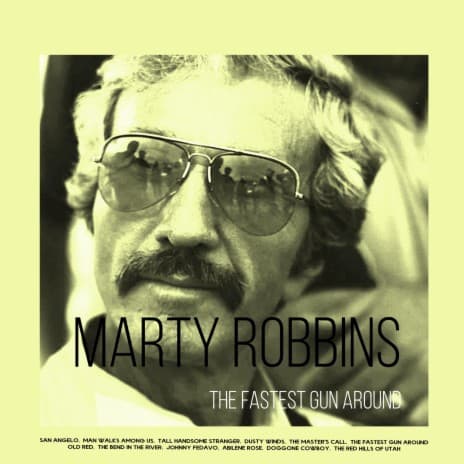
Marty Robbins – Do Me a Favor: A Tender, Heart-Wrenching Request for a Merciful End to a Fading Love
There are moments in the twilight of a relationship when the truth becomes too heavy to bear, and the only thing left to ask for is a little bit of kind deception or a swift, clean break. Marty Robbins, a man whose voice could carry the weight of a thousand heartbreaks with the grace of a summer breeze, captured this exact sentiment in his 1972 masterpiece, “Do Me a Favor.” For those of us who have lived through the quiet transitions of the early 1970s—a time when country music was finding a sophisticated, polished soul—this song remains a poignant reminder of how a simple plea can hold a lifetime of unspoken sorrow.
Released in June 1972 as the lead single from his album I’ve Got a Woman’s Love, the song was an immediate testament to Marty Robbins’ enduring relevance. It climbed steadily to reach Number 10 on the Billboard Hot Country Songs chart, proving that even as the musical landscape was shifting toward a more “Country-Pop” sound, the “Country Gentleman” could still command the room. The album itself, released under the Columbia Records label, showcased a man at the height of his vocal powers, moving away from the dusty trails of the gunfighter and into the intimate, smoke-filled rooms of adult heartbreak.
The story behind “Do Me a Favor” is one of profound emotional fatigue. Written by the talented Don Gibson, a man who truly understood the “lonesome” in lonesome country music, the song explores the final, desperate negotiations of a man who knows he is losing. The “favor” in question is a heartbreaking request: “Do me a favor, and tell me you love me, even if you have to lie.” It is a staggering admission of vulnerability. For an older audience, these lyrics strike a chord of recognition. We understand that sometimes, the cold, hard truth is overrated, and in the final moments of a long-held love, a gentle lie can be a form of mercy—a way to keep the world from shattering just for one more night.
Marty Robbins’ delivery of this track is nothing short of surgical in its precision. His voice, that legendary “velvet baritone,” navigates the melody with a restrained power. He doesn’t shout his pain; he whispers it into the arrangement’s lush strings and soft piano. This was the era of the “Nashville Sound” reaching its most refined peak, and Marty was its most capable architect. When he sings the line, “Tell me that you’ll never leave me,” you don’t just hear a singer; you hear a man holding onto the last threads of his dignity. It is a song that values the “hush” over the “holler,” reflecting a maturity that resonates deeply with those who have weathered their own storms of the heart.
As we look back on this era of Marty Robbins’ career, “Do Me a Favor” stands as a sophisticated bridge. It connects the raw emotion of the 1950s honky-tonk to the polished introspection of the 70s. For the listener who remembers the crackle of a new vinyl record on a Saturday evening, this song is a time capsule. it evokes a period when songs were allowed to be slow, thoughtful, and unashamedly sentimental. It is a masterclass in the art of the “tear-jerker,” delivered by a man who understood that the greatest stories aren’t always found on the battlefield or the frontier, but in the quiet, desperate corners of a lonely heart. Listening to it today, we aren’t just hearing a chart-topper from 1972; we are revisiting a moment of shared human experience, a reminder that the favors we ask in love are often the ones we need the most to survive.