
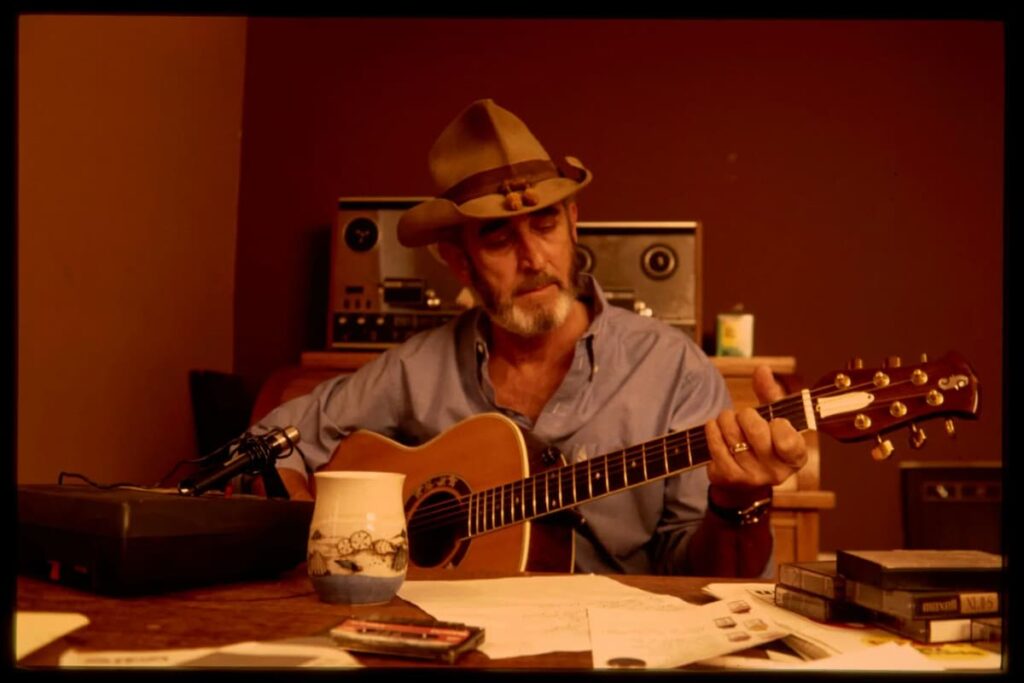
Don Williams Walked Away from the Stage the Same Way He Sang: Quietly, Honestly, and Without Regret
When Don Williams announced his retirement from touring in 2016, there was no dramatic farewell campaign, no grand final spectacle designed to stretch goodbye into a commercial event. The man country music had long called “The Gentle Giant” stepped away from the spotlight with the same calm dignity that had defined his entire career. For many fans, the silence surrounding that decision felt almost startling in an entertainment industry built on constant visibility. But for Williams, choosing home over one last attempt at spectacle was not surprising at all. It was perhaps the most truthful final statement he could have made.
By then, Don Williams had already accomplished more than enough to justify legendary status. Across four decades, he collected seventeen No. 1 country hits, sold millions of records worldwide, and became one of the most emotionally beloved voices in modern country music. Albums such as Harmony, Expressions, and Especially for You helped shape the sound of country radio throughout the 1970s and 1980s, while songs like “Tulsa Time,” “Amanda,” “I Believe in You,” and “Lord I Hope This Day Is Good” became woven into the personal histories of listeners across generations.
Yet unlike many stars who spend their careers chasing permanence, Williams often seemed strangely detached from fame itself. He performed because he loved music, not because he needed adoration. Even at the height of his success, there was an unmistakable humility about him, as though he never entirely believed celebrity mattered as much as the industry insisted it did. That emotional groundedness became central to his connection with audiences. Fans trusted him because he never appeared to be performing a version of himself.
As the years passed and health concerns made touring increasingly difficult, Williams faced a choice many aging performers struggle to confront. He could continue extending appearances out of obligation, nostalgia, or financial incentive. Or he could quietly return to the ordinary life that had always mattered more to him than the machinery of stardom. True to character, he chose the latter.
That decision carried enormous emotional weight precisely because it reflected the themes embedded throughout his music. Don Williams never glorified excess or ambition for its own sake. His songs consistently returned to simpler emotional truths: love, faith, family, exhaustion, loneliness, and the search for peace within everyday life. Unlike artists who built identities around rebellion or self-destruction, Williams built his legacy around emotional steadiness. In many ways, retiring to spend more time at home was not a departure from his artistry. It was the final expression of it.
There is something deeply moving about an artist refusing to turn goodbye into spectacle. Modern entertainment culture often treats retirement as performance itself, complete with farewell tours, emotional branding, and endless attempts to preserve public attention. Williams resisted all of that. His departure felt personal rather than promotional. He simply let the music stand on its own.
And perhaps that restraint is exactly why his absence feels so profound today.
Listeners did not merely lose a singer when Don Williams stepped away. They lost a rare kind of emotional presence. His voice had accompanied people through decades of private struggles: long nights, difficult marriages, uncertain futures, moments of spiritual doubt, and moments of fragile hope. Songs like “Lord I Hope This Day Is Good” became far more than radio hits. They became quiet companions during life’s hardest seasons.
What made Williams extraordinary was his ability to comfort without exaggeration. He never pushed emotion aggressively toward the listener. He trusted simplicity. His warm baritone carried the emotional authority of someone who understood suffering but had learned not to dramatize it. That subtlety created an unusually intimate relationship with audiences. Many fans felt less like they admired him and more like they knew him.
When he finally retreated from public life, that intimacy made the goodbye feel personal. Yet there was also something beautiful about the way he left. He did not cling desperately to relevance. He did not attempt to outlast time. Instead, he chose peace, privacy, and home, the very values his music had celebrated all along.
In retrospect, the ending seems almost inevitable.
Don Williams spent his entire career reminding people that quietness was not weakness, that gentleness could carry enormous strength, and that ordinary emotional honesty mattered more than spectacle.
So when the final spotlight arrived, the “Gentle Giant” simply turned away from it.
And walked home.
 Oldies Songs