
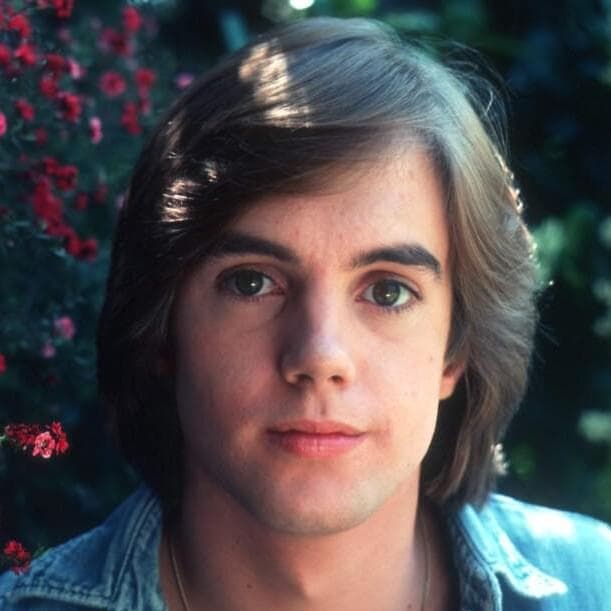
A fleeting portrait of youthful longing, captured at the exact moment before innocence quietly gives way to memory
Released in 1978, “Teen Dream” occupies a reflective and often overlooked corner of Shaun Cassidy’s recording career. Issued as a single from his album Born Late, the song reached No. 24 on the Billboard Hot 100, a respectable showing that belied its deeper emotional intent. While it never rivaled the chart dominance of his earlier hits like “Da Doo Ron Ron”, “Teen Dream” revealed a more introspective artist, one already aware that youth is not only lived forward, but remembered backward.
By the late 1970s, Shaun Cassidy stood at a crossroads. He was widely known as a pop idol and television star, yet behind the surface image was a singer beginning to question the meaning of that very label. “Teen Dream” arrived during this moment of quiet transition. It was not a song designed to shout. It was designed to linger.
Musically, “Teen Dream” leans into soft rock and melodic pop, built on gentle piano lines, restrained rhythm, and a smooth arrangement that allows emotion to surface without urgency. The production reflects the era’s warmth, but it avoids excess. There is a sense of space throughout the track, as if the song itself is pausing to reflect on what it is describing. Nothing feels rushed, because memory never is.
Lyrically, the song speaks from a place of distance rather than immediacy. This is not a celebration of teenage life as it happens, but a meditation on how it is remembered. The dreamlike quality suggested by the title runs through every line. Youth is portrayed as something already slipping away, even as it is being recalled. There is sweetness here, but also awareness. The song understands that what once felt endless was, in fact, brief.
Shaun Cassidy’s vocal performance is one of the most important elements of “Teen Dream.” His voice is calm, reflective, and notably restrained. Gone is the exuberant energy that defined his earlier chart toppers. Instead, he sings as if looking back through a window, describing moments that cannot be returned to, only understood. That tonal shift marked a quiet maturation, one that did not always receive immediate recognition but has grown more meaningful with time.
The album Born Late, from which “Teen Dream” was taken, reinforced this change in direction. The record leaned more heavily into adult pop and singer songwriter sensibilities, moving away from the teen focused sound that had initially defined Cassidy’s success. In this context, “Teen Dream” feels almost autobiographical. It reads as an acknowledgment of an era ending, both personally and culturally.
The story behind the song aligns closely with its emotional message. By 1978, the intensity of Cassidy’s early fame had begun to recede. The screaming crowds were quieter. Expectations were changing. “Teen Dream” does not resist that shift. Instead, it accepts it with grace. The song suggests that youth does not disappear suddenly. It fades gradually, becoming memory long before it is recognized as past.
At the time of its release, the song may have seemed understated compared to the louder pop trends of the era. Yet that understatement is precisely what allows it to endure. “Teen Dream” does not demand attention. It invites reflection. It understands that the most meaningful moments are often recognized only after they have passed.
Today, listening to “Teen Dream” feels like opening an old notebook filled with half remembered thoughts and familiar emotions. The song resonates not because of nostalgia alone, but because of its honesty. It acknowledges that growing older involves carrying versions of oneself forward, each shaped by moments that can no longer be revisited.
In the broader arc of Shaun Cassidy’s musical legacy, “Teen Dream” stands as a quiet but essential chapter. It captures the moment when youthful certainty gives way to reflection, when dreams are no longer lived instinctively but remembered thoughtfully. It is a song that understands time, and more importantly, respects it.