
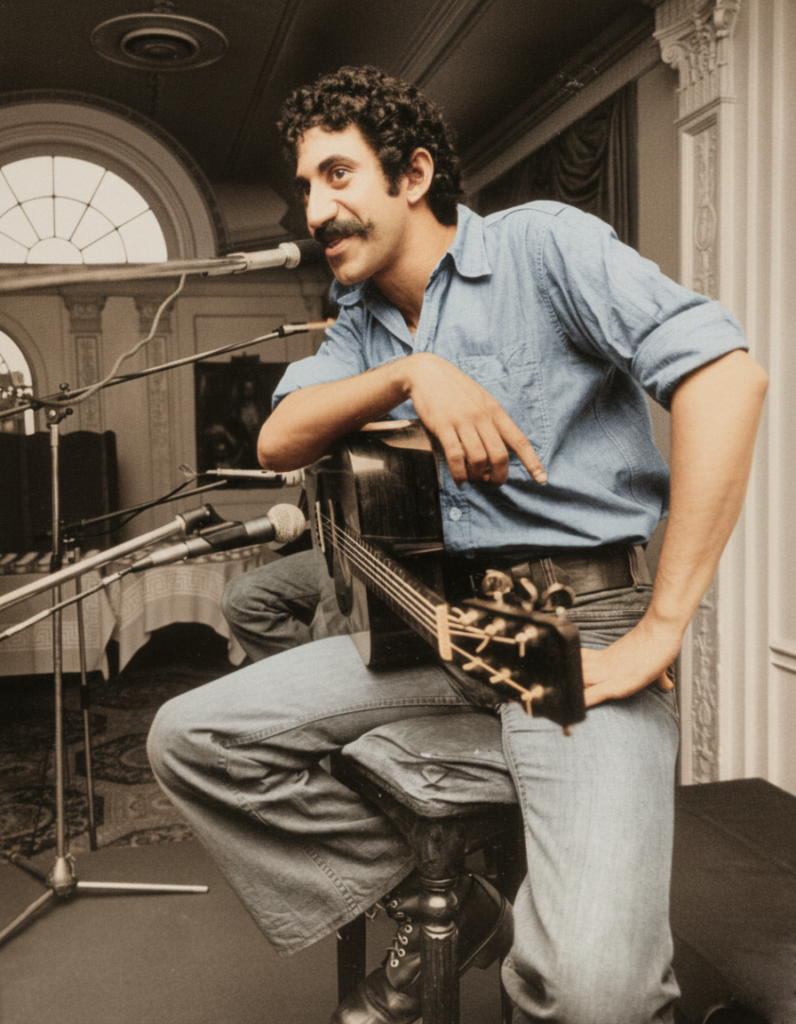
A Quiet Confession Set to Melody, Where Love Finds Its Most Honest Voice
Released in the autumn of 1973, “I’ll Have to Say I Love You in a Song” stands as one of the most tender and intimate moments in the catalog of Jim Croce, arriving just weeks after his sudden and tragic death. The song appeared on the album I Got a Name, which was issued posthumously and quickly became both a commercial success and an emotional farewell. Upon its release as a single, the song reached No. 9 on the Billboard Hot 100 in early 1974 and climbed to No. 1 on the Billboard Adult Contemporary chart, confirming that Croce’s quiet honesty resonated deeply with listeners at a time when the world was still absorbing the loss of his voice.
What makes “I’ll Have to Say I Love You in a Song” remarkable is not only its chart performance, but the deeply personal story behind it. Jim Croce wrote the song for his wife, Ingrid Croce, during a moment of emotional distance. By his own admission, he was not always comfortable expressing affection through conversation. Words spoken aloud could fail him, become tangled, or arrive too late. Music, however, never betrayed him. The song was written as an apology of sorts, a recognition that for some people, the truest emotions are best delivered through melody rather than speech. This was not a grand gesture or a dramatic declaration. It was a soft confession, one that acknowledged human frailty with grace and humility.
Musically, the song reflects Croce’s mature songwriting style at its most restrained. Built around a gentle acoustic guitar, subtle piano accents, and a warm, unhurried tempo, the arrangement allows the lyrics to breathe. There is no excess, no attempt to impress. Croce’s voice carries a conversational warmth, as if he is sitting across the room, speaking quietly so as not to disturb the moment. This simplicity is deceptive. Beneath it lies a carefully crafted balance between vulnerability and reassurance. The song never pleads, never dramatizes. It simply explains.
Lyrically, “I’ll Have to Say I Love You in a Song” explores the gap between feeling and expression. Croce admits that he struggles to say the words directly, not because the love is lacking, but because it is so deeply felt that ordinary language feels insufficient. This sentiment struck a powerful chord with listeners, particularly those who had lived long enough to understand that love is often shown in actions, patience, and quiet presence rather than constant declarations. The song speaks to relationships shaped by time, compromise, and understanding, rather than youthful urgency.
The placement of this song on I Got a Name is especially poignant. The album also includes the title track “I Got a Name”, which became Croce’s final Top 10 hit during his lifetime. Together, these songs form a portrait of an artist who had reached a point of clarity, both musically and personally. Croce was no longer chasing trends or commercial formulas. He was writing with the calm confidence of someone who knew who he was and what mattered to him.
In retrospect, the song has taken on an added layer of meaning. Knowing that Jim Croce would not live to see its success, listeners often hear it as a final message, not only to his wife, but to the world he left behind. It is not a song about loss, yet it carries the weight of absence. It reminds us that some of the most important things are said quietly, and sometimes too late.
Today, Jim Croce remains celebrated not for spectacle, but for sincerity. “I’ll Have to Say I Love You in a Song” endures because it understands something timeless: that love does not always arrive loudly. Sometimes it comes softly, wrapped in melody, asking only to be listened to carefully.
 Oldies Songs