
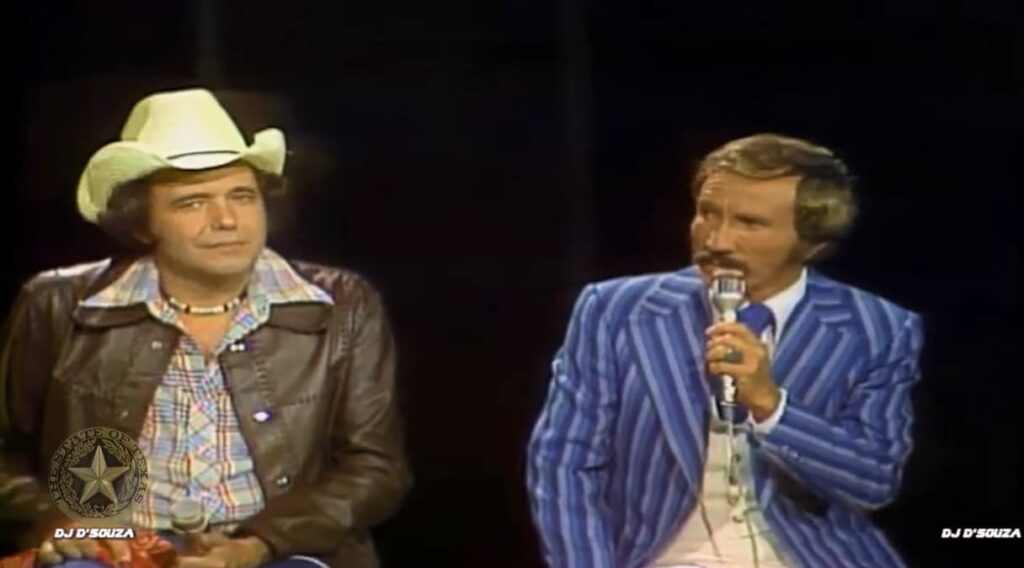
Bobby Bare and Marty Robbins on The Marty Robbins Show: A Meeting of the Storyteller and the Balladeer
For those of us who have spent our Sunday evenings tracing the maps of our lives through the songs on the radio, there was no finer place to find a home than in the presence of Bobby Bare and Marty Robbins. When Bobby Bare stepped onto the stage of The Marty Robbins Show—particularly during their memorable interactions in the late 1960s and again in the late 70s—it felt as though two old friends had just pulled up a pair of rocking chairs on a porch to trade truths. While Marty Robbins was the flamboyant, velvet-voiced king of the Western ballad, Bobby Bare was the “Storyteller,” a man whose voice carried the dust of the road and the wisdom of someone who had seen it all. Together, they represented the soulful, introspective heart of Nashville’s most creative era.
The historical significance of Bobby Bare’s guest appearances, such as in the classic Season 2, Episode 2, is a treasure for any true student of the genre. At the time, Bare was a powerhouse of the RCA roster, known for hits like “Detroit City” and “500 Miles Away from Home,” which had solidified his place as the voice of the American drifter. When he joined Marty, the chemistry was instantaneous. The “story” of their collaboration is one of mutual rebellion against the “rhinestone” expectations of the industry. Both men were fiercely independent; Marty with his diverse musical interests ranging from Hawaiian to NASCAR, and Bobby with his penchant for “bare” (pun intended) and honest storytelling. Their time together on screen was a celebration of that shared spirit—a moment where the cameras caught a genuine, unforced camaraderie that defined the “outlaw” spirit long before it had a name.
For the mature viewer, watching Bobby Bare on the Spotlight stage with Marty evokes a profound sense of nostalgia. It reminds us of a time when a song wasn’t just a melody, but a three-minute movie. Bare’s delivery—natural, conversational, and deeply empathetic—paired perfectly with Marty’s polished, operatic style. When they joked together, it was the laughter of men who had shared the same tour buses and the same stages for decades. It speaks to a generation that values the “long-standing friendship” over the fleeting fame of a modern duet. It reminds us that behind the glitz of the stage lights, there were real men with real stories, leaning on each other to keep the music honest.
The meaning of their performance lies in the raw, “drifter spirit” that Bobby Bare brought to the show. He was the poet of the common man, singing for those who felt like “Detroit City” wasn’t quite home. When he and Marty shared a microphone, they were harmonizing not just with their voices, but with their shared history. For those of us in the twilight of our years, these performances are a validation of our own journeys—the departures, the homecomings, and the friends we made along the way.
Musically, the sessions were stripped of unnecessary ornamentation. Whether they were performing a medley of Bare’s narrative hits or a spontaneous cover of a folk standard, the focus was on the lyrics. Marty’s ability to listen was as impressive as his ability to sing; he gave Bobby the room to let the stories breathe.
Reflecting on these episodes today, we see the true “Spotlight” of country music. It wasn’t just about the stars; it was about the light they shared. Bobby Bare and Marty Robbins gave us a glimpse into a Nashville that was a small town of big talents, where the best part of the show was simply seeing two legends enjoy each other’s company. For the reflective heart, their time together remains a warm, glowing ember in the fireplace of our memories.
 Music Legend