
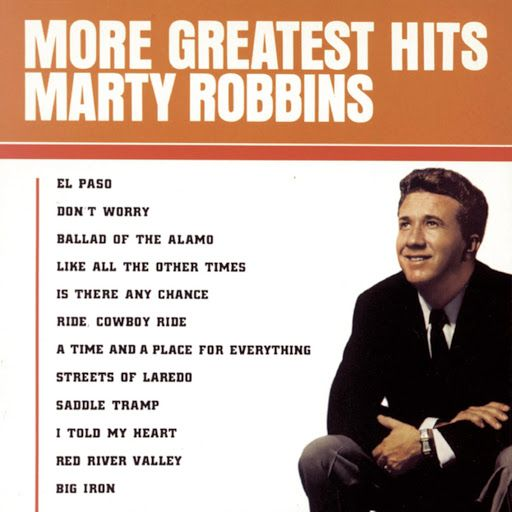
Marty Robbins – Way Out There: A High-Lonesome Echo from the Canyon Walls
In the autumn of 1959, Marty Robbins released what is arguably the most influential country album of all time: Gunfighter Ballads and Trail Songs. While “El Paso” and “Big Iron” became the towering giants of that record, his rendition of “Way Out There” stands as the album’s spiritual soul. It is a song that captures the “high-lonesome” essence of the American West—a place where the land is vast, the sky is infinite, and the only companion is the sound of one’s own voice bouncing off the rocks. It is a song for the wanderer who finds more comfort in the howl of a coyote than the noise of a city.
For the reader who has spent a lifetime appreciating the rugged beauty of the open road or the quiet dignity of the outdoors, this track is a profound nostalgic trigger. Marty Robbins, with a voice that could soar like an eagle over a mountain pass, delivers a performance that is both technically brilliant and emotionally grounding. For the mature listener, “Way Out There” represents the ultimate freedom—the ability to leave the “shackles” of civilization behind and disappear into the horizon. There is a deep, resonant peace in hearing Marty’s voice, reminding us of the times we’ve felt small under a canopy of stars, realizing that “out there” is often where we find our truest selves.
The story behind the song connects Marty to the very roots of Western music. Written by the “pioneer” of the singing cowboys, Bob Nolan of The Sons of the Pioneers, the song was already a classic by the time Marty touched it. However, Marty stripped away the traditional group harmonies and turned it into a solo journey. In 1959, recording at Bradley Film & Recording Studio, Marty used his incredible vocal range to mimic the yodel of the lonely herder. He understood that this song wasn’t just about the lyrics; it was about the atmosphere. By keeping the instrumentation sparse, he allowed the “echo” of the West to become a character in itself.
The lyrical meaning of “Way Out There” lies in its celebration of solitude. The narrator describes a life of “wandering under the stars” and listening to the “wind in the pines.” For those of us looking back through the lens of many decades, the song speaks to the “pioneer spirit” that many of our generation still carry—the desire for a simpler life where a man’s worth is measured by his resilience and his connection to the earth. When Marty breaks into the yodel, his voice carries a “crying” quality that isn’t sad, but rather a joyful expression of being one with the wild.
Musically, the track is the gold standard for Traditional Western Ballads. It features:
- The “Clip-Clop” Acoustic Rhythm: A steady, percussive guitar style that perfectly mimics the gait of a horse on a trail.
- Marty’s Masterful Yodeling: A display of breath control and pitch that few modern singers could hope to replicate, shifting from a chest voice to a head voice with seamless grace.
- Minimalist Production: The absence of drums or heavy strings ensures that the listener feels the “dry heat” and the “wide-open space” of the desert.
To listen to this track today is to appreciate the “Cowboy” in Marty Robbins. He reminds us that even in a world of concrete and steel, there is still a part of the human spirit that belongs “way out there.” It is a song that invites us to tip our hats to the sunset, take a deep breath of mountain air, and find solace in the magnificent silence of the wilderness.
 Music Legend