
A Song About Speed, Escape, and the Quiet Cost of Chasing Dreams — “Silver Dream Machine” as a Reflection of Motion and Memory
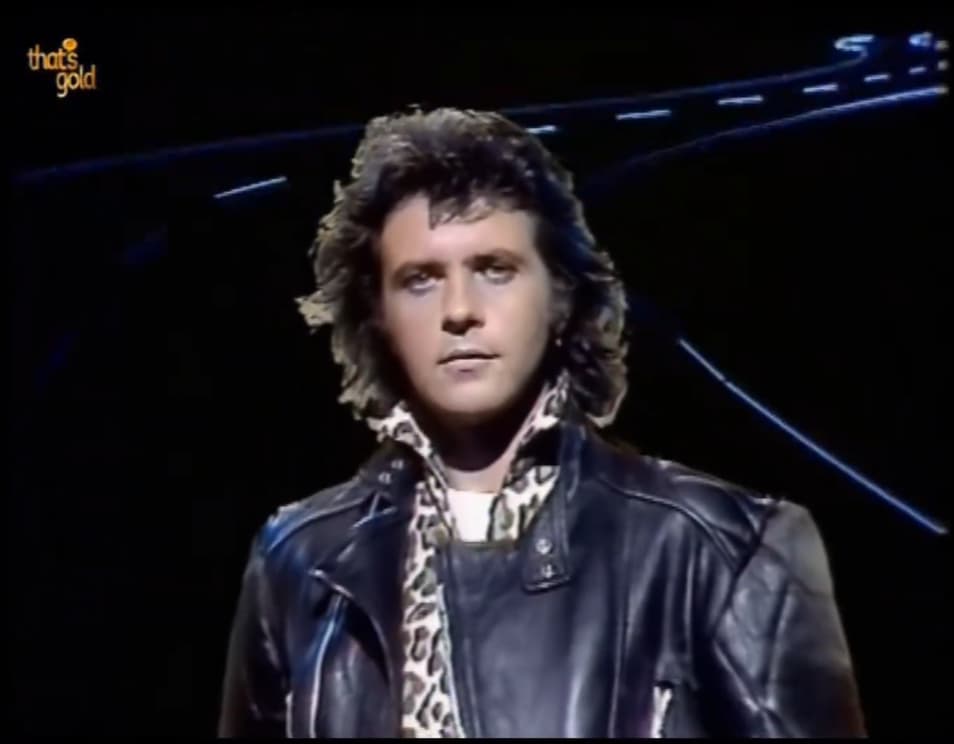
When David Essex performed “Silver Dream Machine” on The Kenny Everett Video Show (Season 3, Episode 5, March 17, 1980), he was not simply presenting a hit single to a television audience. He was revisiting a moment that had already carved its place into the closing years of the 1970s, a song that carried with it both the thrill of movement and the quiet loneliness that often follows.
Released in 1979 as part of the soundtrack to the film Silver Dream Racer, in which David Essex also starred, “Silver Dream Machine” quickly became one of his most recognizable late-decade successes. The single reached No. 4 on the UK Singles Chart, reaffirming Essex’s enduring appeal in a musical landscape that was rapidly shifting toward new wave and post-punk sounds. While trends changed, his voice—distinct, slightly husky, and unmistakably human—remained grounded in storytelling.
At first listen, “Silver Dream Machine” feels like a celebration of speed and freedom. The rhythm moves forward with determination, almost mimicking the hum of an engine on an open road. The melody rises with a sense of urgency, as if always reaching for something just beyond sight. It is easy to hear it as a song about motion, about the exhilaration of leaving everything behind.
But as with many of David Essex’s most enduring works, the surface tells only part of the story.
Beneath the driving tempo lies a deeper reflection on the nature of ambition. The “silver dream machine” itself becomes more than a literal object. It transforms into a symbol—of dreams pursued, of distances traveled, and perhaps of the realization that not every destination brings the peace one imagines.
By the time of this 1980 television performance, there is already a subtle shift in how the song is delivered. Essex, no longer the young man chasing recognition, carries himself with a greater sense of awareness. His vocal phrasing is more measured, less urgent, as though he understands the cost behind the momentum the song celebrates.
There is something particularly intimate about performances on The Kenny Everett Video Show. The setting does not overwhelm the artist. It allows space for personality, for nuance. In this environment, “Silver Dream Machine” sheds some of its cinematic scale and becomes more personal, more reflective.
One begins to notice the pauses between lines, the slight restraint in delivery, the way certain phrases linger just a moment longer than expected. These are not accidental choices. They suggest a reinterpretation, a quiet acknowledgment that the dream once chased at full speed may look different when viewed from a little further down the road.
The origins of the song in Silver Dream Racer also add an important layer to its meaning. The film itself centers on risk, obsession, and the pursuit of a singular goal, themes that echo clearly in the lyrics. Yet, when separated from the narrative of the film and placed into a live performance setting, the song becomes less about the story on screen and more about the universal experience it represents.
Everyone, at some point, has had their own “silver dream machine”—something pursued with intensity, something believed to hold the promise of fulfillment.
And just as often, there comes a moment of reflection.
That is what makes this 1980 performance so quietly powerful. It is not simply a recreation of a recent hit. It is an early glimpse of an artist beginning to look at his own work with a different perspective. The energy is still there, but it is tempered by something more enduring: understanding.
What remains most striking is how the song continues to resonate decades later. Not because of its chart success, though reaching No. 4 in the UK was no small achievement, but because of the feeling it leaves behind.
“Silver Dream Machine” captures that delicate balance between movement and stillness, between desire and reflection.
And in David Essex’s voice, especially in this moment preserved on The Kenny Everett Video Show, it becomes clear that some songs are not just about where we are going.
They are about what we carry with us long after the journey has begun.