
A Proud Salute to the Dignity of Labor and the Country Soul That Refuses to Bend
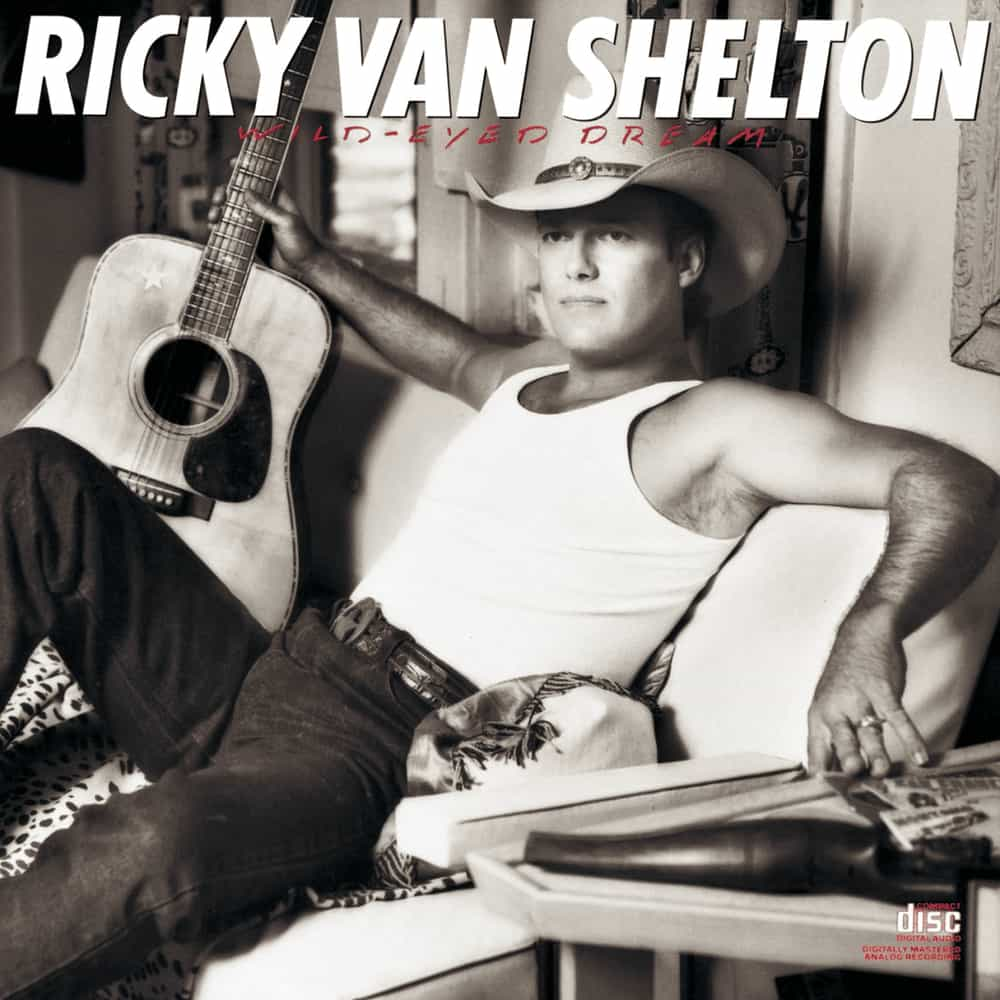
When Ricky Van Shelton released his version of “Working Man Blues” on his debut album Wild-Eyed Dream in 1987, he was not merely revisiting a classic. He was stepping into a lineage. The song itself was written and first recorded by Merle Haggard in 1969, reaching No. 1 on the Billboard Hot Country Singles chart that same year. Nearly two decades later, Shelton’s recording did not chart as a single, yet it carried symbolic weight. It announced that a new traditionalist voice had arrived in Nashville, one deeply rooted in the Bakersfield grit that Haggard himself helped define.
By the time Wild-Eyed Dream was released in 1987, Ricky Van Shelton had already begun turning heads. The album would ultimately produce four No. 1 hits on the Billboard Hot Country Singles chart, including “Somebody Lied” and “Life Turned Her That Way.” His interpretation of “Working Man Blues” was not pushed to radio as a single, but it stood as a declaration of artistic allegiance. Shelton aligned himself with the working class ethos and stripped down authenticity that had shaped country music in the 1960s and 1970s.
To understand Shelton’s recording, one must first revisit Merle Haggard’s original. Released during a turbulent period in American history, Haggard’s “Working Man Blues” spoke directly to blue collar pride. Its narrator is a man who finds identity in labor, who measures his worth not in luxury but in responsibility and endurance. The song’s driving rhythm, sharp Telecaster accents, and confident vocal delivery embodied the Bakersfield Sound, a raw alternative to the polished Nashville productions of the era. It was both a protest and a celebration, quietly political yet intensely personal.
When Shelton approached the song in 1987, country music was once again at a crossroads. The Urban Cowboy wave of the early 1980s had softened the genre with pop influences and synthesizers. But by the mid to late 1980s, a revival of traditional country values was taking shape. Artists like George Strait and Randy Travis were steering the genre back toward steel guitars and storytelling. Shelton’s debut album fit squarely within that movement. His version of “Working Man Blues” was respectful, measured, and vocally controlled. Where Haggard’s voice carried a rebellious spark, Shelton’s tone conveyed steadiness and reverence.
The production on Wild-Eyed Dream allowed the instrumentation to breathe. The steel guitar and fiddle framed Shelton’s baritone without overwhelming it. He did not attempt to outdo Haggard. Instead, he honored him. That choice revealed much about Shelton’s artistic temperament. He understood that certain songs belong not to one era but to an ongoing conversation within country music. By including “Working Man Blues” on his debut, Shelton positioned himself as a custodian of tradition rather than a reformer.
The song’s meaning remains enduring. At its core, “Working Man Blues” affirms the dignity of honest labor. It acknowledges fatigue yet refuses self pity. It celebrates providing for family without romanticizing hardship. In Shelton’s hands, the song feels less defiant and more reflective. It becomes a nod to the men and women who rise early, punch the clock, and carry responsibilities quietly. There is no bitterness in his delivery. There is pride.
In retrospect, Shelton’s decision to record this song on his first album appears almost prophetic. Throughout the late 1980s and early 1990s, he would build a career defined by sincerity and traditionalism. Songs such as “Statue of a Fool” and “I’ll Leave This World Loving You” reinforced his reputation as a vocalist who respected country’s emotional architecture. Including Merle Haggard’s anthem on Wild-Eyed Dream signaled that he understood the shoulders upon which he stood.
Today, revisiting Shelton’s rendition invites reflection on country music’s cycles. Styles evolve, production trends shift, but certain truths remain constant. The working man’s story continues to resonate. And through artists like Ricky Van Shelton, that story is passed forward with humility and care.
 Music Legend