
A Tender Confession of Love and Longing Hidden Behind Youthful Pop Shine
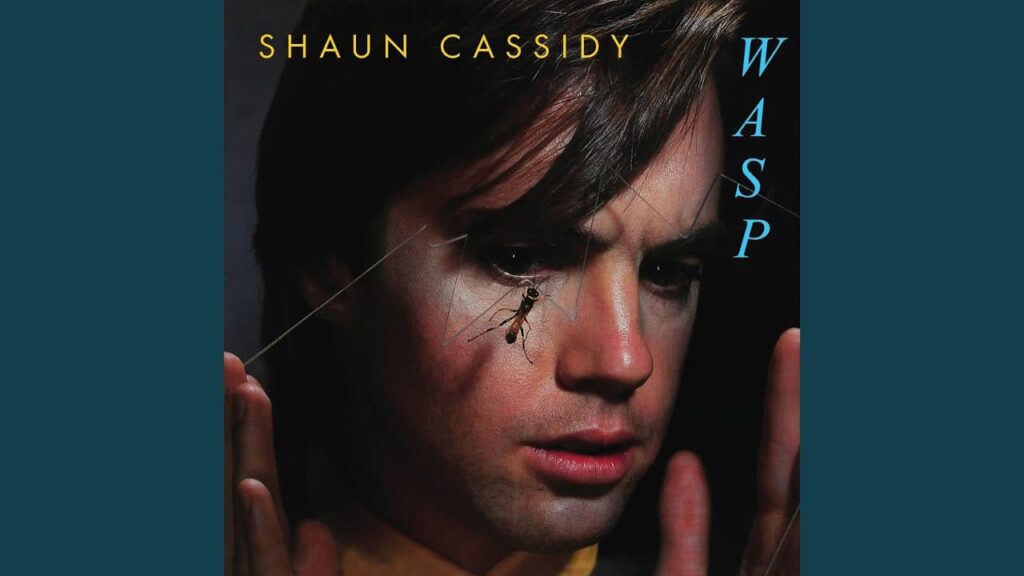
When Shaun Cassidy released “Pretending” in 1977 as part of his self-titled debut album Shaun Cassidy, he was not merely delivering another catchy pop single for the late 1970s teen market. He was giving voice to a theme as old as love itself — the fragile uncertainty of unspoken feelings. The song became one of the standout tracks from an album that reached No. 6 on the Billboard 200, while Cassidy himself quickly rose to national prominence with multiple chart successes during that remarkable year. Although “Pretending” was not the highest-charting single from the album — that distinction belongs to his No. 1 hit “Da Doo Ron Ron” — it remains one of the more emotionally resonant recordings of his early career.
Written by Barry Mann and Cynthia Weil, two of the most respected songwriters of the Brill Building era, “Pretending” carried with it a pedigree of classic pop craftsmanship. Mann and Weil had already shaped the sound of the 1960s with songs recorded by The Righteous Brothers and The Animals. By the time Cassidy recorded their composition, the song had already been performed by other artists, but his 1977 version introduced it to a new generation, wrapped in polished production and a voice that balanced innocence with yearning.
At first listen, “Pretending” feels simple — almost disarmingly so. The arrangement is clean, driven by gentle guitars and steady percussion, allowing Cassidy’s vocal to remain front and center. Yet beneath that simplicity lies emotional complexity. The lyrics tell the story of someone caught between friendship and love, forced to hide deeper feelings behind a mask of casual indifference. It is about standing close to someone while quietly aching for more. That quiet ache is what gives the song its staying power.
In 1977, pop music was shifting rapidly. Disco was rising, rock was diversifying, and youth culture was changing shape. Amid those transitions, Shaun Cassidy emerged as one of the defining teen idols of the era. His image appeared on magazine covers and bedroom walls, yet songs like “Pretending” hinted that beneath the glossy surface was a young performer capable of emotional nuance. His vocal performance avoids melodrama. Instead, he delivers the lines with restrained vulnerability, as if carefully guarding the very feelings the song describes.
There is something timeless about the theme of “Pretending.” Many have known the experience of loving quietly, of smiling outwardly while carrying private hope. The song captures that universal moment when the heart moves faster than courage. It does not shout. It does not plead. It confesses softly.
Looking back, the success of Shaun Cassidy in 1977 was not accidental. His debut album produced multiple hit singles and solidified his presence on the charts. Yet beyond statistics and chart placements, what remains is the emotional imprint of songs like “Pretending.” They remind us of a time when pop music still allowed space for innocence, when vulnerability could be wrapped in a three minute melody and broadcast across AM radio.
Today, “Pretending” feels less like a relic of teenage fandom and more like a gentle reminder of first loves and cautious hearts. It stands as part of a brief but bright chapter in late 1970s pop — a chapter where sincerity, however softly spoken, still mattered deeply.