
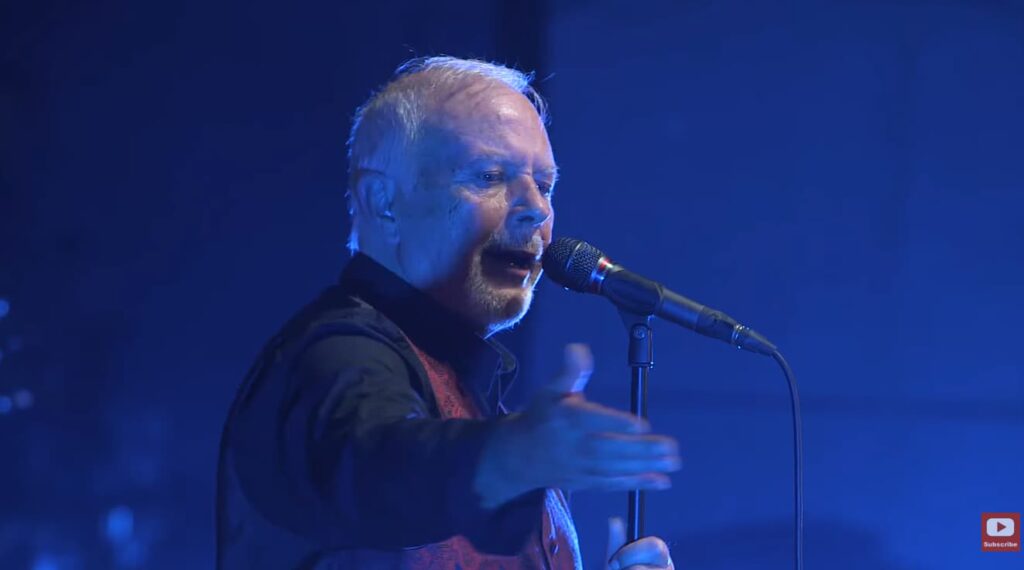
A veteran voice returns to the stage—“Oh What a Circus” becomes a triumphant reflection on legacy, theatre, and the enduring power of performance.
When David Essex stepped onto the stage during his 2022 UK tour to perform Oh What a Circus, the moment carried more than the excitement of a live concert. It was the sound of a long musical journey coming full circle. The song itself holds a remarkable place in British music history, first released in 1978 as part of the celebrated stage musical Evita, written by composer Andrew Lloyd Webber and lyricist Tim Rice.
Originally recorded by David Essex for the concept album Evita, “Oh What a Circus” quickly became a major success. In 1978, the single climbed to No. 3 on the UK Singles Chart, proving that a theatrical piece from a musical could capture the imagination of mainstream audiences. It was an unusual hit in many ways: a dramatic, storytelling-driven composition that blended rock energy with theatrical grandeur. Yet Essex’s passionate performance turned it into something deeply accessible.
The song serves as the opening narrative voice of the Evita story, sung by the character Che, who reflects on the massive public reaction to the death of Argentina’s First Lady Eva Perón. Rather than simply mourning her passing, the lyrics observe the spectacle surrounding the event—questioning fame, political power, and the strange relationship between public figures and the crowds that idolize them. The phrase “Oh what a circus” captures that tension perfectly. It is both admiration and criticism, awe and skepticism wrapped into one unforgettable line.
David Essex was already a well-known figure in British pop culture when he recorded the song. His earlier hits like Rock On (which reached No. 3 on the UK Singles Chart in 1973 and No. 5 on the Billboard Hot 100 in the United States) had established him as a charismatic performer with a distinctive voice. But “Oh What a Circus” revealed another dimension of his artistry. It showed that Essex could command a theatrical narrative just as effectively as a rock stage.
Fast forward more than four decades to 2022, and the song still carries its dramatic force. During the UK tour, Essex’s live performance of “Oh What a Circus” felt less like a nostalgic revival and more like a seasoned storyteller revisiting a chapter of his life. The voice may have matured, softened by time, yet it gained something deeper in return: experience. The song’s themes—fame, spectacle, and the fleeting nature of public adoration—resonate even more strongly when sung by someone who has lived through decades of changing musical landscapes.
On stage, the performance often unfolds with quiet confidence. The audience already knows the story behind the song, yet the first notes still draw attention instantly. As the melody builds, Essex moves effortlessly between reflection and drama, allowing the lyrics to carry their original theatrical weight. The crowd responds not just with applause, but with recognition. Many remember hearing the song when it first climbed the charts in the late 1970s.
In that moment, the distance between past and present seems to disappear.
What makes “Oh What a Circus” remarkable is that it never belonged to a single era. It began as part of a theatrical experiment that redefined modern musical storytelling. It became a pop hit in 1978, a surprising crossover between stage and radio. And decades later, it remains a compelling live performance piece that continues to captivate audiences.
For David Essex, performing the song today feels almost symbolic. It represents the intersection of rock stardom, theatre, and a lifetime spent on stage. The themes embedded in the lyrics—public spectacle, admiration, and the strange theatre of fame—have only grown more relevant with time.
Listening to “Oh What a Circus” during the 2022 tour is like watching history gently echo through music. The song once described the drama surrounding a legendary public figure, yet it also quietly reflects the long career of the performer who sings it.
And when the final lines fade into applause, the meaning becomes clear.
The circus may change. The crowds may come and go.
But the music—and the voice that carries it—still knows how to command the stage.