
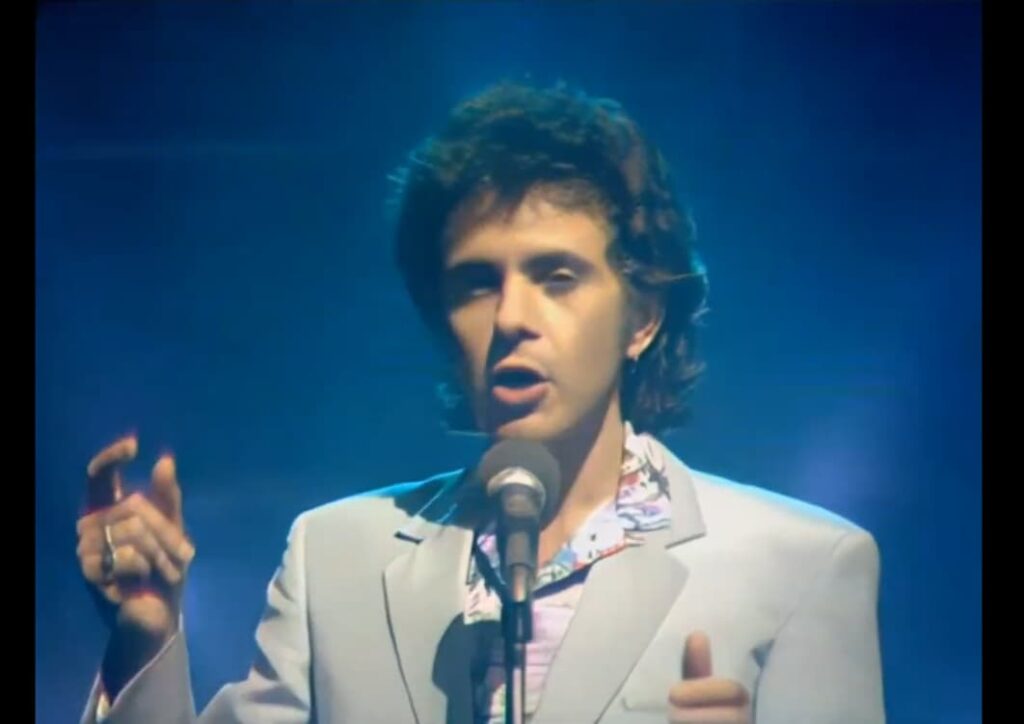
A rock ’n’ roll revival on television “Be-Bop-A-Lula” becomes a joyful bridge between the rebellious spirit of the 1950s and the glittering pop era of the 1970s through David Essex’s unforgettable performance.
In 1977, when David Essex stepped onto the stage of The David Essex Show to perform the rock ’n’ roll classic Be-Bop-A-Lula, the moment felt like a musical time machine. The television audience watching at home was suddenly transported back to the electrifying birth of rock ’n’ roll, when the genre first shook the foundations of popular music two decades earlier.
The song itself carries a remarkable history. “Be-Bop-A-Lula” was originally written and recorded by Gene Vincent in 1956, with songwriting credit shared with Sheriff Tex Davis. Released by Capitol Records, the track became an immediate sensation, climbing to No. 7 on the Billboard Hot 100 and reaching No. 5 on the Billboard R&B chart. More importantly, it sold over a million copies and helped define the rebellious energy of early rock ’n’ roll. Vincent’s cool, slightly dangerous vocal delivery and the hypnotic rhythm guitar created a sound that influenced generations of musicians.
By the mid-1970s, rock music had evolved dramatically. Glam rock, progressive rock, and polished pop productions dominated the charts. Yet artists like David Essex still carried a deep affection for the raw spirit of the earlier rock era. Essex himself had become a major star during that decade, thanks to hits such as Rock On, which reached No. 3 on the UK Singles Chart in 1973 and later climbed to No. 5 on the Billboard Hot 100 in the United States. His distinctive voice—somewhere between theatrical drama and rock swagger—made him a natural performer on television as well as on stage.
The David Essex Show, broadcast by the BBC between 1977 and 1978, became a vibrant showcase of Essex’s musical influences. Rather than presenting only his own hits, the program allowed him to celebrate the roots of rock and pop music. Covering “Be-Bop-A-Lula” on the show was therefore more than a nostalgic gesture. It was a tribute to the artists who first sparked the musical revolution that eventually shaped Essex’s own career.
When Essex performed the song on television in 1977, he approached it with both respect and personality. The arrangement preserved the familiar rockabilly rhythm that made the original recording so distinctive, yet his vocal interpretation added a slightly theatrical flair. His performance did not attempt to imitate Gene Vincent. Instead, it celebrated the spirit of the song while allowing Essex’s charismatic stage presence to shine.
There is something deeply symbolic about hearing “Be-Bop-A-Lula” performed during the late 1970s. By that time, rock ’n’ roll had already passed through several generations of change. New sounds and styles had emerged, yet the simple magic of those early songs remained powerful. When Essex sang the famous refrain, it reminded audiences that the roots of modern rock music were still alive beneath all the glitter and production of the era.
The song itself carries a playful, almost mysterious lyric. Unlike many later rock songs, its words do not tell a complicated story. Instead, they capture a feeling—youthful excitement, a hint of romance, and the thrill of rebellion. The phrase “Be-bop-a-lula” may not have a literal meaning, but its rhythm perfectly reflects the carefree spirit of early rock ’n’ roll.
For viewers watching The David Essex Show in 1977, the performance felt like a celebration of musical heritage. It connected the rock pioneers of the 1950s with a new generation of listeners discovering those sounds through television and radio. Essex, standing confidently at the center of the stage, acted almost like a musical storyteller guiding the audience back to the beginning of the rock era.
Looking back today, that performance remains a charming reminder of how music travels through time. Songs like “Be-Bop-A-Lula” never truly disappear; they simply find new voices to carry them forward.
And on that television stage in 1977, David Essex proved that the heartbeat of rock ’n’ roll—simple, rebellious, and irresistibly alive—was still echoing just as loudly as it had two decades earlier.