
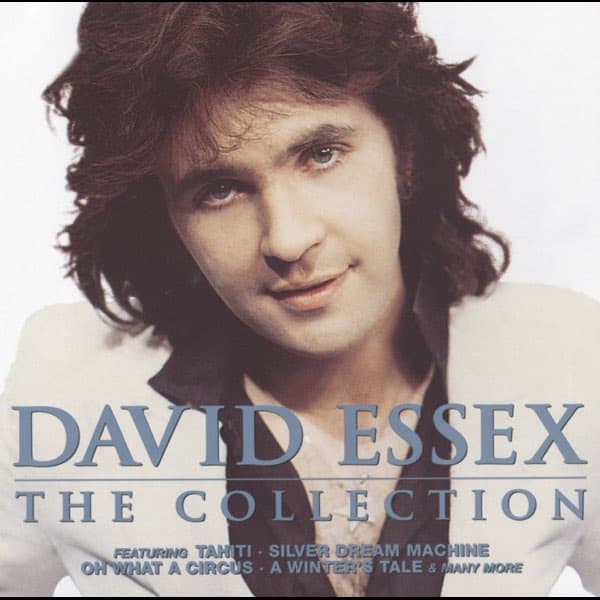
A song about illusion, desire, and the mysterious power of love—“The Magician” reveals how charm and vulnerability can exist within the same restless heart.
When David Essex released “The Magician” in 1975, it arrived during one of the most vibrant and dramatic moments of his career. Known widely for his charismatic stage presence, theatrical voice, and a style that balanced pop accessibility with glam-rock flair, Essex had already become a household name across Britain. The song appeared on his album All the Fun of the Fair, a record that would become one of the defining works of his 1970s period. The album itself performed strongly, reaching No. 3 on the UK Albums Chart, confirming that Essex was far more than a passing pop phenomenon.
Although “The Magician” was not released as a major standalone single like “Gonna Make You a Star” or “Hold Me Close,” it became one of the most memorable tracks on the album. Fans often remember it as a song that captures the theatrical spirit that made David Essex unique among British pop artists of the decade. His music frequently carried a sense of storytelling—songs that felt like scenes from a play rather than simple radio hits.
To understand “The Magician,” it helps to remember where David Essex stood in the mid-1970s. After his breakthrough acting role in the film That’ll Be the Day (1973), where he starred alongside Ringo Starr, Essex quickly transformed from actor to pop idol. His 1974 single “Gonna Make You a Star” soared to No. 1 on the UK Singles Chart, while other hits like “Lamplight” and “Stardust” cemented his place in British pop culture. Yet Essex was never entirely comfortable being seen merely as a teen idol. Beneath the glamour, there was always a songwriter trying to express something more reflective and imaginative.
That deeper instinct can be heard clearly in “The Magician.” The song unfolds like a quiet piece of theatre. Rather than telling a straightforward story, it explores the metaphor of a magician—someone who dazzles audiences with mystery and charm, yet may hide loneliness behind the illusion. In Essex’s hands, the magician becomes a symbol for the performer himself: someone admired by crowds, but still searching for something genuine beyond the spotlight.
Musically, the track reflects the rich production style of the All the Fun of the Fair album. Strings drift gently through the arrangement, while the rhythm section carries a steady, almost hypnotic pulse. Essex’s voice moves between soft reflection and dramatic emphasis, a technique that always made his recordings feel emotionally layered. Unlike the bright pop immediacy of “Gonna Make You a Star,” “The Magician” leans toward a more atmospheric mood, as if inviting the listener into a quiet, dimly lit theatre where secrets are slowly revealed.
There is also a fascinating duality in the lyrics. On the surface, the magician appears powerful—someone capable of creating wonder and holding an audience spellbound. Yet beneath that confidence lies vulnerability. The magician may perform miracles, but he cannot easily control matters of the heart. Love, in this song, remains the one illusion that cannot be mastered.
This theme resonated strongly with listeners during the 1970s, a decade when many pop artists began exploring more introspective songwriting. While glam rock often celebrated spectacle and flamboyance, songs like “The Magician” hinted at the emotional complexity behind the stage lights. Essex, perhaps more than many of his contemporaries, understood that balance between showmanship and sincerity.
Looking back today, “The Magician” stands as a reminder of a moment when pop music still embraced storytelling with a theatrical touch. It reflects an era when albums were meant to be experienced as journeys, not just collections of radio singles. On All the Fun of the Fair, the song sits quietly among bigger hits, yet it offers one of the album’s most thoughtful reflections.
And perhaps that is the true magic of David Essex as a songwriter. Beneath the glitter of fame and the roar of crowds, he often wrote songs that felt like personal reflections disguised as stories. In “The Magician,” the illusion is beautiful—but the emotion behind it is unmistakably real.