
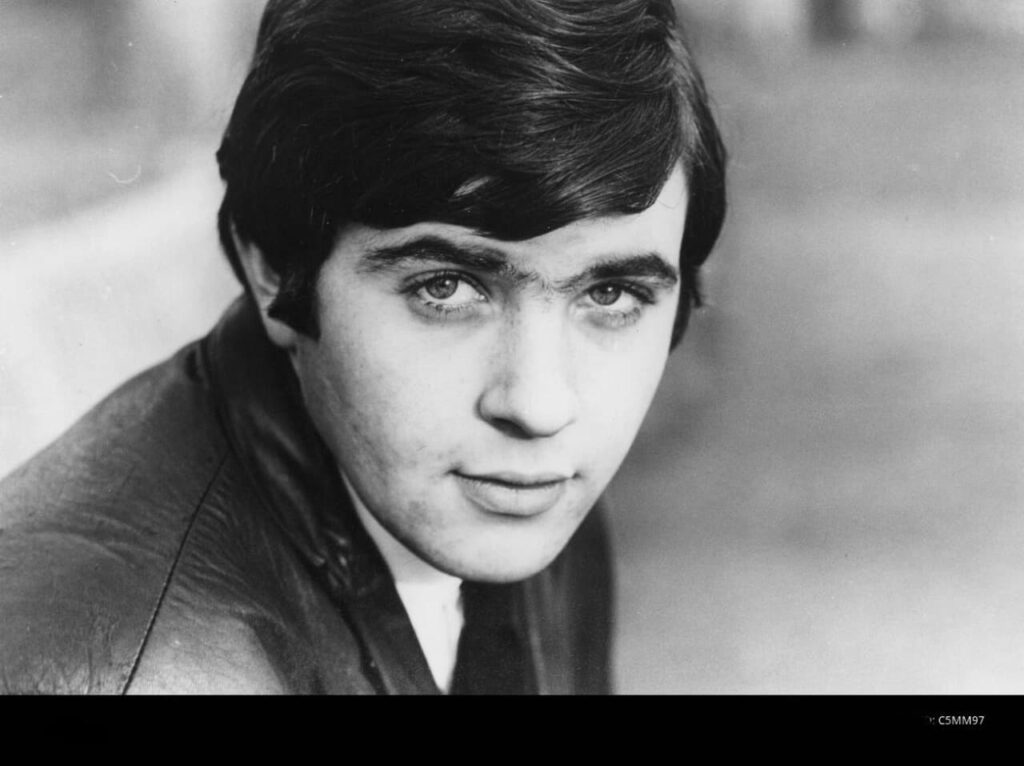
How a young electrician’s apprentice from London followed a quiet dream and became one of Britain’s most unforgettable pop stars
Before the bright stage lights, platinum records, and crowds chanting his name, David Essex lived a life that was far more ordinary than the fame that would later surround him. Like many young men growing up in working-class London during the 1960s, he began his adult life learning a practical trade. In his late teens, Essex worked as an electrician’s apprentice, spending long days handling wires, tools, and circuits. It was honest work — the kind that promised stability and a predictable future.
Yet even during those early years, another dream quietly lived beneath the surface.
When the workday ended and the city lights began to glow, Essex stepped into a different world. Instead of construction sites and toolboxes, he carried a guitar. He would head into small pubs and local clubs scattered across London, searching for any stage that would allow him to perform. These venues were rarely glamorous. Most were smoky rooms filled with chatter, clinking glasses, and distracted audiences. Sometimes only a handful of people would stop to listen.
But those modest stages became his training ground.
Night after night, David Essex developed something that cannot be taught in classrooms — stage presence. He learned how to hold a room’s attention, how to project emotion through song, and how to connect with listeners even when they were more interested in their drinks than the music. The young electrician slowly began to transform into a performer.
The early 1970s would bring the first real turning point. Essex’s natural charisma and musical instincts led him into acting, where he gained widespread attention through the film That’ll Be the Day in 1973. The movie, which captured the spirit of Britain’s rock-and-roll youth culture, introduced him to a much wider audience and showed that he possessed more than just musical talent.
Soon after, the music world truly took notice.
In 1973, David Essex released “Rock On,” a song unlike anything dominating the charts at the time. With its haunting rhythm, sparse arrangement, and Essex’s distinctive vocal delivery, the track quickly became a sensation. It climbed to No. 3 on the UK Singles Chart and later reached No. 5 on the US Billboard Hot 100, establishing him as an international star.
From that moment forward, the journey accelerated. Essex followed with a string of successful singles including “Gonna Make You a Star,” which soared to No. 1 in the UK in 1974, along with other beloved hits like “Hold Me Close” and “Lamplight.” The young man who once spent his days wiring buildings had become one of Britain’s biggest pop icons of the decade.
Yet what makes the story of David Essex so compelling is not simply the fame that followed. It is the quiet determination behind it — the image of a young apprentice finishing a day’s work, picking up a guitar, and stepping into a small pub to sing.
Those humble nights, surrounded by cigarette smoke and the low murmur of conversations, were where the dream truly began. And perhaps that is why the music of David Essex still carries a certain sincerity today. Long before the screaming fans and sold-out venues, there was simply a young man chasing a melody in the dark — believing, somehow, that the stage was waiting for him. 🎸