
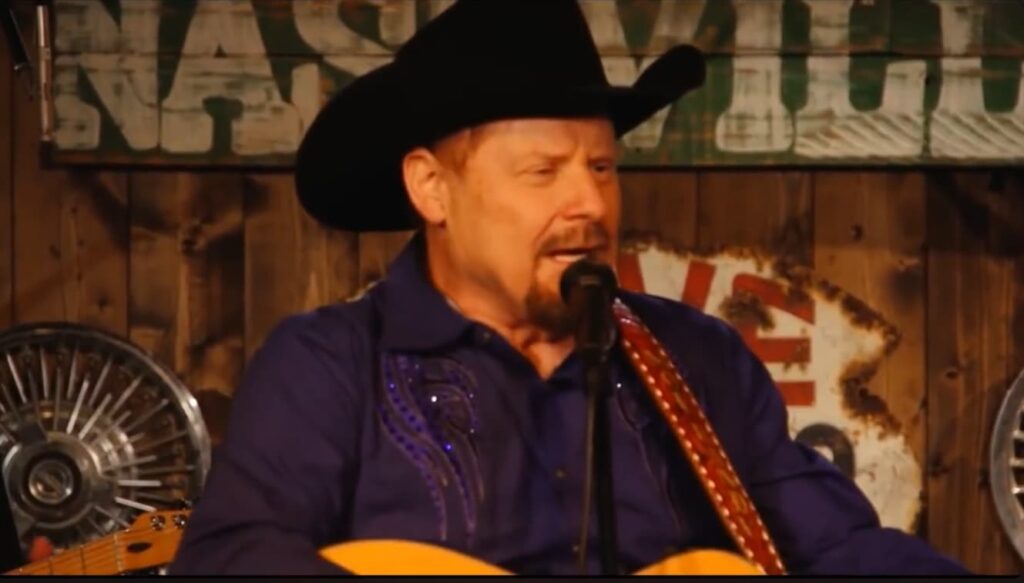
A Honky-Tonk Story of Forgetting Heartache — “Honky Tonk Amnesia” and the Classic Country Humor of Moe Bandy
Among the many voices that carried the torch of traditional honky-tonk country music through the 1970s and early 1980s, few sounded as authentic—or as unapologetically old-school—as Moe Bandy. With his unmistakable Texas twang and a deep affection for the storytelling style pioneered by artists like Lefty Frizzell and Hank Williams, Bandy built a career on songs that felt lived-in, honest, and sometimes gently humorous. One such song, “Honky Tonk Amnesia,” perfectly captures that spirit.
Originally released in 1979, “Honky Tonk Amnesia” appeared on Moe Bandy’s album Just Good Ol’ Boys, a project closely associated with his musical partnership with fellow country traditionalist Joe Stampley. At the time of its release, the song reached No. 17 on the Billboard Hot Country Singles chart, a respectable showing during an era when the charts were crowded with major names like Kenny Rogers, Willie Nelson, and George Jones. Though it never reached the very top of the charts, the song became a favorite among fans who appreciated the witty storytelling and classic honky-tonk charm that defined Bandy’s music.
The premise of “Honky Tonk Amnesia” is as clever as it is relatable. The narrator wakes up after a long night in a bar, unable—or perhaps unwilling—to remember the details of the evening before. The lyrics play with the idea of selective memory: a humorous condition where the mind conveniently erases embarrassing moments, bad decisions, and emotional vulnerability that may have surfaced under the glow of neon lights and the melancholy sound of steel guitars.
In typical Moe Bandy fashion, the song walks a fine line between comedy and quiet sadness. Beneath the lighthearted title lies a familiar theme in country music: a person trying to escape heartbreak through the familiar refuge of a honky-tonk bar. Yet instead of presenting the situation with heavy drama, Bandy approaches it with a wry smile, suggesting that sometimes laughter is the only way to make peace with the past.
Musically, “Honky Tonk Amnesia” embraces everything that made late-1970s traditional country music so enduring. The arrangement features classic pedal steel guitar, steady shuffle rhythms, and a warm barroom piano that seems to echo through the smoky atmosphere of a dance hall. Bandy’s vocal performance is relaxed but confident, delivering each line as though he were recounting a story to old friends across a small wooden table.
Years later, the song found renewed life when Moe Bandy performed it on The Gene and Moe Show, the television program he hosted alongside Gene Watson, another revered figure in traditional country music. Their show became a celebration of the genre’s roots, bringing together artists who had shaped the golden age of honky-tonk and traditional country.
When Bandy sings “Honky Tonk Amnesia” on the program, the performance carries a special warmth. By that time, he was no longer simply presenting a song from his catalog—he was revisiting a piece of musical history that had traveled with him across decades of touring, recording, and performing for audiences who never lost their love for classic country storytelling.
Watching that performance, one can sense the easy camaraderie between Moe Bandy and Gene Watson. Both men represent a generation of country singers who believed that a good song should tell the truth—even if that truth arrived wrapped in humor. Their stage presence is relaxed, almost conversational, as though they were inviting listeners into the same honky-tonk where the song itself takes place.
In the broader landscape of country music, “Honky Tonk Amnesia” stands as a small but delightful example of the genre’s storytelling tradition. It reminds us that not every country song must be tragic to be meaningful. Sometimes the most enduring songs are those that reflect life’s imperfections with a wink, a melody, and the comforting sound of a steel guitar.
And in the steady voice of Moe Bandy, that story continues to echo like music drifting out of an old dance hall on a warm Texas night—familiar, bittersweet, and impossible to forget… even if the singer claims he can’t quite remember what happened the night before.