
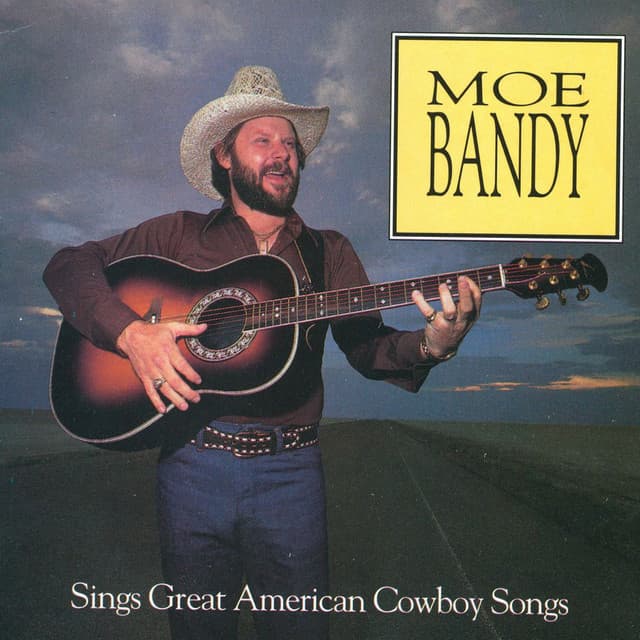
A Joyful Tribute to Texas Pride and Western Swing Tradition — “Deep In The Heart Of Texas” Through the Voice of Moe Bandy
Few songs capture the spirit of the American Southwest quite like “Deep In The Heart Of Texas.” When Moe Bandy, one of country music’s most devoted traditionalists, recorded his own version of the beloved classic, he wasn’t simply performing a familiar tune—he was paying heartfelt homage to the culture, landscape, and musical heritage that shaped his entire career.
Originally written in 1941 by June Hershey (lyrics) and Don Swander (music), “Deep In The Heart Of Texas” quickly became one of the most recognizable songs ever associated with the Lone Star State. The song’s cheerful melody and unforgettable clapping rhythm turned it into an instant phenomenon. In its early days, multiple recordings raced up the charts almost simultaneously. The version by Alvino Rey and His Orchestra reached No. 1 on the Billboard charts in 1942, while other renditions by Perry Como, Bing Crosby, and Gene Autry also enjoyed enormous popularity. Few songs of the era managed to unite audiences in quite the same way.
By the time Moe Bandy recorded “Deep In The Heart Of Texas,” the song was already deeply woven into the fabric of American musical history. Yet Bandy’s interpretation carried a special authenticity. Born in San Antonio, Texas, and raised on the traditions of honky-tonk and classic country, Bandy had always been more than just a singer of Texas songs—he was a living representative of that culture.
During the 1970s and 1980s, Moe Bandy emerged as one of the most reliable voices keeping traditional honky-tonk alive at a time when country music was rapidly evolving. Songs like “Bandy the Rodeo Clown,” “Hank Williams, You Wrote My Life,” and “Just Good Ol’ Boys” established him as an artist who respected the roots of the genre. Recording “Deep In The Heart Of Texas” felt like a natural extension of that mission.
When Bandy performs the song, there is a sense of joy that feels genuine rather than theatrical. The melody itself has always carried a kind of communal magic. That famous rhythmic pause—followed by the clapping pattern in the chorus—creates a moment where audiences instinctively join in. For decades, listeners have known exactly when to clap along, turning the song into something closer to a shared celebration than a simple performance.
Musically, Bandy’s version leans into the warm textures of classic country instrumentation. Steel guitars glide gently through the arrangement, fiddles add a bright western swing flavor, and the rhythm section keeps everything moving with an easy, dancehall sway. It feels like music designed for a Saturday night gathering somewhere beneath wide Texas skies.
But beyond the lively rhythm lies something more enduring: a deep affection for place. The lyrics of “Deep In The Heart Of Texas” paint simple yet vivid images—the stars at night, the coyotes calling across open land, the sagebrush scattered across dusty plains. These details might seem small, but together they form a portrait of a landscape that holds powerful emotional meaning.
In the voice of Moe Bandy, those images feel especially sincere. His singing style has always been rooted in clarity and storytelling rather than dramatic vocal flourishes. That approach works beautifully here. Instead of overpowering the song, Bandy allows its natural charm and pride to shine through.
For many listeners, hearing “Deep In The Heart Of Texas” performed by Moe Bandy feels like stepping into a memory. It recalls the era when country music was often played in dance halls rather than massive arenas, when songs traveled by jukebox and radio waves across rural highways and small towns. There is warmth in that memory—something simple, sincere, and deeply comforting.
Over the decades, countless artists have recorded “Deep In The Heart Of Texas.” Yet each new interpretation carries the same spirit of celebration that first captured America’s imagination in the early 1940s. In Bandy’s hands, the song becomes more than just a classic standard. It becomes a reminder of home, heritage, and the timeless power of music to connect people to the places that shaped them.
And when that familiar chorus arrives—those four claps echoing through the melody—it still feels as though the entire room is joining together, keeping time with a piece of musical history that refuses to fade.