
A Bright Pop Moment That Carried the Sound of Youth “Hey Deanie” Showcases Shaun Cassidy at His Most Effortlessly Charming
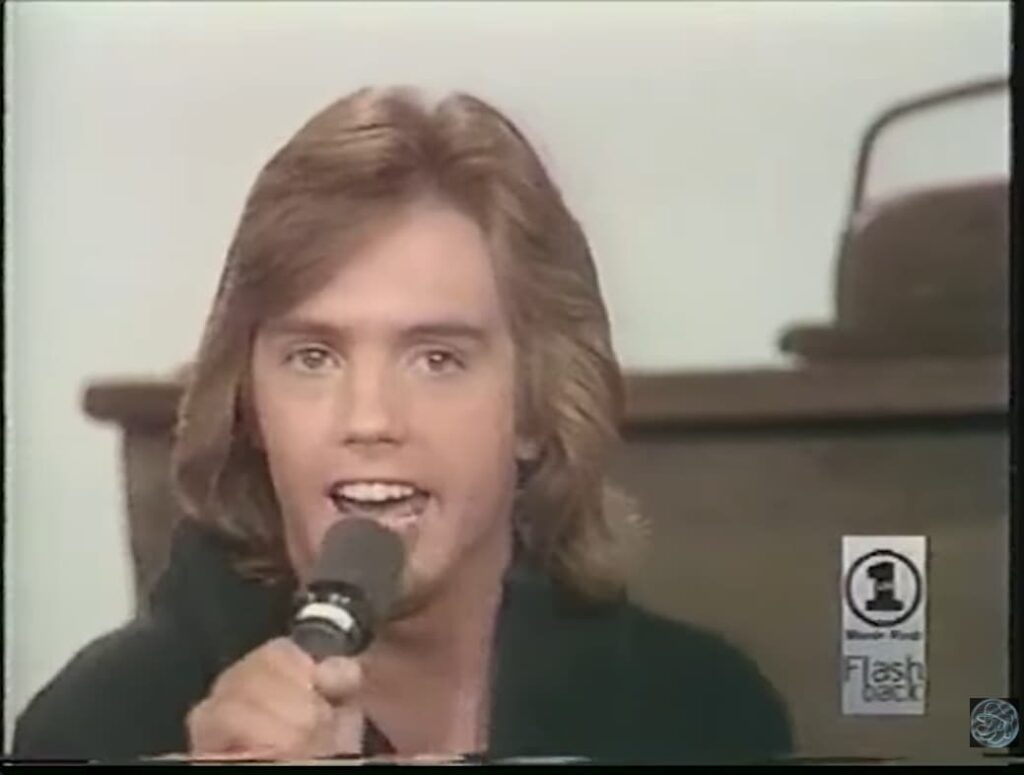
When Shaun Cassidy stepped onto the stage of The Mike Douglas Show in 1977 to perform “Hey Deanie,” the performance captured a very particular moment in pop history, one where youthful energy, melodic simplicity, and television exposure combined to create something unforgettable. It was a time when a song could travel quickly from radio waves into living rooms, and in that space between speaker and screen, artists like Cassidy found their audience not just listening, but watching, connecting, and remembering.
Released in 1977 as a single from his second album Born Late, “Hey Deanie” quickly became one of Shaun Cassidy’s most successful recordings. The song climbed to No. 7 on the Billboard Hot 100, confirming his place among the leading pop voices of the late 1970s teen idol era. It also performed strongly on adult contemporary charts, further expanding his reach beyond younger listeners and into a broader audience that appreciated its clean, melodic appeal.
The story behind “Hey Deanie” adds an interesting layer to its legacy. The song was written by Eric Carmen, the former frontman of The Raspberries, who had already established himself as a gifted songwriter capable of blending pop sensibility with emotional clarity. Carmen originally recorded the song himself, but it was Shaun Cassidy’s version that brought it widespread commercial success. In many ways, the recording reflects a meeting point between two musical identities — the craftsmanship of an experienced songwriter and the fresh, accessible presence of a young performer stepping fully into the spotlight.
By 1977, Shaun Cassidy was already a recognizable figure, thanks in part to his role in the television series The Hardy Boys Mysteries. That visibility played a crucial role in shaping his musical career. His earlier hit “Da Doo Ron Ron” had reached No. 1 on the Billboard Hot 100, introducing him as more than just a television personality. With “Hey Deanie,” he proved that his success was not a fleeting moment, but part of a sustained connection with the audience.
Musically, the song is built on a foundation of bright guitar lines, steady rhythm, and a melody that feels instantly familiar. There is a certain lightness to its arrangement, a sense that the song is not trying to overwhelm but simply to invite. The chorus arrives naturally, almost conversationally, as if the singer is calling out to someone just beyond reach.
Lyrically, “Hey Deanie” carries a tone of youthful affection, capturing the feeling of admiration that exists somewhere between friendship and love. It is not complicated, and perhaps that is its greatest strength. The simplicity allows listeners to project their own memories into the song, to recall moments when emotions were clear but not yet fully understood.
During the Mike Douglas Show performance, that simplicity translated beautifully to the screen. There was no need for elaborate staging or dramatic presentation. Shaun Cassidy stood comfortably within the moment, delivering the song with an ease that made it feel immediate and genuine. Television, in that era, had a unique intimacy. It brought performers into everyday spaces, allowing songs like “Hey Deanie” to become part of daily life rather than distant entertainment.
Looking back, the performance reflects more than just a successful single. It captures a time when pop music embraced innocence without irony, when melodies were allowed to breathe, and when a song could succeed simply by being sincere.
For Shaun Cassidy, “Hey Deanie” remains one of the defining recordings of his career. It represents a period when everything seemed to align — the right song, the right voice, and the right moment in cultural history.
And today, listening again or recalling that television appearance, the song still carries that same gentle brightness. It does not demand attention. It simply returns, like a familiar voice from another time, calling out softly — steady, warm, and unchanged.