
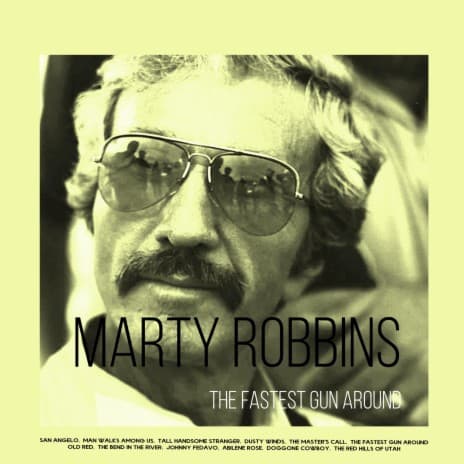
Marty Robbins’ Story: From Penniless Boy to Nashville Legend
1. How did he get started in the business? (The Arizona Desert Roots)
Marty didn’t start in Nashville; he started in the dusty, neon-lit clubs of Phoenix, Arizona. After returning from the Navy following World War II, he worked a variety of odd jobs—driving trucks and handling construction—but the music was always calling.
- The Breakthrough: He began playing at local venues like Fred Kares’ club and eventually landed his own local radio and TV show, Western Caravan.
- The “Little” Push: It was actually Little Jimmy Dickens who heard Marty in Arizona and was so impressed that he went back to Nashville and told Columbia Records, “You’ve got to sign this kid.” By 1953, Marty was on his way to the Grand Ole Opry, carrying the desert wind in his voice.
2. Who was his hero? (The Influence of Gene Autry)
If you ever wondered where Marty got his love for the “Silver Screen” cowboy image, the answer is simple: Gene Autry.
- The Inspiration: Growing up in the harsh poverty of the Depression-era West, Marty found escape in the Saturday matinees. Gene Autry wasn’t just a singer to Marty; he was the symbol of the dignified cowboy—clean-cut, heroic, and musical.
- The Legacy: Marty’s goal was always to bring that same cinematic grandeur to country music. He wanted to make “movies for the ears,” which eventually led to the creation of the Gunfighter Ballads that we still cherish today.
3. What’s the difference between “Cheating” and “Illegal”?
This is one of the most famous “Marty-isms” from his talks, often shared when he discussed his second passion: NASCAR racing. Marty had a very sharp, principled way of looking at the world, and he applied it to the track.
- The Distinction: Marty famously said that in racing (and in life), “Cheating is when you’re doing something to get ahead that you know is wrong, but ‘illegal’ is just a matter of the rules.”
- The Meaning: To Marty, if a car part was “illegal” according to a technicality in the rulebook, that was just part of the game of pushing limits. But cheating—violating your own personal integrity or hurting someone else to win—was something he could never abide. He was a man who believed your word and your character were your most valuable assets.
Watching these old interviews, you can see the twinkle in his eyes and the sincerity in his voice. He was a “Gentle Giant” who never forgot where he came from. Whether he was talking about his heroes or his code of honor, Marty Robbins remained a man of the people—a true Western gentleman.
 Music Legend