
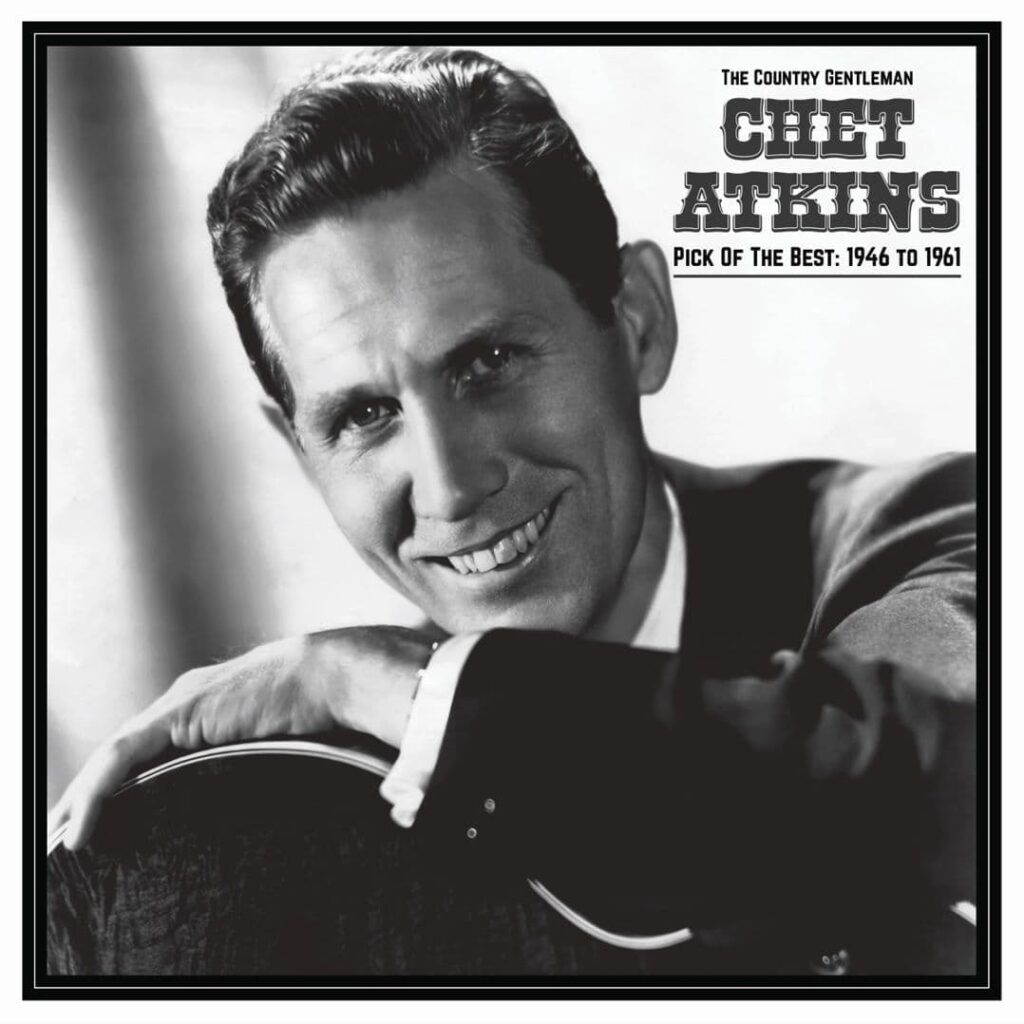
A Gentle Dance Across Strings, Where Elegance Speaks Louder Than Words
When Chet Atkins turned his attention to “Cheek to Cheek,” he was not simply revisiting a beloved standard—he was reshaping a piece of American musical heritage through the quiet poetry of his guitar. Originally written by Irving Berlin in 1935 for the film Top Hat and immortalized by Fred Astaire, the song had long been associated with the grace of ballroom dance and the golden glow of Hollywood romance. Yet in the hands of Chet Atkins, it found a different kind of intimacy—one that did not rely on lyrics, but on touch, tone, and the spaces between notes.
By the time Atkins recorded his instrumental interpretation, he had already established himself as one of the most influential figures in country and popular music. Known as “Mr. Guitar,” he was not just a virtuoso performer but also a visionary producer who helped shape the smooth, polished Nashville Sound of the late 1950s and 1960s. His version of “Cheek to Cheek” appeared on albums such as “Finger Style Guitar” (1956) and later collections, where his signature fingerpicking style transformed familiar melodies into something deeply personal.
Unlike the vocal versions that soared with orchestral backing and romantic declarations, Atkins approached the song with restraint. Each note felt carefully placed, as though he were tracing the outline of a memory rather than trying to recreate it fully. The melody, already timeless, became even more delicate under his touch—softened, slowed, and allowed to breathe in a way that only an instrumental performance can achieve.
There is something profoundly reflective in how Chet Atkins interprets “Cheek to Cheek.” Without words, the listener is invited to supply their own story, their own faces, their own moments of closeness. The famous line “Heaven, I’m in heaven…” is never sung, yet it lingers in the background, almost as if the guitar itself remembers it. In this way, Atkins does not replace the original—he converses with it, gently reimagining its emotional landscape.
Though instrumental recordings rarely climbed the pop charts in the same way vocal hits did, Atkins’ work consistently found success within the Billboard Country Albums rankings, and his influence reached far beyond numbers. His interpretations of standards like “Cheek to Cheek” were less about commercial impact and more about artistic legacy. They became part of a larger body of work that earned him multiple Grammy Awards and a lasting reputation as one of the finest guitarists of the 20th century.
The story behind Atkins’ affinity for such material lies in his deep respect for melody. He once spoke about the importance of making the guitar “sing,” and in “Cheek to Cheek,” that philosophy is unmistakable. There is no rush, no unnecessary flourish—only a steady, graceful unfolding of notes that seem to glide as effortlessly as dancers across a polished floor.
Listening to his version now, one might feel as though time itself has slowed. The world outside fades, replaced by the gentle rhythm of a song that has traveled across decades, carried by different voices, different instruments, yet always retaining its core sense of wonder. In Atkins’ hands, that wonder becomes quieter, more introspective—less about the spectacle of romance and more about its quiet endurance.
And perhaps that is the lasting meaning of “Cheek to Cheek” as interpreted by Chet Atkins. It is not merely a song about being close to someone; it is about the feeling of being at ease in that closeness. About the unspoken understanding that does not need to be declared, only felt. Through his guitar, Atkins reminds us that sometimes the most profound emotions are the ones expressed without a single word—lingering softly, like a melody remembered long after the music has faded.