
A Love That Refuses to Fade, Even as Time Quietly Moves On
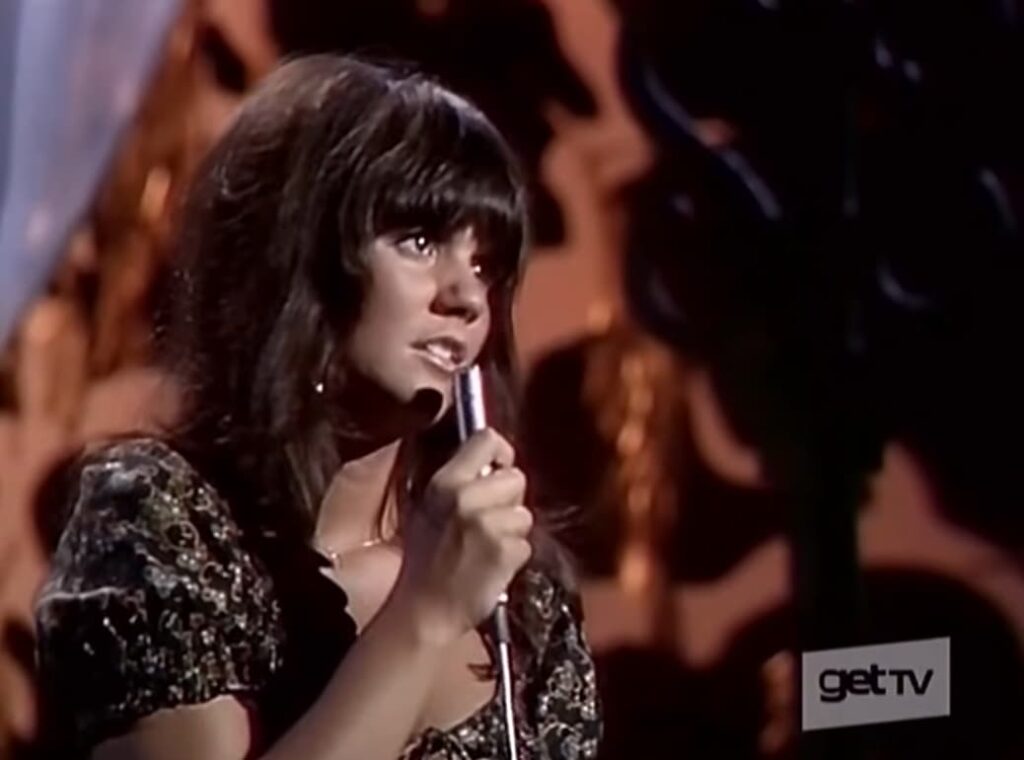
When Linda Ronstadt stepped onto the stage of The Johnny Cash Show to perform “Long, Long Time,” she carried with her a song that had already etched its place into the emotional fabric of American music. Originally released in 1970 as part of her album “Silk Purse,” the song became one of her earliest defining moments, reaching No. 25 on the Billboard Hot 100 and climbing to No. 8 on the Billboard Easy Listening chart. It also earned Ronstadt a Grammy nomination for Best Contemporary Female Vocal Performance—an early recognition of a voice that could hold both strength and fragility in the same breath.
Written by Gary White, “Long, Long Time” is not a song that demands attention—it lingers instead, unfolding slowly, almost reluctantly, as if aware that some feelings are too delicate to be rushed. By the time Ronstadt performed it on The Johnny Cash Show in the early 1970s, the song had already become a quiet companion to those who understood the weight of unreturned love. Yet in that live setting, something shifted. The performance felt less like a presentation and more like a confession.
There is a particular stillness in the way Linda Ronstadt approached the song on that stage. Surrounded by the understated elegance of the show—where Johnny Cash himself curated moments of authenticity over spectacle—her voice rose without force, clear and unguarded. She did not embellish the melody unnecessarily. Instead, she allowed its natural rise and fall to carry the story, trusting the listener to meet her halfway.
The meaning of “Long, Long Time” rests in its restraint. It is a song about love that persists even when it has no reason to. Not dramatic, not loud, but enduring—almost stubborn in its quiet refusal to disappear. Lines that speak of waiting, of hoping, of accepting what may never come, are delivered with a sincerity that feels almost disarming. In Ronstadt’s voice, there is no bitterness, only a kind of weary understanding. She does not accuse; she remembers.
The story behind the song’s impact lies partly in timing. In 1970, popular music was shifting—folk, country, and rock were blending in new ways, and artists were beginning to explore more personal, introspective themes. “Silk Purse,” produced by Elliot Mazer, reflected that transition, blending country influences with a softer, more contemporary sound. Within that album, “Long, Long Time” stood out not because it was louder or more elaborate, but because it felt honest in a way that could not be manufactured.
On The Johnny Cash Show, that honesty found its perfect setting. The program was known for bringing together artists who valued authenticity, and Ronstadt’s performance fit seamlessly into that tradition. There was no need for grand staging or dramatic lighting. The power of the moment lay entirely in the voice—in the way it trembled ever so slightly at the edges, hinting at emotions just beneath the surface.
Watching that performance now, one cannot help but feel the passage of time within it. The song speaks not only of love, but of endurance—of carrying something quietly, year after year, without expectation of resolution. It is a reminder that not all stories are meant to be completed, that some are simply meant to be lived.
And perhaps that is why “Long, Long Time” continues to resonate. It does not offer closure. It does not promise that things will be made right. Instead, it acknowledges the reality that some feelings remain, unchanged, even as everything else moves forward. In a world that often seeks quick answers and tidy endings, the song stands as a gentle contradiction.
In the end, Linda Ronstadt’s performance on The Johnny Cash Show becomes more than a moment in television history. It becomes a quiet testament to the power of simplicity, of sincerity, of a voice willing to carry the weight of something unresolved. And as the final note fades, there is a lingering sense that the song is not truly over—it simply continues, somewhere beyond the stage, in the quiet corners of memory where time, no matter how long, never quite erases what once was.
 Oldies Songs