
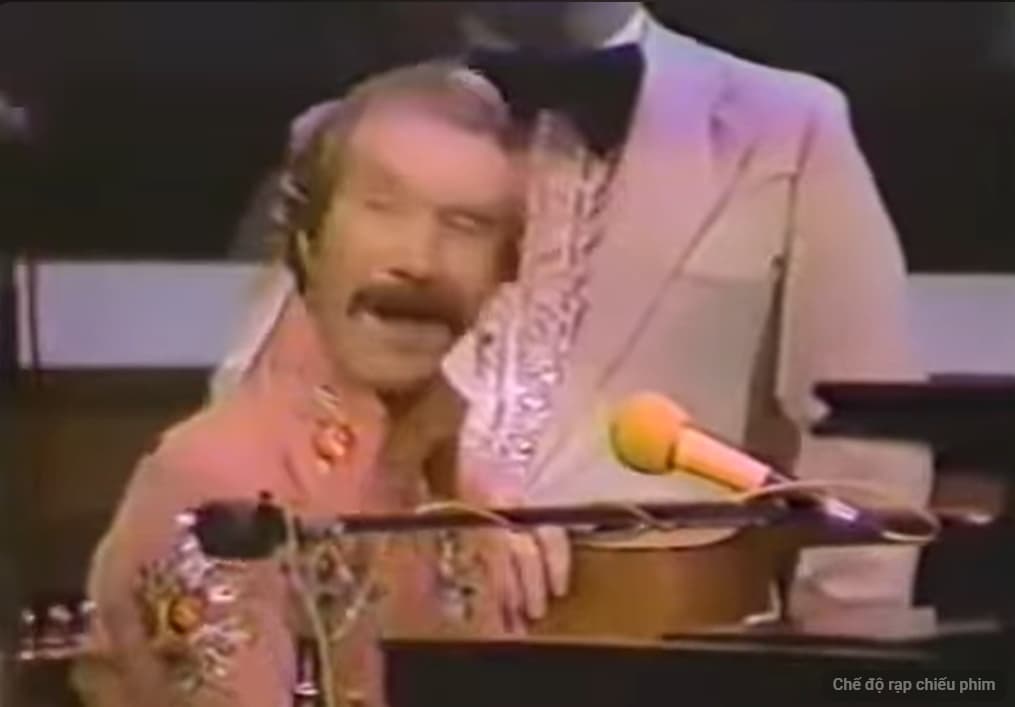
A Final Declaration of Devotion, Where Love Is Spoken Not Loudly, But With a Lifetime Behind It
On December 2, 1982, Marty Robbins stood once more on the stage of the Grand Ole Opry, offering what would become his final performance in that sacred circle of country music. The song he carried with him that evening, “My Woman, My Woman, My Wife,” was not simply another entry in his catalog—it was one of his most deeply personal and celebrated works. Originally released in 1970 from the album “My Woman, My Woman, My Wife,” the song reached No. 1 on the Billboard Hot Country Singles chart and earned Marty Robbins a Grammy Award for Best Country Song. More than a commercial success, it became a defining statement of his ability to express devotion with rare sincerity.
Written by Robbins himself, “My Woman, My Woman, My Wife” stands apart from the grand narratives that often characterized his earlier work. There are no duels, no deserts, no distant horizons. Instead, the song turns inward, focusing on the quiet endurance of a woman who remains steadfast through hardship, disappointment, and time. It is, at its core, a song of gratitude—one that recognizes strength not in moments of triumph, but in the daily acts of loyalty and care that often go unnoticed.
By the time of that final Opry appearance, the meaning of the song had evolved. In 1970, it may have been heard as a tribute, a thoughtful acknowledgment of love’s resilience. But in 1982, delivered in a voice touched by years and circumstance, it felt closer to a reflection—something that had been lived, not merely written.
There is a particular stillness in that performance. The Grand Ole Opry, long a place of celebration and continuity, becomes something quieter in that moment. Marty Robbins does not approach the song with the confidence of a hitmaker revisiting a familiar success. Instead, there is a measured calm in his delivery, as though each word carries a weight that no longer needs to be emphasized.
The story behind this final performance cannot be separated from the reality of Robbins’ condition at the time. His health had been in decline, and though there was no formal announcement marking the evening as a farewell, there was an undeniable sense that something was drawing to a close. In that context, “My Woman, My Woman, My Wife” takes on a deeper resonance. It is no longer simply about admiration—it becomes an expression of understanding, of looking back and recognizing what has endured.
Musically, the arrangement remains faithful to the original, allowing the strength of the composition to stand on its own. There are no dramatic reinterpretations, no attempts to modernize or expand. This restraint is essential. It ensures that the focus remains where it belongs—on the voice, on the words, on the meaning that has grown over time.
The lyrics themselves speak with a kind of quiet clarity that is rare. They do not romanticize in the traditional sense. Instead, they acknowledge difficulty, sacrifice, and the passage of years. And yet, within that acknowledgment, there is a deep sense of respect—one that feels earned rather than declared.
In the broader arc of Marty Robbins’ career, this song represents a shift toward introspection. While he will always be remembered for the sweeping narratives of “El Paso” and similar works, “My Woman, My Woman, My Wife” reveals another dimension—one that values stillness over spectacle, reflection over drama.
As he sings those final lines on the Opry stage, there is no visible attempt to hold onto the moment. The performance does not reach for a grand conclusion. It simply unfolds, line by line, until it comes to rest. And in that quiet ending, there is something profoundly complete.
The audience, perhaps sensing what could not yet be fully spoken, responds not with overwhelming noise, but with a kind of reverence. It is the recognition of a moment that cannot be repeated, of a voice that has given everything it needed to give.
And when the song ends, what remains is not just the memory of a performance, but the echo of a life expressed through music—honest, unadorned, and enduring.
In that final appearance, Marty Robbins does not say goodbye in words. He does not need to. Through “My Woman, My Woman, My Wife,” he leaves behind something far more lasting—a quiet testament to love, to gratitude, and to the understanding that the most meaningful stories are often the ones told not in grand gestures, but in the steady passage of time.