
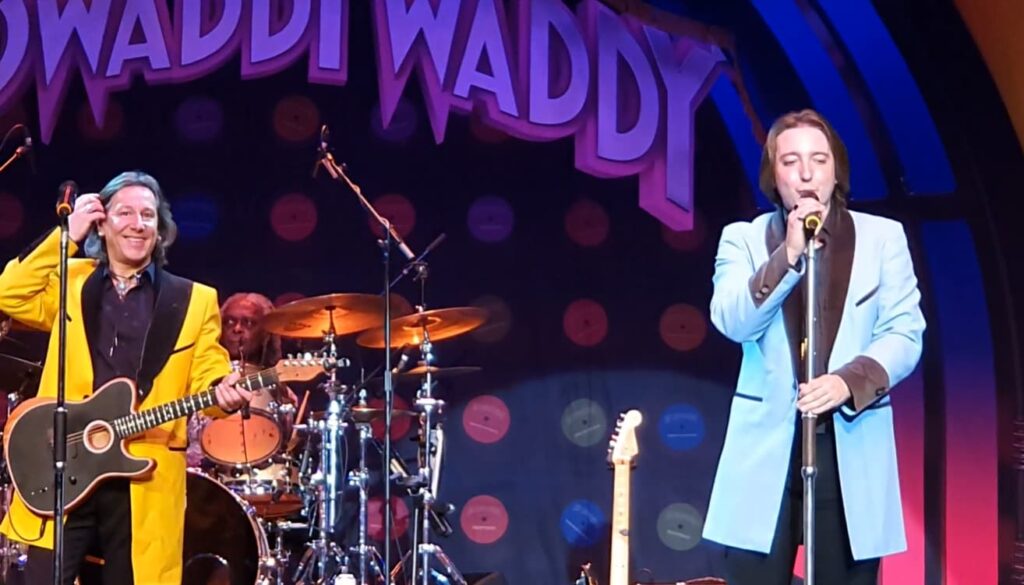
A timeless plea for comfort, where an old song finds new breath and reminds us that sorrow still sounds the same
When Showaddywaddy revisited “Cry to Me” in 2022, they were not simply covering a classic—they were returning to a feeling that had never truly left. Originally written and recorded by Solomon Burke in 1961, the song had long been regarded as one of the most emotionally direct expressions of longing in popular music. Burke’s version reached No. 5 on the Billboard R&B chart and No. 44 on the Billboard Hot 100, establishing it as a quiet but enduring presence in the early soul canon.
Over the decades, “Cry to Me” has been interpreted by many, including Betty Harris and later Billy Stewart, each bringing their own nuance to its simple yet powerful message. By the time Showaddywaddy approached the song in 2022—sometimes associated in performance with the phrasing “Billy Shannon Cry to Me” due to stylistic or vocal interpretation—the composition had already lived multiple lives. Yet its essence remained untouched.
The song’s meaning is disarmingly straightforward. It is not about grand declarations or dramatic heartbreak. Instead, it offers something quieter: an invitation to vulnerability. “When your baby leaves you all alone,” the lyric begins, and from there, it unfolds as a gentle assurance that comfort exists, if one is willing to seek it. There is no judgment in the words, only understanding.
In the hands of Showaddywaddy, the 2022 version carries a different weight than its predecessors. Where earlier renditions often leaned into the immediacy of fresh heartbreak, this interpretation feels shaped by time. The arrangement remains faithful to the song’s roots—steady rhythm, warm instrumentation—but the delivery is more measured, almost reflective. It is less about the urgency of pain and more about the memory of it.
This distinction is subtle, yet significant. The band, known for their dedication to preserving the spirit of 1950s rock and roll and early 1960s pop, does not attempt to modernize “Cry to Me” in any overt way. Instead, they allow it to exist as it always has, trusting in the strength of its melody and message. In doing so, they remind us that certain emotions do not require reinvention to remain relevant.
There is also something deeply fitting about Showaddywaddy choosing this particular song at this stage of their career. For decades, they have served as custodians of a musical era defined by sincerity and directness. Their interpretation of “Cry to Me” feels less like a performance and more like a continuation of that responsibility.
Listening to the 2022 version, one becomes aware of how differently the same song can resonate over time. What once might have felt like an immediate response to heartbreak now carries a layer of reflection. The words do not change, but the listener does. And in that change, the song reveals new meaning.
There is a quiet dignity in the way the performance unfolds. No excessive ornamentation, no attempt to overshadow the original. Just a steady, respectful rendering that allows the emotional core to remain intact. It is this restraint that gives the recording its strength.
In a musical landscape often driven by reinvention and novelty, Showaddywaddy’s approach feels almost rare. They do not seek to transform the song into something new. They seek to preserve what has always made it meaningful.
And perhaps that is why “Cry to Me” continues to endure. Not because it evolves, but because it does not need to. Its message remains constant: that in moments of loneliness, there is solace to be found in simply reaching out.
In the end, this 2022 interpretation is not about redefining a classic. It is about honoring it—allowing its quiet plea for connection to be heard once more, carried forward by voices that understand not just the song itself, but the passage of time that has shaped its meaning.