
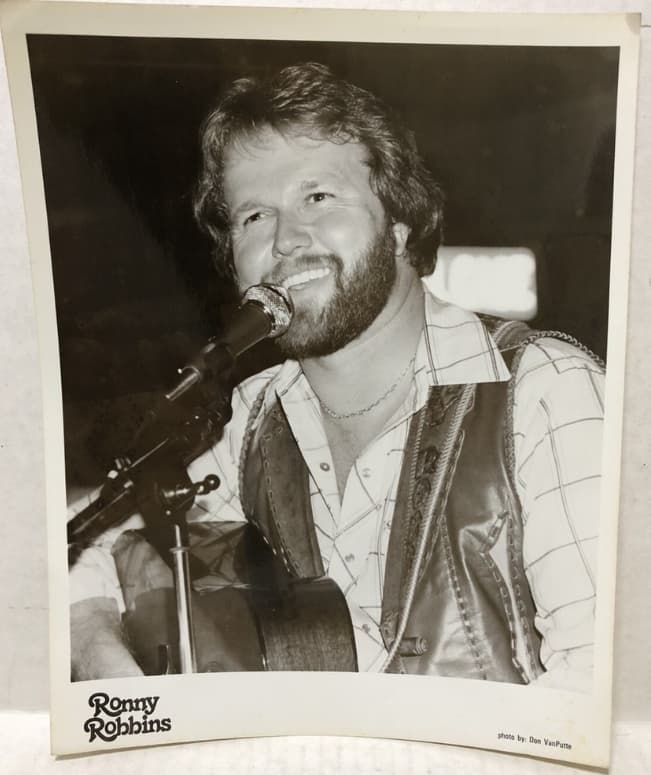
Ronny Robbins & Marty Robbins – Make Believe Cowboy: A Tender Generational Bridge Between a Father’s Devotion and a Son’s Enduring Legacy
There is a unique, quiet magic in the way music can tether the past to the present, especially when that music is born from the private, sacred halls of family life. For those of us who have followed the “Robbins” name through the decades, “Make Believe Cowboy” isn’t just another track; it is a living heirloom. It represents a profound, full-circle moment where the legendary Marty Robbins looked at his young son, Ronny, and saw not just a child at play, but the future of a legacy. For an audience that understands the bittersweet beauty of watching children grow, this song serves as a gentle, tear-stained window into the heart of a man who was as much a devoted father as he was a Western icon.
The song’s history is rooted in the peak of Marty Robbins’ creative powers. It was originally released in 1961 on the album Portrait of Marty, a collection that allowed the “Country Gentleman” to step away from the dusty trails of his Gunfighter Ballads and Trail Songs and offer a more intimate, crooning perspective. While it didn’t chase the high-noon drama of “El Paso” on the pop charts, it found a permanent home in the hearts of true country aficionados. Recorded for Columbia Records, the track features the signature polished production of the early 1960s, where Marty’s velvet baritone was supported by lush, understated arrangements that let the sincerity of the lyrics take center stage.
The narrative of “Make Believe Cowboy” is one of the most touching “father-son” portraits ever captured in song. Marty Robbins wrote the piece about his own son, Ronny Robbins, whom he watched play-acting as a frontiersman in their family home. The lyrics describe a little boy with a wooden gun and a stick horse, fighting “imaginary” outlaws in a world where justice is simple and the hero always wins. For those of us in our later years, these words evoke a powerful nostalgia. We remember the days before digital screens, when the backyard was a vast prairie and a cardboard box was a stagecoach. The song captures that fleeting, precious innocence, while the father—the man who actually sang the real “gunfighter” stories—watches with a mix of pride and a quiet, knowing sadness that his son will eventually have to trade his make-believe world for the complexities of adulthood.
When Ronny Robbins (often billed as Marty Robbins Jr.) performs this song today, the emotional weight is staggering. Hearing the “grown-up” version of that little boy sing the very words his father wrote for him creates a bridge across time that few other songs can claim. Ronny possesses a vocal tone that is eerily reminiscent of his father’s—rich, melodic, and deeply sincere—yet he brings his own mature perspective to the performance. When he sings “Make Believe Cowboy”, he isn’t just covering a classic; he is honoring a personal blessing. He is the living proof of the song’s enduring truth.
For a sophisticated, older listener, this song is a meditation on the passage of time and the continuity of love. It reminds us that our greatest legacies are not the trophies on our shelves, but the values and memories we instill in the next generation. As Ronny Robbins carries the torch, he reminds us that the “make-believe” worlds of our children are the foundations upon which their real characters are built. It is a stunning, emotional tribute to a legendary father from a son who has truly lived the story, making it one of the most poignant and reflective pieces in the entire Robbins catalog.