
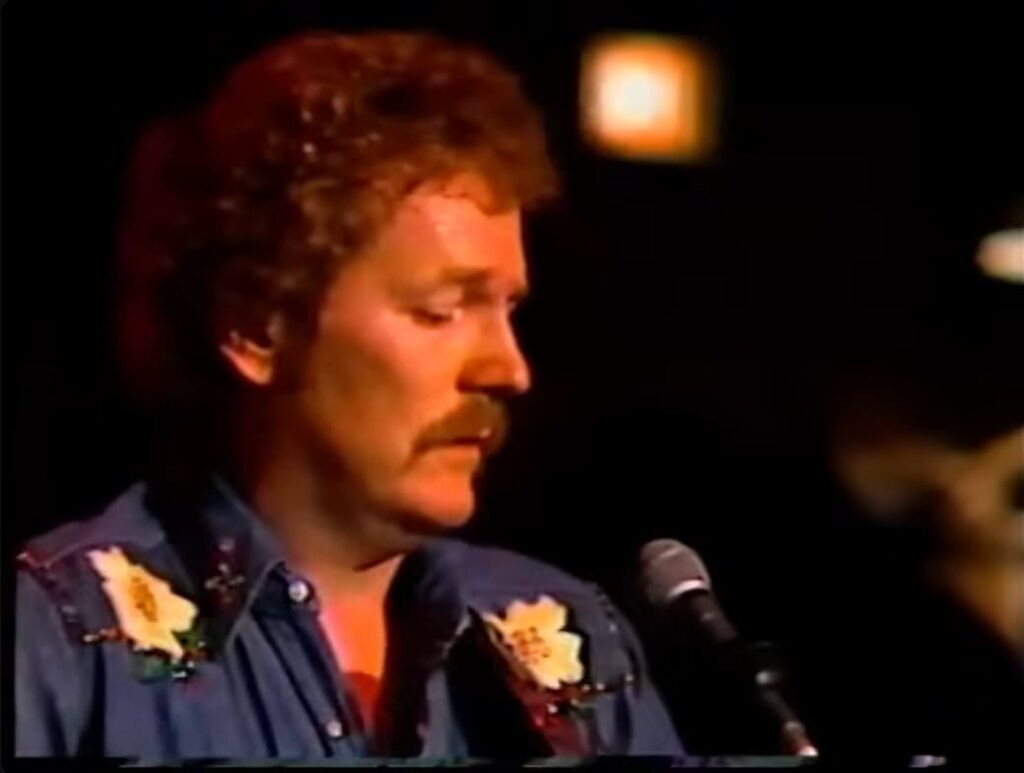
A song carried by distance and quiet endurance—“Early Morning Rain” becomes a portrait of longing shaped by roads, weather, and the passage of time
When Gordon Lightfoot stepped onto the stage in Chicago in 1979 and performed “Early Morning Rain”, he was not simply revisiting one of his earliest compositions—he was returning to a song that had already traveled far beyond its origin. Written in 1964 and first recorded for his debut album Lightfoot! in 1966, the song did not achieve major chart success in its initial release. It did not climb the upper reaches of the Billboard Hot 100, nor did it dominate the UK Singles Chart. Yet, in a quieter, more enduring way, it became one of the defining works of his career—carried forward through countless interpretations and performances.
The story behind “Early Morning Rain” is as grounded as the song itself. Lightfoot wrote it while waiting at Los Angeles International Airport, watching planes depart while he remained behind, unable to afford a ticket. That simple, almost ordinary moment became the foundation for something far more universal. The image of an airplane lifting into a grey sky, leaving someone behind in the early morning rain, captured a feeling that transcended circumstance. It was not just about travel—it was about separation, about longing, about the quiet realization that movement is not always within reach.
By the time of the 1979 Chicago performance, Gordon Lightfoot had already established himself as one of the most respected voices in folk and contemporary music. Songs like “If You Could Read My Mind”, which reached No. 5 on the Billboard Hot 100 in 1971, and “Sundown,” a No. 1 hit in 1974, had brought him widespread recognition. Yet “Early Morning Rain” remained different. It was not defined by its chart position, but by its persistence—its ability to remain relevant without needing to change.
In this live setting, the song takes on a slightly altered tone. The arrangement is spare, almost minimal, allowing the narrative to come forward without distraction. Lightfoot’s voice, deeper now, carries a weight that was not present in the earlier recordings. It does not strive for perfection. Instead, it leans into the natural texture of time, giving the song a sense of lived experience.
There is a quiet discipline in the way he performs it. Each line is delivered with care, not rushed, not overly emphasized. The rhythm remains steady, mirroring the slow, inevitable passage of time itself. And within that steadiness, the meaning of the song deepens. What once felt like a moment of immediate frustration—being left behind—now feels more like a reflection on all the moments that have passed since.
The imagery remains vivid. The rain, the airport, the distant sound of engines—these elements are unchanged. But their significance evolves. They are no longer just details within a scene; they become symbols of something larger. The rain suggests not only weather, but mood. The departing plane represents not just travel, but opportunity, distance, and the choices that shape a life.
What makes “Early Morning Rain” endure is its honesty. It does not rely on dramatic gestures or elaborate arrangements. It speaks plainly, yet with a depth that reveals itself over time. In the 1979 performance, that depth becomes more apparent. Lightfoot does not reinterpret the song so much as he allows it to reveal itself more fully.
There is also a sense of continuity in this performance. The song connects the early years of his career with the present moment, forming a bridge between who he was and who he has become. It does not belong exclusively to one period. It moves with him, adapting without losing its core identity.
As the performance unfolds, there is no attempt to elevate the song beyond its natural scale. It remains grounded, close to its origins. And perhaps that is its greatest strength. In a world often drawn to spectacle, “Early Morning Rain” offers something quieter, but no less powerful—a reminder that some of the most enduring songs are those that speak softly, yet remain long after the final note has faded.
In the end, Gordon Lightfoot does not need to explain the song. He simply sings it, as he always has, allowing its meaning to settle where it may. And somewhere within that steady, unbroken delivery, the listener finds not just a story of departure, but a reflection of time itself—moving forward, whether we are ready or not.