
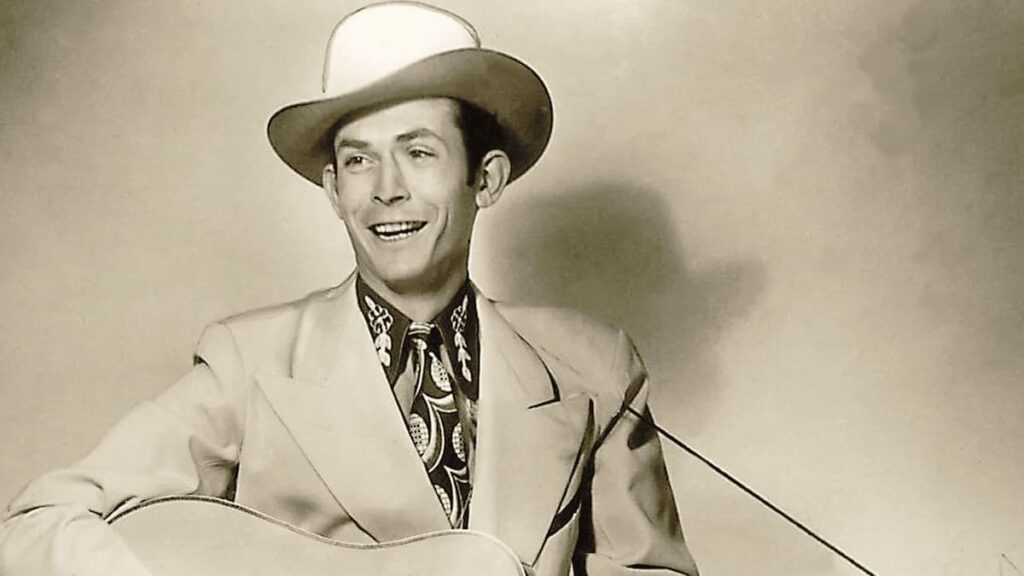
Hank Williams Sang About Loneliness So Honestly That Generations Began Trusting Him With Their Own
There are legendary singers, legendary songwriters, and legendary performers. Then there is Hank Williams, an artist whose music feels less inherited from history than passed directly from one wounded heart to another. More than seventy years after his death, Williams remains one of the defining emotional architects of country music because he understood something few artists ever fully grasp: loneliness is not merely sadness. It is a condition of the soul. And no singer in American music history translated that feeling into song with greater honesty than the man who became, almost accidentally, the patron saint of lonely hearts.
By the time of his death on January 1, 1953, Hank Williams had already reshaped country music forever. Through recordings released primarily on MGM Records, and songs later collected across countless posthumous compilations and albums, Williams created a body of work that permanently altered American songwriting. Hits such as “Your Cheatin’ Heart,” “Cold, Cold Heart,” “Hey, Good Lookin’,” and especially “I’m So Lonesome I Could Cry” elevated country music beyond regional entertainment into something emotionally universal. His songs reached people not because they were sophisticated, but because they were devastatingly direct.
That directness became his greatest gift.
Williams wrote about heartbreak without decoration. There was no emotional distance between the singer and the suffering inside the song. When he sang about loneliness, listeners believed him immediately because his voice carried the exhausted truth of someone who knew isolation intimately. He did not romanticize pain. He inhabited it. And in doing so, he gave millions permission to acknowledge emotions they otherwise kept hidden.
Part of what makes Hank Williams feel so timeless is how modern his emotional vulnerability still sounds. Long before confessional songwriting became fashionable, Williams exposed his inner life with startling openness. In “I’m So Lonesome I Could Cry,” loneliness becomes almost cosmic in scale. The famous imagery of whippoorwills, falling stars, and midnight trains transforms ordinary sadness into something existential. Yet the song never feels literary for its own sake. Every image exists because the emotion behind it demands expression. Williams understood instinctively that the most powerful songs do not describe pain intellectually. They allow listeners to feel trapped inside it.
That emotional authenticity emerged directly from his life.
Behind the rapid rise to stardom stood a deeply troubled man. Chronic physical pain caused by spina bifida, alcoholism, prescription drug dependency, unstable relationships, relentless touring schedules, and mounting psychological strain slowly consumed Williams throughout his brief career. He achieved extraordinary fame while simultaneously unraveling in public. Yet unlike many artists whose suffering becomes mythologized after death, Williams transformed his personal instability into art with almost frightening clarity. The loneliness in his music was not performance. It was autobiography disguised as melody.
And perhaps that is why listeners continue returning to him during their own darkest moments.
There are artists people admire, and there are artists people seek out when life becomes unbearable. Hank Williams belongs firmly to the latter category. His songs function almost like emotional companions for those navigating grief, heartbreak, addiction, regret, spiritual exhaustion, or quiet despair. Generations of listeners have discovered that Williams never tries to solve loneliness within his music. He simply acknowledges it with compassion and precision. Sometimes that honesty offers more comfort than optimism ever could.
His influence on later generations of songwriters cannot be overstated. Artists ranging from Johnny Cash and George Jones to Bob Dylan, Kris Kristofferson, and Townes Van Zandt recognized Williams as a foundational figure because he proved emotional truth mattered more than technical perfection. He taught country music that vulnerability could carry enormous artistic power. In many ways, nearly every confessional songwriter who followed him owes something to the emotional pathways he opened.
Yet for all the tragedy surrounding his story, Williams’ music does not feel hopeless. Beneath the sorrow exists a desperate longing for connection, redemption, and spiritual peace. Gospel songs like “I Saw the Light” reveal another side of his artistry, one constantly searching for grace even while trapped inside personal chaos. That tension between despair and hope gave his music extraordinary depth. Williams sang like a man standing somewhere between salvation and collapse, unsure which direction life would ultimately force him toward.
Looking back now, it becomes clear why the phrase “patron saint of lonely hearts” fits him so perfectly. Saints are figures people turn toward in moments of suffering, searching for understanding from someone who has endured pain themselves. That is exactly the role Hank Williams continues to occupy in American music culture.
Decades after his death, lonely people still find him waiting in the dark with a guitar, a trembling voice, and the uncomfortable reassurance that someone else once felt this way too.
 Music Legend