
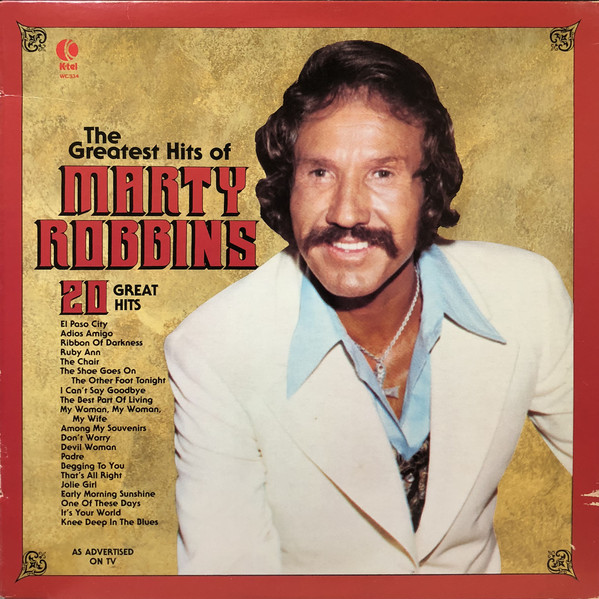
Marty Robbins – “I Heard The Bluebirds Sing”: A Harmonious Echo of Springtime Hope and the Sweetness of True Companionship
In the vast and storied career of Marty Robbins, there are moments where the dust of the trail settles, the gunsmoke clears, and we are left with nothing but the pure, crystalline joy of a melody. “I Heard The Bluebirds Sing” is exactly that—a breath of fresh mountain air captured in song. While many of us associate Marty with the solitary, brooding figure of the Western frontier, this track showcases his incredible ability to master the “Close Harmony” style that defined an era of country and bluegrass. Originally a hit for The Hodivsky Family and later made famous by The Browns, Marty Robbins brought his signature “Velvet Voice” to this tune, often performing it as a duet, most notably on the album Marty Robbins & The Smith Brothers in the mid-1950s under Columbia Records.
The “backstory” of this song is rooted in the rich tradition of North American folk-country. Written by Hod Pharis, it tells a story of romantic fruition—a narrative that begins in the cold, uncertain “winter” of loneliness and blossoms into the vibrant “spring” of a shared life. When Marty Robbins took up this song in the 1950s, he was at a creative crossroads, moving between the hard-driving honky-tonk of his early days and the smooth, pop-country crossover style that would eventually make him a household name. This particular track serves as a bridge, retaining the rural honesty of the country hills while polishing it with the vocal sophistication that only Robbins could provide.
The Symbolism of the Bluebird and the Seasonal Heart
For the listener who has walked through the many seasons of life, the imagery in “I Heard The Bluebirds Sing” carries a weight that is both nostalgic and deeply comforting. The bluebird has long been a symbol of happiness and renewal, and in this song, its song serves as a herald for the end of a long, metaphorical winter. There is a profound simplicity in the lyrics that speaks to a universal truth we often forget in the rush of the modern world: that the greatest joys are often the most natural ones.
“I heard the bluebirds sing, and I knew that it was spring… because you smiled at me and the world was right again.”
As we look back through the lens of time, these lines feel less like a simple rhyme and more like a philosophy. They remind us of those pivotal moments in our own youth—the first time a certain someone smiled, the day a heavy burden was lifted, or the morning we realized that life was beginning anew. Marty’s performance, characterized by its impeccable timing and the warmth of his baritone, makes the listener feel as though they are sitting on a porch swing, watching the shadows lengthen while the world hums in harmony.
A Legacy of Harmony and Light
What makes this recording particularly special is the way Marty blends his voice with his collaborators. It is a masterclass in musical unselfishness. For a man who could easily dominate any stage, his work on “I Heard The Bluebirds Sing” shows a deep respect for the tradition of harmony. It is a reminder that while the solo journey is often heroic, the journey taken in tandem—harmonizing with another soul—is where the real music is made.
In the grand tapestry of Marty Robbins‘s discography, this song stands as a vibrant, colorful thread. It is a “souvenir” of a time when music was used to celebrate the simple arrival of a new season and the enduring power of love. For those of us who have lived through many springs and winters, it is a gentle invitation to listen for our own “bluebirds” and to remember that, no matter how long the winter, the song always returns.
 Music Legend