
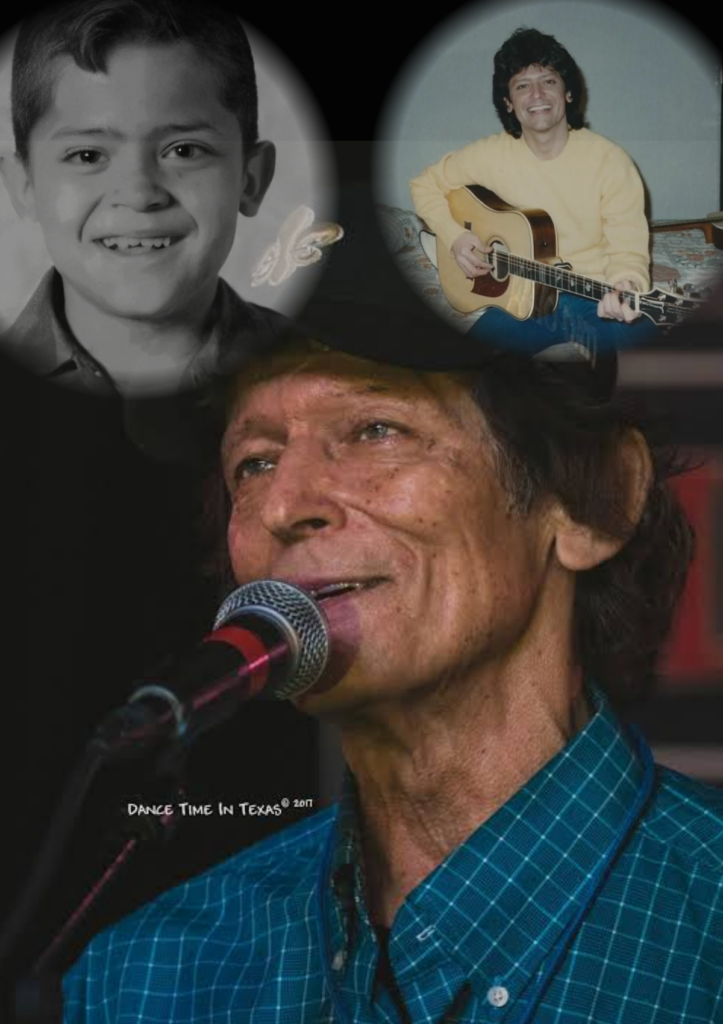
A final chapter spoken without regret, where a lifetime of music settles into quiet acceptance
In 1996, Johnny Rodriguez released “You Can Say That Again”, the title track of what would become his final studio album, You Can Say That Again. It did not storm the charts the way his earlier recordings once had his golden run in the 1970s had already produced six No. 1 hits on the Billboard Hot Country Singles chart, including Ridin’ My Thumb to Mexico and That’s the Way Love Goes. By contrast, this late-career release arrived almost quietly, with limited commercial impact and little chart presence. But to measure it that way would be to misunderstand what this record truly is. This was never meant to be a return to dominance. It was something far more personal a closing statement.
By the mid 1990s, the landscape of country music had shifted dramatically. The polished, radio-driven sound of a new generation had pushed aside the honky-tonk storytelling that once defined artists like Johnny Rodriguez. For nearly seven years, he had largely stepped away from the recording spotlight, becoming more of a memory than a presence. Many assumed his story, at least in musical terms, had already reached its conclusion. But when he returned with You Can Say That Again, it was clear he had not come back to compete. He had come back to reflect.
The title track, “You Can Say That Again,” does not announce itself with grandeur. There is no sense of urgency, no attempt to reclaim lost ground. Instead, it unfolds like a conversation perhaps even like an agreement between a man and his own past. The phrasing is calm, almost disarmingly so, as though every word has already been lived before it is sung. And in that restraint lies its quiet power.
What makes this recording particularly striking is how it embraces time rather than resisting it. The voice of Johnny Rodriguez here is no longer the youthful instrument that once carried him to the top of the charts. It is weathered, steadier, shaped by years that have not always been easy. But rather than diminishing the performance, that change gives the song its authenticity. There is no effort to sound young again. No attempt to chase the tone of a different era. What remains is something rarer honesty that cannot be manufactured.
The story behind the album is inseparable from the life that led to it. Johnny Rodriguez, once celebrated as the first major Mexican American star in country music, had built his career on songs that spoke of distance, longing, and resilience. His rise in the early 1970s was swift and remarkable, but like many artists of that era, the years that followed brought both success and struggle. By the time this album was recorded, he had already experienced the full arc of a career the peaks, the quiet stretches, and everything in between.
Listening to “You Can Say That Again” now, there is a sense that the song exists outside of time. It does not belong strictly to 1996, nor to the era that came before it. It feels more like a summation. The lyrics carry an understated wisdom, the kind that does not need to explain itself. When he sings the title line, it is not a repetition for emphasis. It is an acknowledgment a recognition that everything that has been said, everything that has been lived, holds its own truth.
There is also a subtle sense of peace running through the track. Not the kind that comes from resolution, but the kind that comes from acceptance. The album as a whole does not feel like a farewell in the traditional sense. It does not ask for attention or sentimentality. Instead, it reads like the final page of a memoir written by someone who has already come to terms with his story.
And perhaps that is why this record continues to resonate in its own quiet way. It reminds us that not every ending needs to be dramatic to be meaningful. Sometimes, the most lasting statements are the ones spoken softly, without regret, without urgency. In You Can Say That Again, Johnny Rodriguez does not try to rewrite his past or redefine his legacy. He simply acknowledges it.
In the end, when he sings those words it feels less like a performance and more like a nod to everything that came before. A life in music, distilled into a single, unhurried moment. And in that moment, there is nothing left to prove. Only something to understand.