
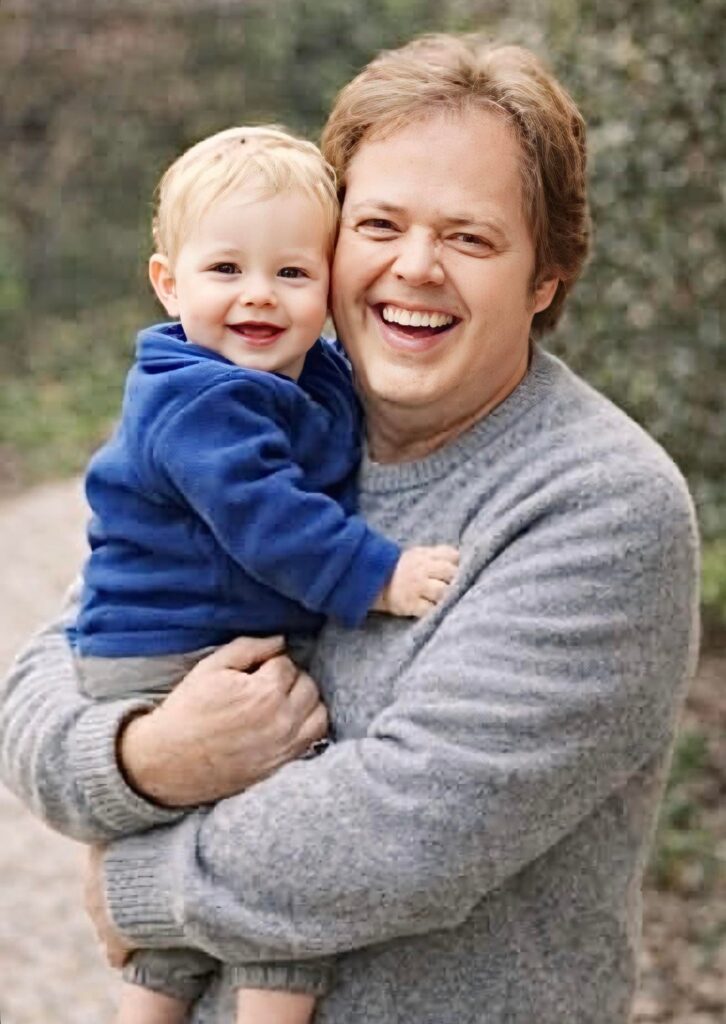
From Applause to Affection: When a Lifetime in Music Gently Finds Its Way Home
There is a quiet kind of beauty in knowing when the music has said enough—when the stage lights dim not in sadness, but in fulfillment. For Jimmy Osmond, once the youngest voice in the globally celebrated family group The Osmonds, that moment has come not as an ending, but as a graceful turning of the page. At 62, after decades spent under the glow of admiration and expectation, his life now unfolds in a softer, more intimate melody—one composed not of chart positions or sold-out venues, but of family, memory, and enduring love.
To understand the significance of this transition, one must look back to the remarkable beginning. Jimmy Osmond was not merely a participant in a musical era—he was, in many ways, a symbol of its innocence and charm. In 1972, at just nine years old, he achieved something extraordinary with his single “Long Haired Lover from Liverpool”, which reached No. 1 on the UK Singles Chart. This achievement made him the youngest artist ever to top the UK charts, a record that still stands. The song, lighthearted and playful, captured the spirit of a time when music often carried a sense of joy unburdened by complexity.
Yet behind that youthful success was a life shaped by discipline, travel, and the constant demands of performance. Growing up within The Osmonds, Jimmy was part of a family whose harmony extended beyond music into a carefully maintained image of unity and wholesomeness. Alongside brothers like Donny Osmond, the group achieved international fame in the early 1970s, with hits such as “One Bad Apple” reaching No. 1 on the Billboard Hot 100 in 1971. Their success was not fleeting—it was sustained, built on relentless touring, recording, and a shared commitment to their craft.
For Jimmy, childhood and career were intertwined. The stage was not a distant aspiration—it was home. Applause became familiar, expectations constant. And yet, as the years passed, the nature of that life inevitably changed. The spotlight, once so bright and defining, began to soften. The rhythm of constant performance gave way to quieter moments, more personal reflections.
In recent years, particularly following health challenges that led him to step back from public appearances, Jimmy Osmond’s life has taken on a different kind of richness. No longer defined by schedules and stages, he has embraced something far more enduring—the presence of family. The laughter of children, the gentle continuity of generations, the comfort of being surrounded not by audiences, but by loved ones.
There is something profoundly moving in that shift.
For an artist who once stood before thousands, the idea of finding deeper joy in smaller, quieter moments speaks to a kind of wisdom that can only come with time. It suggests an understanding that while music may shape a life, it is love that ultimately gives it meaning.
And yet, even in this quieter chapter, Jimmy Osmond’s legacy remains firmly intact. His contributions to music, both as a solo artist and as part of The Osmonds, continue to resonate. Songs like “Long Haired Lover from Liverpool” are not simply nostalgic artifacts—they are reminders of a time when melodies were simple, heartfelt, and shared across generations.
But perhaps more importantly, his life now offers a different kind of message.
That beyond the applause, beyond the charts, beyond the relentless pursuit of success, there is something more lasting. Something that does not fade when the music stops. In Jimmy’s case, it is the enduring presence of family—the very foundation that once supported his rise, and now gently surrounds him in this new chapter.
There is no sense of loss in this transition. Only a quiet completeness.
The roar of the crowd may have faded, but in its place is a deeper, more meaningful harmony—the kind that cannot be recorded, cannot be measured, and cannot be replaced. A harmony built on shared moments, on memory, on love.
And in that gentle, unspoken music, Jimmy Osmond continues to live a life just as meaningful as the one he once sang about—only now, the audience is closer, and the song, far more personal.