
A Life Sung in Truth: When Family, Pain, and Music Became One Unbreakable Story
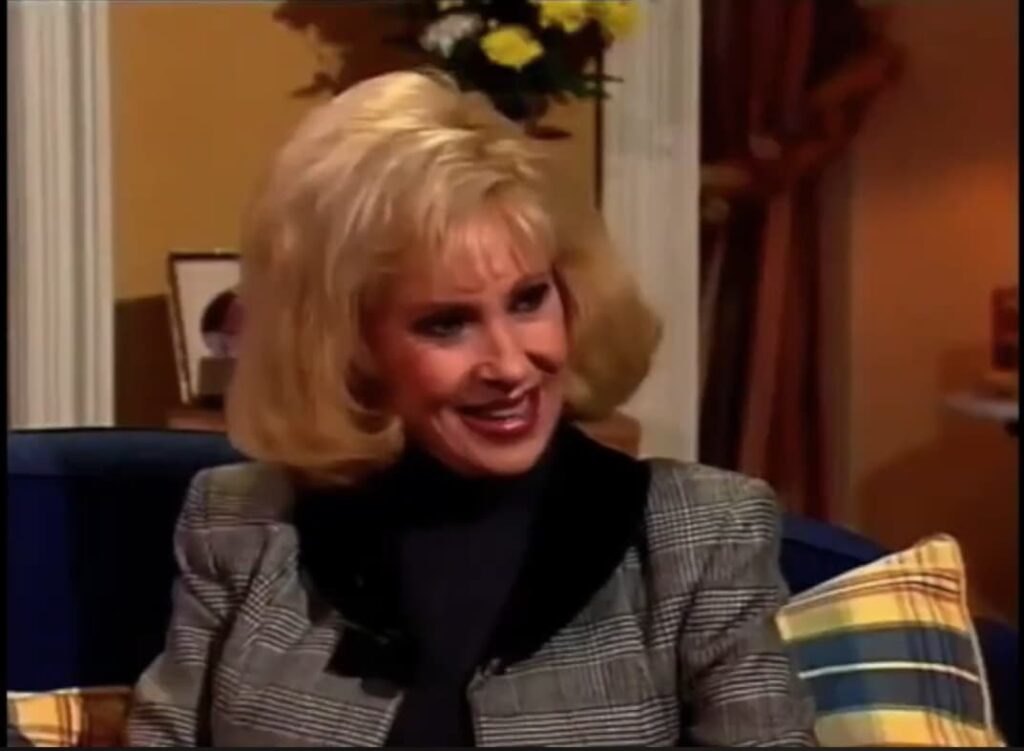
By the time Tammy Wynette sat down for that rare British interview in 1993, she was no longer simply a country star—she was a living testament to the kind of honesty that only time, hardship, and survival can carve into a human voice. When asked about the importance of family, her response came without hesitation: “Oh very important, my family is my life…” It was not rehearsed, not softened for the audience, not shaped to fit any expectation. It was immediate, instinctive—true.
And perhaps that is the only way Tammy Wynette ever knew how to speak, or sing.
To understand the weight of those words, one must return to where it all began. Long before the title “First Lady of Country Music” was ever spoken, before the lights of Nashville and the recognition of millions, there was a young woman in Mississippi—alone, determined, and carrying responsibilities far heavier than her years. With three small children and no financial security, she made a decision that would define the rest of her life: to leave behind certainty for the fragile hope of something more.
When she arrived in Nashville in the mid-1960s, she had no connections, no safety net, and no guarantee that her voice would ever be heard. But what she did have was something far more enduring—a reason. Singing was not simply ambition. It was survival. It was a way forward for her children, a way to transform struggle into something meaningful.
That truth would later echo through every line she recorded.
When “Stand by Your Man”, from the 1968 album Stand by Your Man, rose to No. 1 on the Billboard Hot Country Singles chart and crossed into the Billboard Hot 100 at No. 19, it became one of the most recognizable songs in country music history. But its success was not merely commercial. It was emotional. The song carried a complexity that many listeners felt but few could fully articulate—a mixture of loyalty, pain, endurance, and quiet resignation.
Similarly, “D-I-V-O-R-C-E”, released the same year, also reached No. 1 on the Billboard country chart, telling the story of a child caught in the unraveling of a marriage. It was delivered with a tenderness that felt almost too real to be fiction. And in many ways, it wasn’t. These songs were not distant narratives. They were reflections—fragments of a life lived through love, loss, and difficult choices.
By 1993, Tammy Wynette had lived through multiple marriages, personal struggles, and the relentless pressures of fame. And yet, in that interview, there was no attempt to rewrite her story. She spoke openly about her mistakes, her failed relationships, and the emotional cost of the life she had chosen. There was a kind of quiet courage in that honesty—a refusal to hide behind the polished image that success often demands.
It is this openness that gives her music its lasting power.
When Tammy sang, there was no separation between the artist and the person. The voice carried everything—the sleepless nights, the difficult decisions, the resilience required to keep moving forward even when the path was uncertain. There is a certain stillness in her recordings, a space where the listener is invited not just to hear, but to feel.
And in that British interview, that same stillness exists in her words.
“My family is my life.” It is a simple sentence. But coming from Tammy Wynette, it holds the weight of every sacrifice, every risk, every moment of doubt she endured in pursuit of something better. It explains the urgency behind her journey, the depth behind her songs, and the unwavering connection she maintained to the people who mattered most.
There is something profoundly moving about an artist who does not separate their art from their life. In Tammy Wynette’s case, the two are inseparable. Her music is not a performance—it is a record of endurance. A testament to what it means to love, to lose, and to continue despite it all.
And perhaps that is why, decades later, her voice still lingers.
Not because it was perfect—but because it was real.