
A Gentle Conversation Between Legends: Where Music, Memory, and Simple Joys Meet Beyond the Spotlight
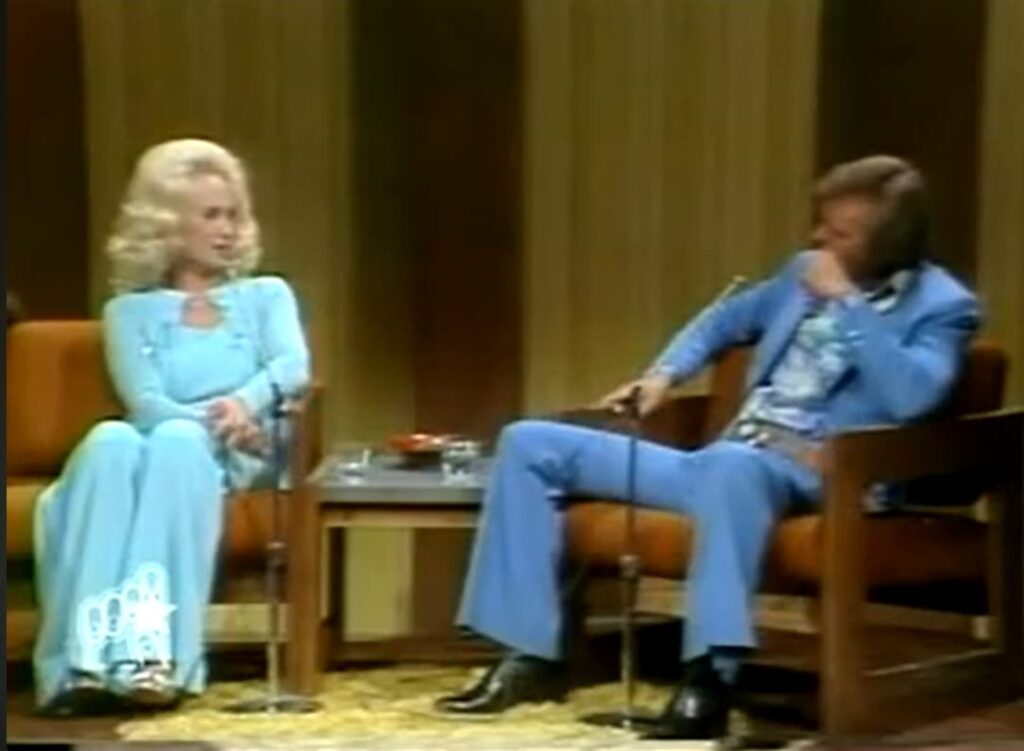
In 1975, at a time when country music stood firmly rooted in storytelling and sincerity, an intimate television moment unfolded between two remarkable figures—Jerry Reed and Tammy Wynette. More than just an interview, it was a quiet exchange between artists who understood the weight of the road behind them and the meaning of the songs they carried. Broadcast on Jerry Reed’s show, this conversation offered something increasingly rare: a glimpse not of fame, but of the human spirit that shaped it.
By 1975, Tammy Wynette was already a towering presence in country music. Her signature song, “Stand by Your Man”, released in 1968 from the album Stand by Your Man, had reached No. 1 on the Billboard Hot Country Singles chart and crossed over to the Billboard Hot 100, peaking at No. 19—a remarkable achievement for a country song at the time. It became not only her defining hit but one of the most recognizable recordings in the genre’s history. Yet, behind that success was a story marked by hardship, perseverance, and quiet determination.
As Jerry Reed guided the conversation, there was an ease between them—a familiarity that allowed Wynette to speak not as a star, but as a woman remembering where it all began. She spoke of her early life in rural Mississippi, of growing up in modest circumstances, and of the responsibilities she carried from a young age. There was no self-pity in her words, only a calm reflection—as though those difficult years had become part of a larger understanding, something she had made peace with long ago.
Her journey into music was anything but straightforward. Before stepping into a recording studio, Wynette worked as a beautician, supporting her children while holding onto a quiet dream. When she eventually moved to Nashville, the road was uncertain. Rejections were frequent. Opportunities were fragile. But there was something in her voice—fragile yet unwavering—that could not be ignored for long.
During the interview, when she spoke about her first recordings, one could sense that she still carried the same humility that defined her beginnings. Songs like “D-I-V-O-R-C-E” and “Your Good Girl’s Gonna Go Bad”—both of which reached No. 1 on the Billboard country charts—were not just commercial successes. They were reflections of lived experience, delivered with a kind of emotional honesty that resonated deeply with listeners.
Jerry Reed, known for his wit and easygoing charm, gently shifted the conversation toward something more personal—Wynette’s love for fishing. It may seem like a small detail, almost incidental, but in that moment, it revealed something essential. Away from the stage lights and recording studios, Tammy Wynette found peace in the stillness of nature. Fishing, for her, was not just a pastime—it was a retreat, a way to reconnect with a simpler rhythm of life.
There is something quietly profound about that image: a voice that could fill concert halls choosing instead the solitude of a quiet lake, the patience of waiting, the gentle movement of water. It speaks to a balance that many artists seek but rarely find—the ability to step away from the noise without losing oneself.
The conversation between Reed and Wynette unfolds without urgency. There are no dramatic revelations, no carefully staged moments. Instead, there is warmth, respect, and an unspoken understanding of what it means to endure in a life shaped by music. Reed listens as much as he speaks, allowing Wynette’s words to settle naturally, like verses in a song that does not need embellishment.
Looking back, this 1975 interview feels less like a piece of television and more like a preserved moment in time. A reminder of when artists were known not just for their hits, but for their stories—their struggles, their quiet victories, and the simple things that brought them joy.
In the years that followed, Tammy Wynette’s life would continue to carry both triumph and hardship. But in this conversation, captured in a gentler chapter, we see her not as an icon burdened by legacy, but as someone still grounded in memory, still connected to the roots that shaped her voice.
And perhaps that is what lingers most—the realization that behind every unforgettable song lies a life lived in full, with all its complexities. In that quiet exchange with Jerry Reed, the music pauses just long enough for us to hear the person behind it.
Video:
