
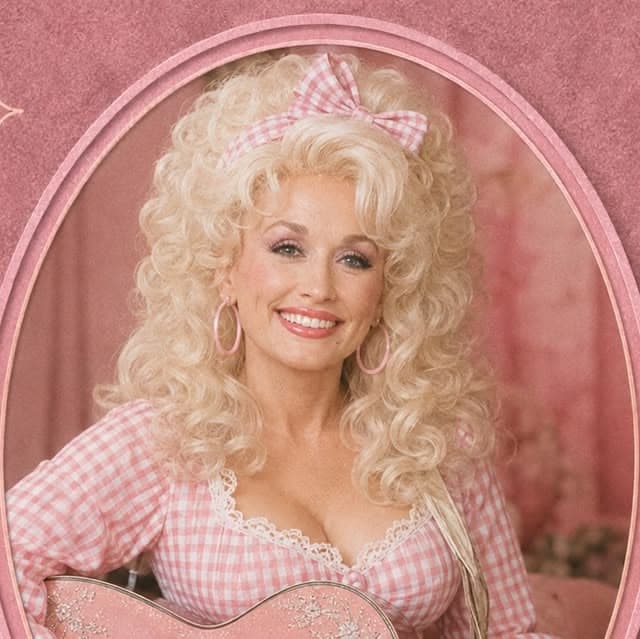
“Mule Skinner Blues” turned an old working man’s song into an early Dolly Parton triumph, carrying the voice of a young woman who had already decided that Nashville was where she belonged.
There is a wonderfully satisfying detail in Dolly Parton’s story that becomes even more meaningful when you hear her 1970 recording of “Mule Skinner Blues (Blue Yodel No. 8).” At her high school graduation in June 1964, Dolly told her classmates that she was going to Nashville to become a star. The declaration was bold for an 18 year old from Sevierville, Tennessee, and some classmates reportedly laughed a little. Dolly did not spend much time arguing with them. She packed her belongings and songs into a cardboard suitcase and left for Nashville the following morning. Six years later, the young woman whose ambition had once seemed amusing was standing firmly inside the country music business, and “Mule Skinner Blues” became one of the clearest early signs that her dream was becoming reality. Released by RCA Victor on June 22, 1970, the single debuted at No. 60 on the Billboard country chart and rose all the way to No. 3, giving Dolly her first solo Top 10 hit.
The song itself was already a piece of country music history long before Dolly recorded it. Jimmie Rodgers, the great early country pioneer known as the Blue Yodeler, recorded “Blue Yodel No. 8” in 1930, and the song later became widely known as “Mule Skinner Blues.” Its world is far removed from the polished country sound that would eventually make Dolly a superstar. The narrator is a working man looking for a job driving mules, asking whether the captain needs another mule skinner on the road line. The song carries the language of itinerant labor, hard physical work and the restless life of someone who has to keep moving wherever there is employment. The term “muleskinner” refers to a mule driver, not someone literally removing an animal’s skin. Rodgers recorded the song with the rough energy and blues inflections that helped define his revolutionary approach to early country music. Later, Bill Monroe and other artists carried it into bluegrass and roots music, making it one of those songs that seemed to belong to every generation that discovered it.
What makes Dolly’s version so memorable is that she did not treat this old standard like a museum piece. Recorded on May 4, 1970, at RCA Studio B in Nashville and produced by Bob Ferguson, her performance has a lively, confident attack that suits the song’s working class character. There is humor in her delivery, but there is also muscle. Dolly could make a song sound playful without making it lightweight, and that quality was becoming central to her artistry. She understood that country music often lives in the space between hardship and humor, between a hard day’s work and the grin that gets you through it. With “Mule Skinner Blues,” she took a song associated with one of country music’s founding figures and made it sound unmistakably like herself.
The timing was significant. Dolly had already established herself professionally through her work with Porter Wagoner, having joined The Porter Wagoner Show in 1967 and begun building a substantial recording career of her own. But the road toward becoming a major solo star was still unfolding. In 1970, “Mule Skinner Blues” showed that Dolly could take an old country standard and turn it into a commercial success under her own name. It was included on The Best of Dolly Parton, released in November 1970, and that album itself became an important early collection of her RCA work. More importantly, the success of the single was followed by “Joshua,” which entered the country chart later that year and eventually became Dolly’s first No. 1 solo hit in 1971.
There is another beautiful piece of history attached to the record. The success of “Mule Skinner Blues” earned Dolly her first solo Grammy nomination, placing her alongside some of the established female voices of country music at a moment when her own identity as a solo artist was becoming impossible to overlook. Listening back now, the charm of the recording is not simply that it reached No. 3. It is that you can hear Dolly having fun with a song that had already traveled a long road through American music, while at the same time hearing the confidence of an artist who knew she had somewhere to go. The laughter she encountered in that high school classroom in 1964 was already six years behind her by the time “Mule Skinner Blues” climbed the country chart. And the girl who had announced that she was going to Nashville to become a star was no longer asking anyone to believe her.